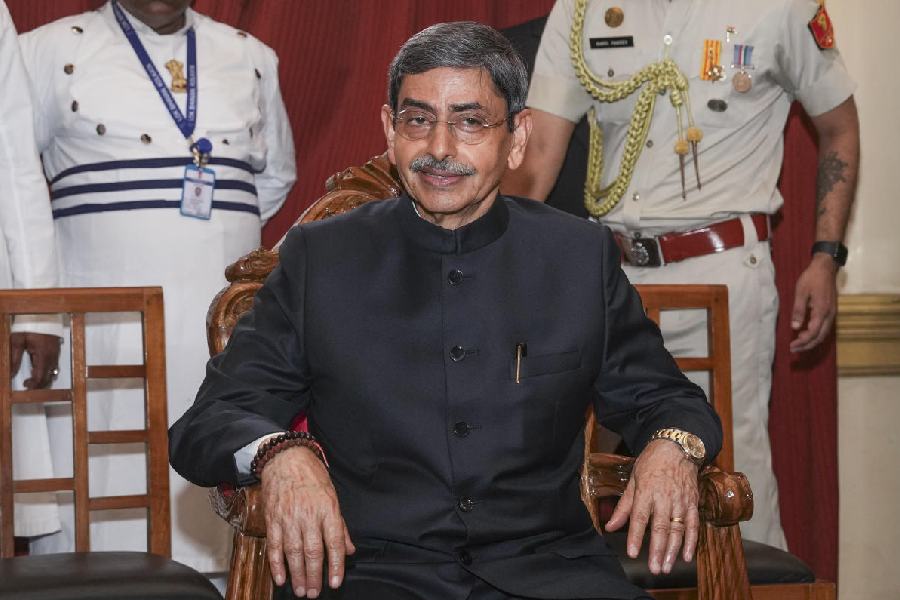

Guwahati, Nov. 8: The chairman of Amalgamated Plantations Private Limited, Ranjit Barthakur, today admitted that the living conditions in the tea gardens were not the best. APPL is the second largest tea producer in the country.
Barthakur made the statement in response to the report of the World Bank's internal watchdog, the Office of the Compliance Adviser/Ombudsman (CAO), which says the International Finance Corporation (IFC), the Bank's private-sector lending arm, did not assure that its client (APPL) was discharging its obligation to provide housing and other services in a manner that met the requirements of law. CAO says IFC underestimated the environmental and social challenges associated with the project.
IFC, which had invested in the company, has admitted that it failed to appreciate the risks posed by the project. It said the issues raised in the report echo the work of several independent institutions and external stakeholders and highlight some of the legacy issues plaguing the sector, which require urgent action.
Barthakur said, "There is no harm in admitting that the conditions are still not the best. The government has to intervene and help us through schemes in health and rural development".
Asked whether the image of APPL had taken a hit after the report, he said the image of Assam tea industry had been hit. "New ways of thinking are continually required if the Assam tea plantations are to sustain and to provide an improved quality of life to workers," he said, adding that the Plantations Labour Act wasantiquated.
IFC decided to partner with Tata Global Beverages Limited, a leader in the tea sector, at an extremely difficult time. The tea industry is facing widespread closure of estates and massive job loss. The IFC investment, encompassing 25 tea estates in Assam and Bengal, aims to support nearly 30,000 jobs on which over 1.5 lakh people were dependent.
The problem came up when CAO had to intervene in 2011 and 2013 when it received complaints from non-governmental organisations on the living and working conditions in the tea estates of APPL, specifically citing long working hours, inadequate compensation, poor hygiene and health concerns, poor living conditions and inadequate protection for workers using pesticides. It completed its appraisal in February 2014 and said the issues raised merited further inquiry.
"We are addressing the issues raised. We started Unnati in 2014 with the specific objective of improving living and working conditions of plantation workers," Barthakur said, adding that the financial condition of the company was not good.
The ombudsman recommended that IFC should not pull out the investment but stay fully engaged until the stated goals of the project are achieved in compliance with the standards.