

Suchandra Goswami, a resident of Silchar town in Cachar district, was out of home when her son called to say some policemen had come and wanted to meet her. By the end of the day, she was lodged in Silchar jail. That was last year.
Rabindra Das of Chandinagar part 4 village in Katigorah block in the district was in the market when policemen picked him up and threw him in jail. That was in 2011. He stayed in jail for nine months.
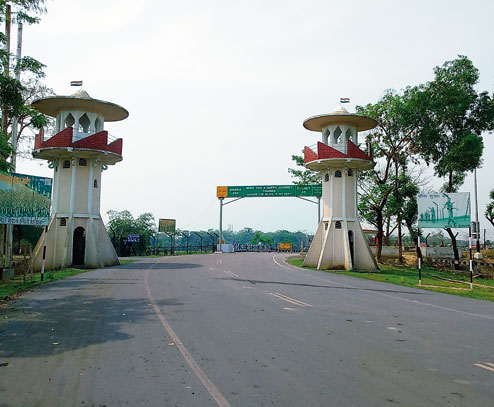
Pranhari Baishnab of Panchgram Thandapani in Hailakandi district met a worse fate. After keeping him in jail for a month in 2013, he was pushed inside Bangladesh through the Mahishasan border in adjoining Karimganj district.
As the three south Assam districts of Cachar, Karimganj and Hailakandi or, collectively, Barak Valley, prepare to go to polls to elect their 15 representatives in the first of the two-phase Assembly elections in the state on April 4, the one issue that hogscentre stage is that of citizenship.
There was reason to celebrate when the Centre issued a notification in September last year saying minorities from Pakistan and Bangladesh who had come to India till December 2014 fleeing religious persecution could stay on even if they did not have valid papers.
"Now we realise how cruel a bluff it was," says a visibly angry Rupam Nandi Purkayastha, adviser to the All Cachar Karimganj Hailakandi Students' Association, an influential organisation in the Valley.
"The notification is just a piece of paper until it is made into law," Purkayastha says. "It has been six months since the notification was issued, but nothing has been done to incorporate it in the laws of the land to give protection to the Bengali Hindus," he says. "But more importantly, why are thousands of people still being held at detention camps in violation of their rights even after the notification?"
As scathing in his criticism of the BJP-led NDA government at the Centre is Hafiz Rashid Ahmed Choudhury, chief adviser to Citizens' Rights Preservation Committee (CRPC), a group that seeks to protect the rights of linguistic minorities in Assam.

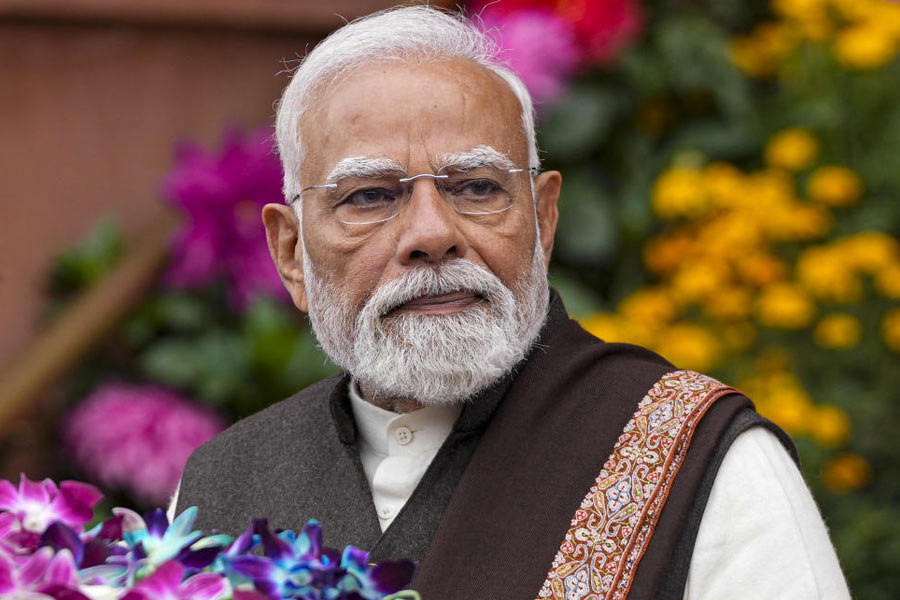
"It is all a big hoax. Narendra Modi had promised before the Lok Sabha elections in 2014 that if the BJP was elected his government would grant citizenship to people from Bangladesh who came to Assam because of religious persecution. Two years after realising his dream of becoming Prime Minister, Modi has forgotten the Bengali Hindus," Choudhury, who is also the state president of Samajwadi Party, said.
Choudhury's colleague in the CRPC and its secretary general, Sadhan Purkayastha, pointed out that laws were amended in 2003 to grant citizenship to refugees from Pakistan and they were settled in Rajasthan, Gujarat and Punjab. "We live in the same country, don't we?" asks Purkayastha, somewhat pained by the use of different yardsticks for different sets of refugees in the same country.
According to him, there are nearly 1.40 lakh voters across the state who are marked as "doubtful". If any letter of the alphabet were to evoke extreme fear and anxiety in these parts, then it has to be the fourth - "D". It is dreaded like no other. When it was first introduced as a suffix to names in the voter list way back in 1997, it denoted the person's "doubtful" citizenship and robbed him or her of the right to franchise till Indian citizenship was proved beyond a shadow of doubt.
Subsequently, the "D" also became synonymous with "detention". "As on date, the signals that emanate on the coming elections are still very confusing," says Jyotilal Chowdhury, former lecturer in English at Cachar College in Silchar, an author and a veteran journalist. "We seem to be at the crossroads," he says.
What has compounded the confusion is the inherent contradiction in the BJP-AGP alliance on the citizenship question. The AGP came out all guns blazing when the Centre issued the notification saying it would not let any more refugees settle in Assam after the 1985 Assam Accord had, "on behalf of the country", allowed in more than the state could hold.
The party makes no distinction between the religious affiliations of those from Bangladesh seeking shelter in India maintaining none was welcome unlike the BJP or, for that matter, the Congress since the days of Jawaharlal Nehru. Yet, the AGP and BJP are together for these elections - firm on their respective stands.
People were looking forward to some categorical announcement from the Prime Minister during his election campaign, but that was not forthcoming either. He only said people would be given "protection" and "respect" and legal process in this regard had already been initiated. His ministerial colleague and BJP's chief ministerial candidate, Sarbananda Sonowal, though, did say Bengali Hindus would be protected. "They have kept the suspense alive," Sadhan Purkayastha said. "Let us see whether any law is made."
Till then, the likes of the Suchandras, the Rabindras and the Pranharis will continue to break out in cold sweat every time a policeman appears on their horizon. They will live one day at a time.
Postscript
It was later found that Suchandra was bundled into jail on the mistaken identity of one Sachindra, a male. She is now as Indian a citizen as she always was. She was born here and studied here and her father was only 12 when his family had come from Bangladesh or erstwhile East Pakistan during Partition. "I can't forget those three days in jail, the food and the company," Suchandra says still traumatised by the experience.
At 80, Rabindra Das lives in penury after having sold off all he had to meet litigation expenses on the way to prove he is an Indian. He is one now, as he always was. His father had come in 1964, well before the cut-off date enshrined in the Assam Accord. He was not even a "D" case and had a voter identity card when he was taken to jail.
Pranhari Baishnab is out on bail and his case is being heard in Hailakandi. He had sneaked back into India from Bangladesh after a month and was rearrested. His brother Jaihari, who lives here, says there are "touts" who help people cross the fenced Indo-Bangladesh border. He sounded rather amused.