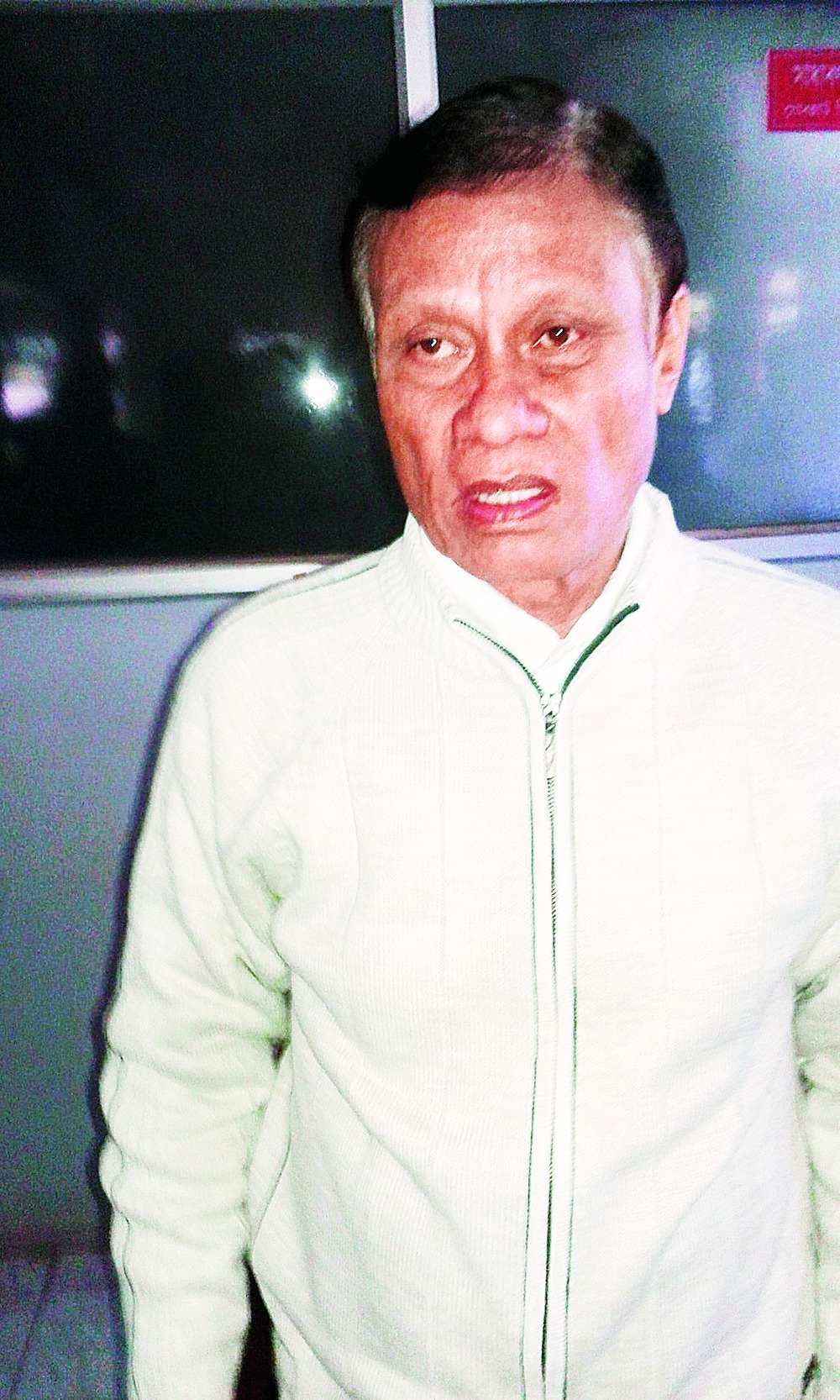

Jorhat, Jan. 2: Former Congress Lok Sabha member from Kaliabor Dip Gogoi today said he, like other citizens and small traders, had been hit badly by the Centre's demonetisation policy.
Gogoi, who is the younger brother of former Assam chief minister Tarun Gogoi and the Jorhat district president of the Congress, spoke to The Telegraph exclusively on the sidelines of a news conference - addressed by former state minister Ajanta Neog at the party office here - on the Congress's nationwide plan to take on the Centre over demonetisation.
Gogoi said the economic situation post-November 8 across the country was "dismal" and had thrown the lives of a majority of people out of gear. He said he had been forced to stop selling fish from his fishery because of a sharp fall in prices after demonetisation.
Gogoi said he had opened a fishery over an area of 100 bighas at Borbheti, on the northwestern outskirts of this town, about 20 year ago before joining politics. He said with business going smoothly over the years and demand rising from local wholesalers, a hatchery was also set up.
The former MP said after demonetisation, the sales from the fishery started dropping and, simultaneously, the prices started plummeting and dropped to less than half the rate before November 8.
"My fishery has been selling fish though prices were coming down very sharply with every passing week since demonetisation. But about three weeks back, the sale had to be stopped completely as it was not commercially viable to sell at very low rates. Otherwise my fishery would incur losses," Gogoi said.

The Congress leader said the wholesale prices of fishes like rohu, bahu, mirika, chital, khoria were Rs 400 per kg or more before November 8, but dipped to Rs 250 per kg. Gogoi said when wholesalers offered prices below Rs 250 per kg, he had to stop sales.
He said 12 regular employees were working in the fishery and sometimes casual workers also had to be engaged. Then there was the cost feed for the fish. All of this added to the cost of production.
The former MP said the prices of carp, which sold before November 8 for around Rs 300 per kg or more, had fallen to Rs 150. "But prices below Rs 150 were not viable," he said.
He said earlier sales would be made twice a week. Each sale would fetch between Rs 30,000 and Rs 50,000.
Gogoi said he had around 2,000 fishes in stock right now and with uncertainty looming large, he was "worried".
He said sales had fallen because the purchasing power of the people had decreased "drastically" following lack of cash flow from the banks due to restrictions imposed by the government on withdrawals.