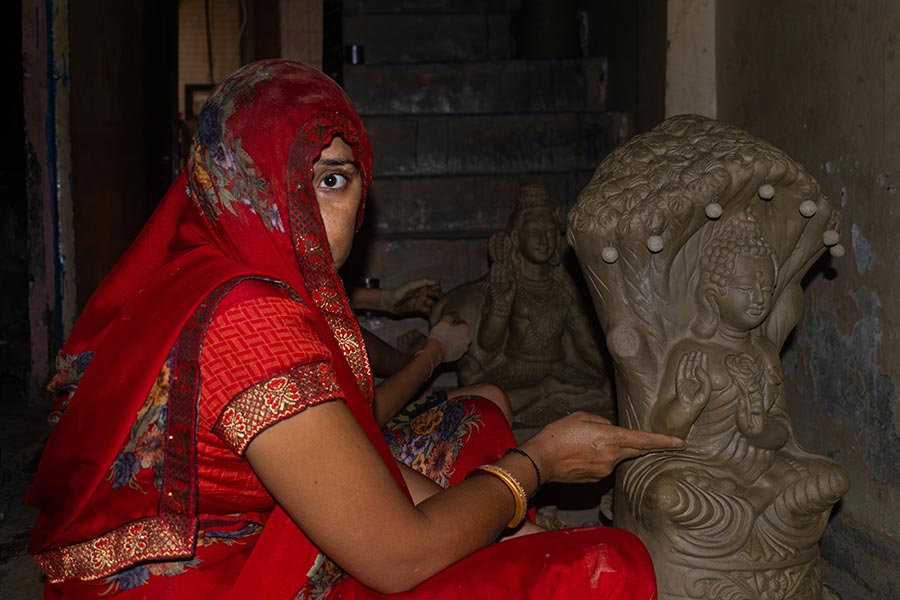
Hidden among the bylanes of Delhi’s Uttam Nagar is a small village where the traditional craft of pottery still thrives. It came into being when potters from Rajasthan’s Alwar district, along with a few from Haryana, relocated to this corner of the city.
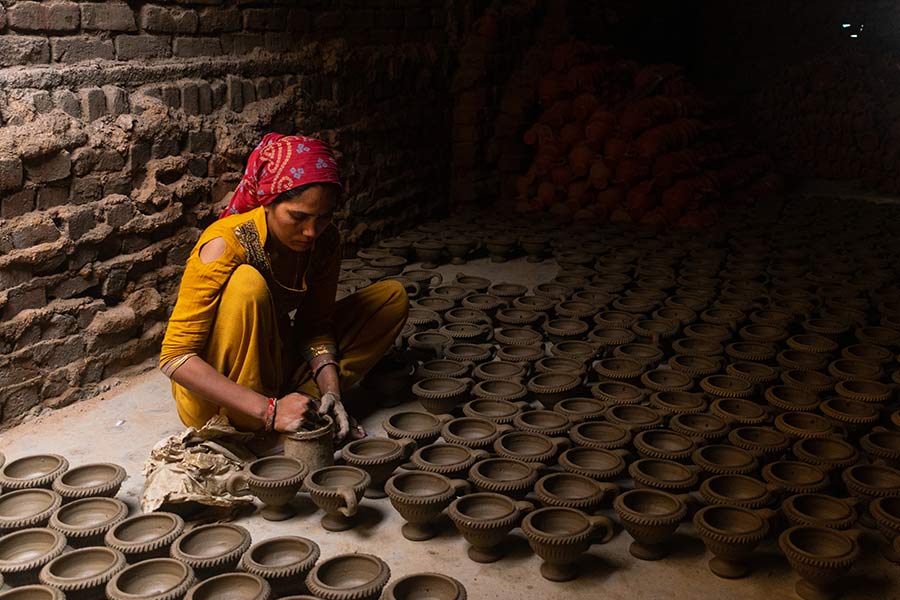
Today, it is one of India’s largest potters' colonies, home to over 400 families.
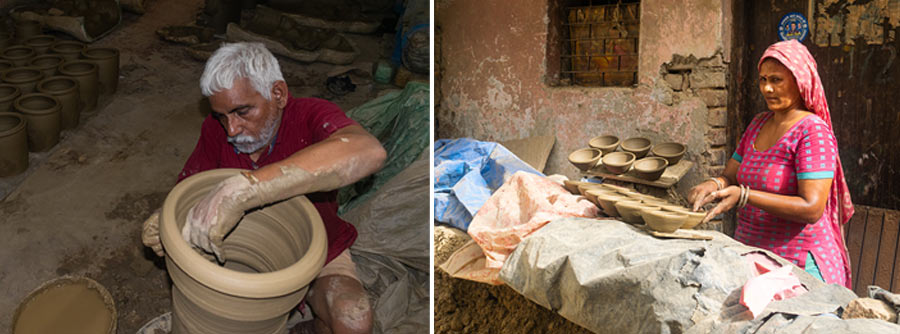
Walking through its alleys, one can see men shaping pots and women polishing them to refine the finish. Mud huts have given way to two-storey buildings, and kilns once placed in front of homes now sit on terraces, with the front areas turned into spaces to sell their wares.
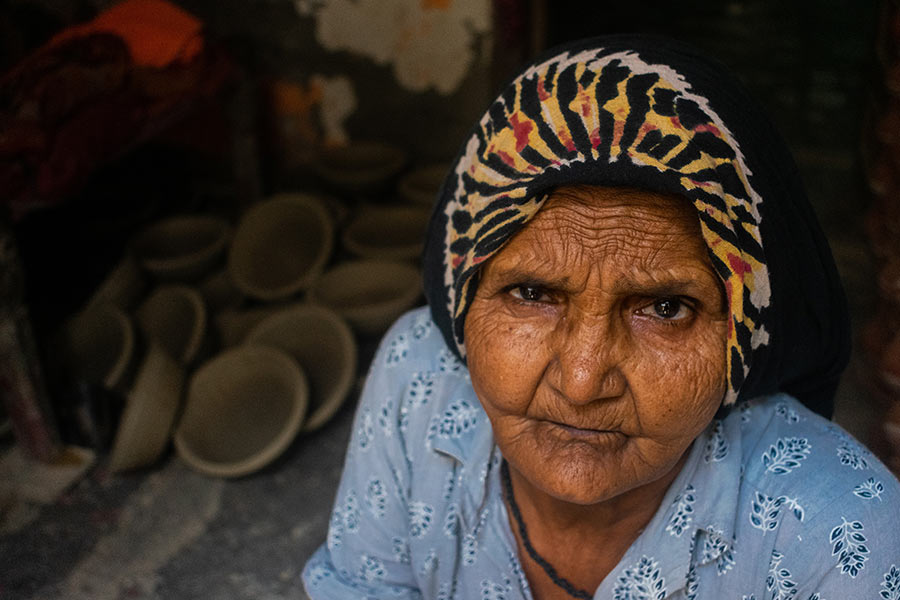
Kasturi Devi, 68, who lives with her son Rajesh, has been making pots for over 50 years. From diyas to urulis (vessels), she has sold a range of items at wholesale rates. She used to make earthen items herself, but now, her son does not allow her to continue, and she manages customer interactions instead.
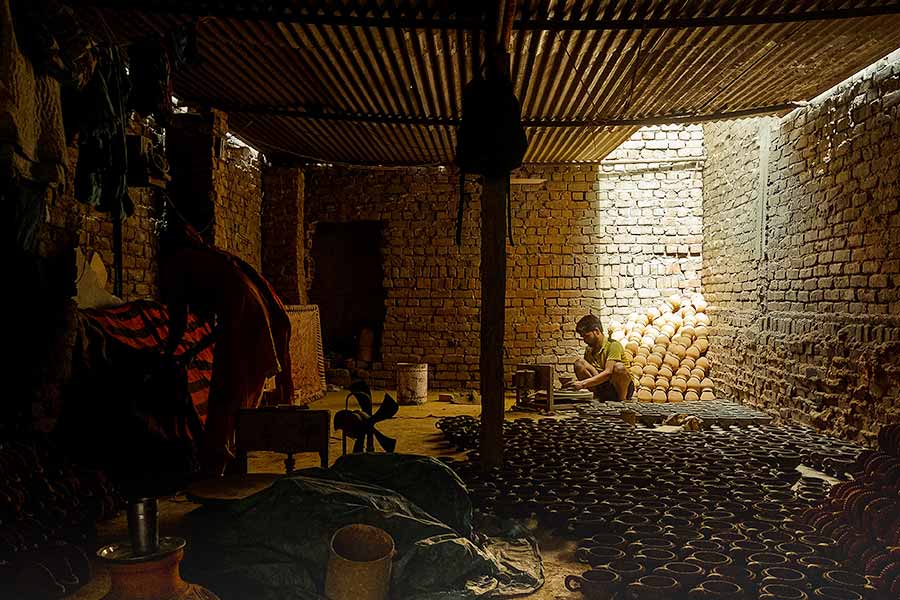
Their diyas are priced between Rs 9 and Rs 20, while pots cost around Rs 100. She says that many retailers visit the colony to buy in bulk.
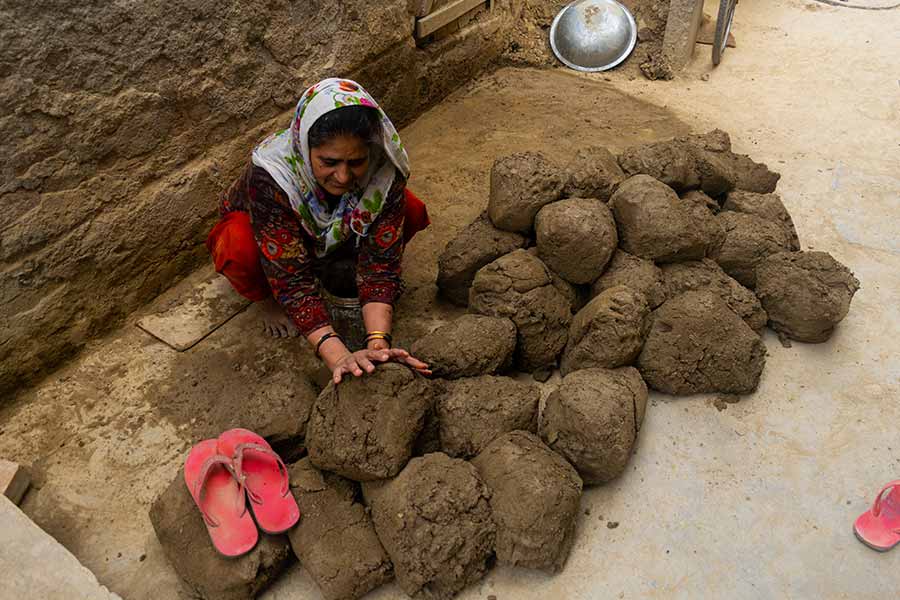
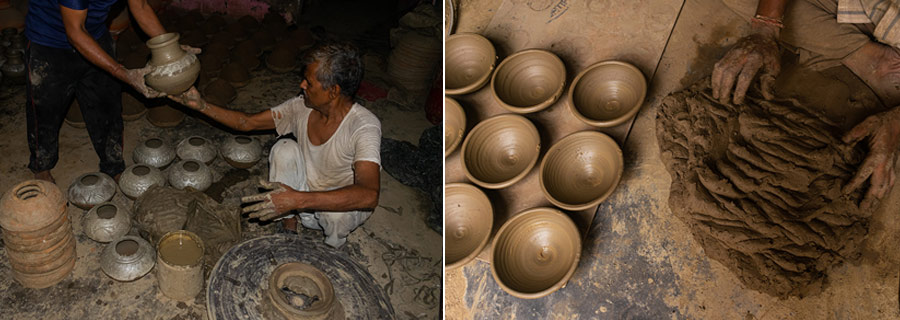
When people think of pottery, they often picture a man at the wheel shaping clay, but the process is far more detailed. It begins with refining the mud, usually brought in mini trucks from Haryana.
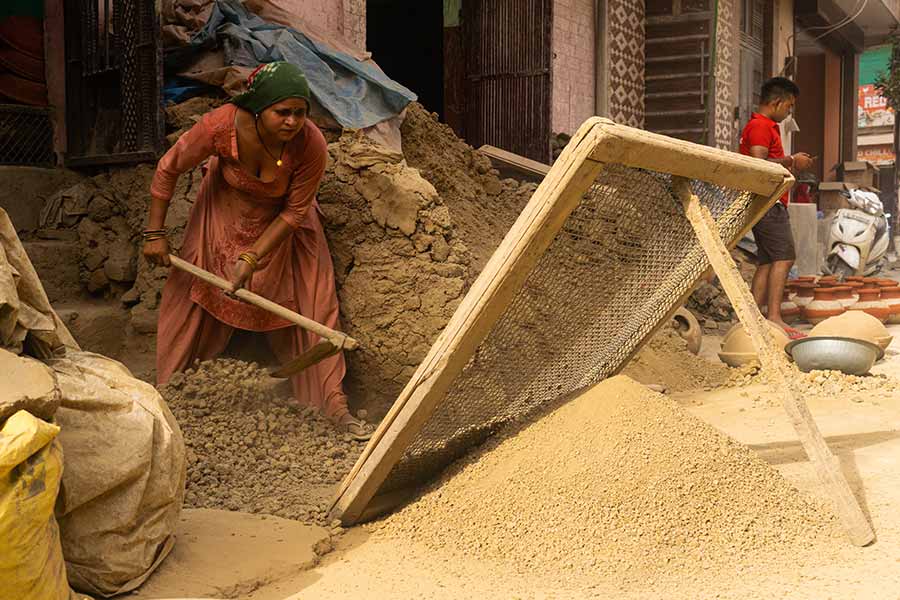
Once finely powdered, it is moulded and placed on the wheel. The process does not end there. Newly made items are baked in kilns and then dried in the sun before being painted and decorated to give them a vibrant finish.
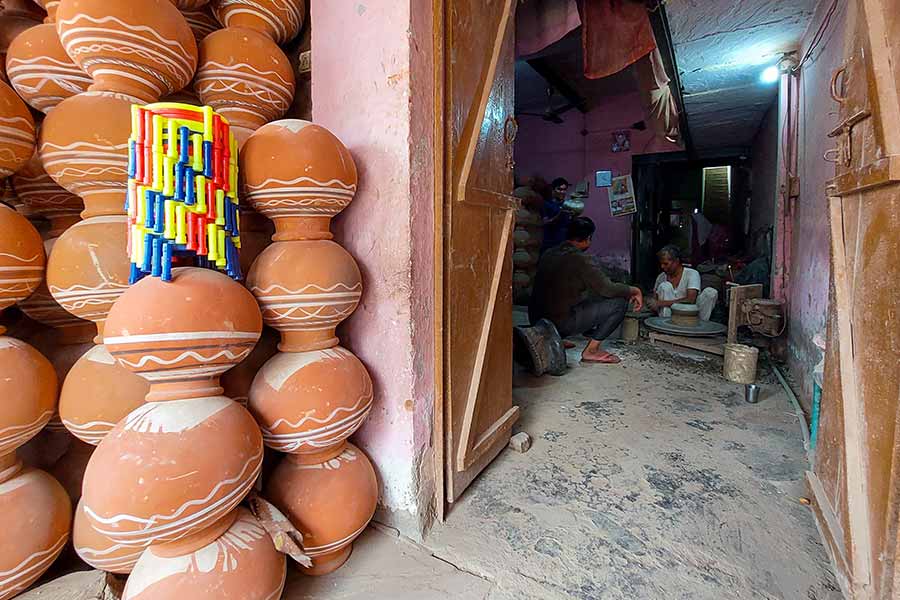
Beyond making earthen items, the colony is also known for its decorated pots, with some shops not only designing but also repairing minor damages.
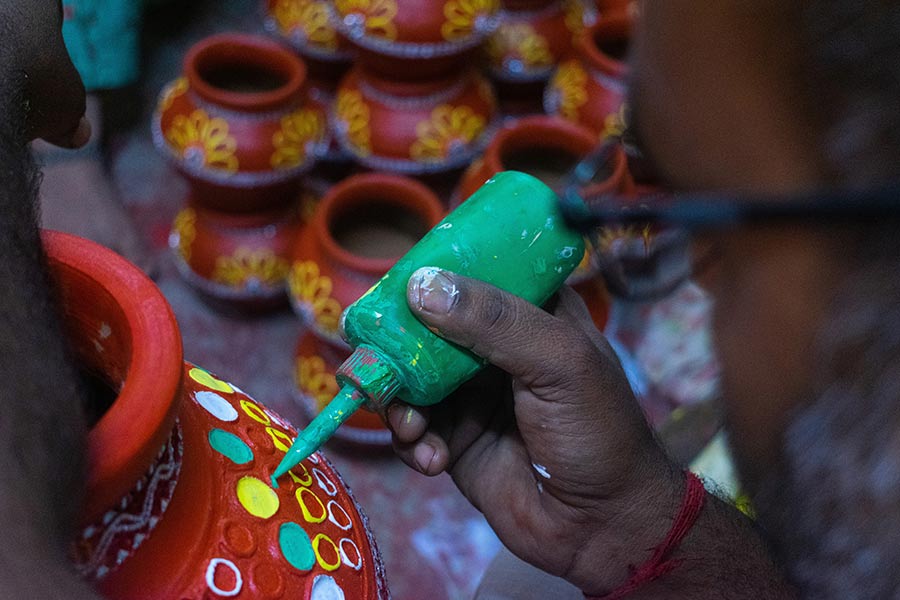
Moni Handicrafts, run by Naresh, creates and sells decorated earthenware across India, a craft his family has practised for over 40 years.
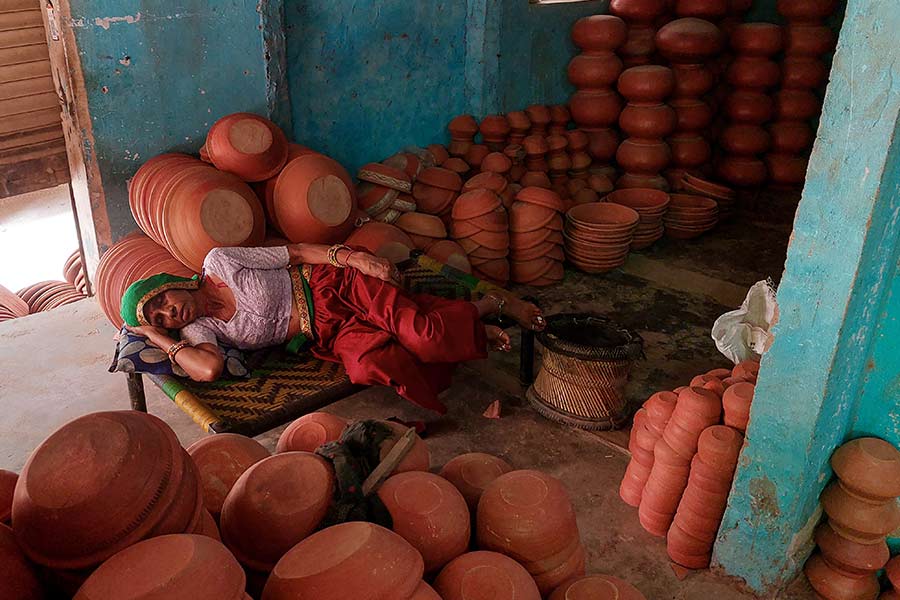
Similarly, Premvati, who has been living in the colony as a tenant for 15 years, repairs and sells water pots priced between Rs 200 and 250.
Despite being a peaceful place, the colony sparks concerns over kiln smoke contributing to air pollution.
Inder Kumar, a wholesale dhuni and kalash maker who has lived there for over 15 years, said, “Bhatta ke dhue ke kaaran police kaam karne mein rok lagati hai (due to the smoke emission from the kiln, police sometimes ask us to stop work for some days)” adding that despite these challenges, pottery remains a matter of pride for the community.