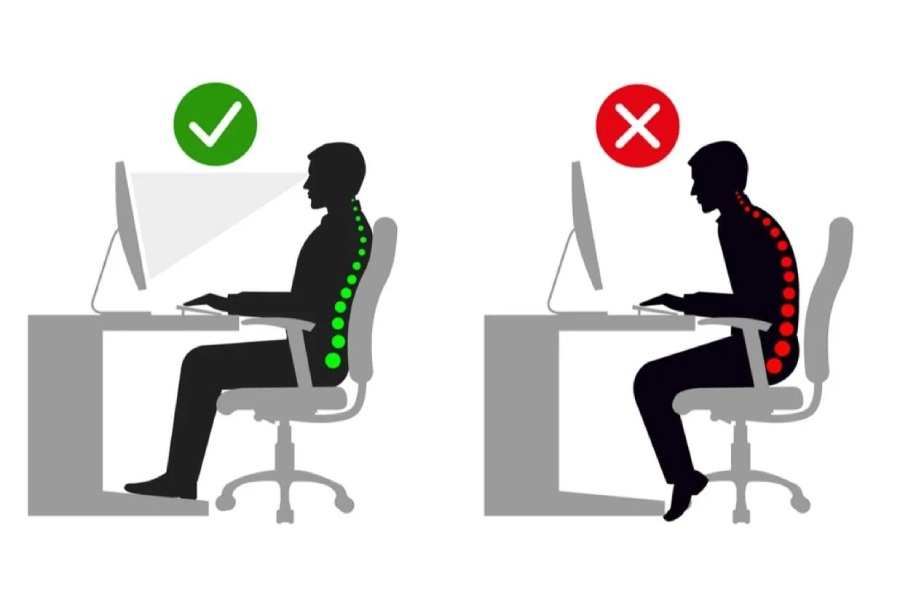
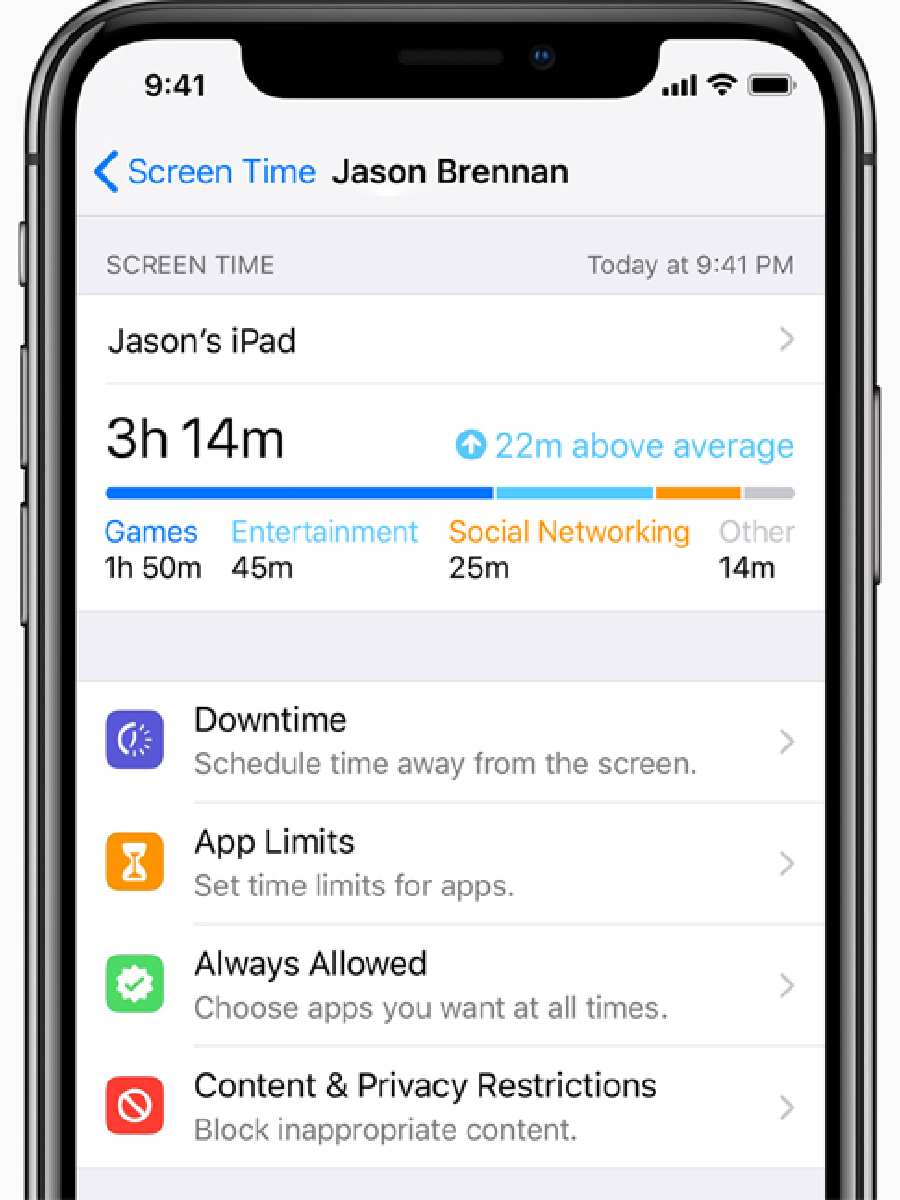
Sit straight, sit for fewer hours and reduce screen time — this is a simple advice doctors offer at physiotherapy sessions and neurologist visits. But in the age of digital dependency, the rules are easier stated than followed.
Kolkata doctors have flagged a steep rise in cervical spine and lumbar problems, citing fast degeneration of the back and neck muscles among young adults.
Keeping screens — smartphones, tabs, and computers — at bay helps. But is it feasible?
From adjusting the viewing angle to sitting positions, there are various ways one can address their discomfort and reverse the damage done.
But if the stiffness in your neck is accompanied by lightheadedness and unbearable pain, you must consult a doctor first.
Getting the right chair
Ishan Dey, a 30-year-old entrepreneur, says maintaining good posture can be an expensive affair.
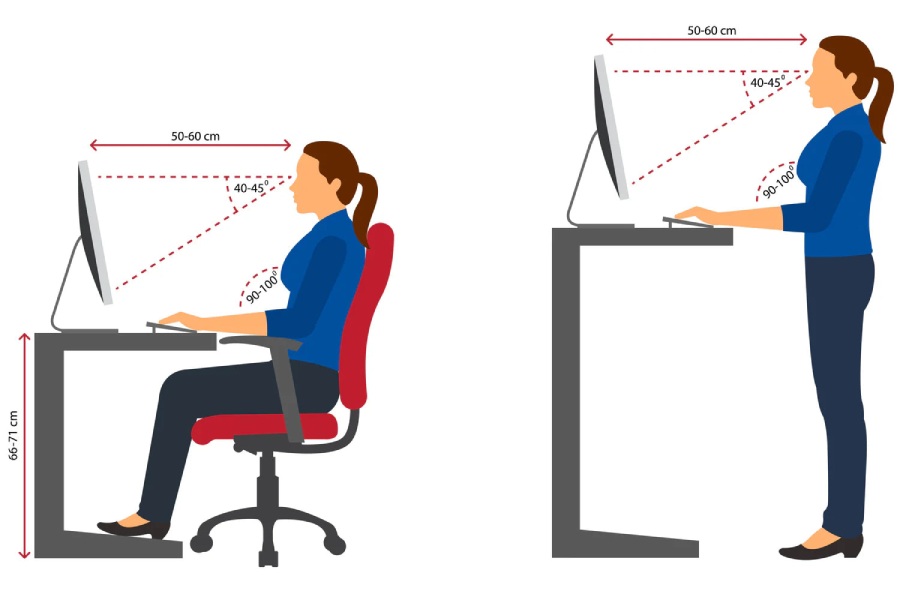
“A good chair with lumbar support can easily cost between eight to fifteen thousand rupees. I use a standing desk that can be adjusted to the user’s height. That has helped me in maintaining a good posture,” said Dey.
The 20-20-20 rule
Ayan Chakraborty, a software engineer, has had lumbar problems working long hours in front of a screen. His hack is a 20-20-20 rule.
“My workplace has a 20-20-20 rule. 20 minutes of screen time must be followed by a 20-second break, with the user blinking 20 times. This releases the stiffness, and helps me deal with long-term working schedules,” says Chakraborty.
Doctors advise precaution
Dr Rakesh Rajput, director and HOD, Orthopaedics, CK Birla Hospitals, Kolkata, says correct posture, regular breaks, screen positioning at eye level, and strengthening exercises are essential to prevent long-term damage.
“When we stoop forward or keep the neck bent for long periods while using smartphones, laptops, or tablets, the load on the cervical spine increases significantly. In a neutral position, the head weighs about 4-5 kg, but as the neck bends forward, this load multiplies several times, putting excessive strain on muscles, ligaments, and spinal discs,” says Rajput.
When is it alarming
Over time, bad posture leads to muscle fatigue, chronic neck and shoulder pain, stiffness, and headaches.
“Prolonged poor posture can also accelerate disc degeneration, cause nerve compression, and contribute to long-term spinal problems such as cervical spondylosis. What is concerning is that these issues are now being seen in much younger individuals,” adds Rajput.
Finding the root cause is important
Dr Ashutosh Mukherjee, radiologist and internal medicine specialist practising at Sahid Khudiram Bose Hospital in Belgharia, says he has come across many patients who suffer from chronic pain, particularly on neck and shoulders, and it’s due to screen placement.
“The goal is to sit with your head erect and shoulders back, looking straight at the screen. Using a slanted mount protects you from extending your head and neck backwards and lifting your chin to see a screen that is too high,” says Mukherjee.
How exercise helps
According to Rajput, exercises aimed at strengthening neck, back, and shoulder muscles can help. But it is important to follow professional advice and not rely on YouTube videos. Some exercises may cause more harm than good.