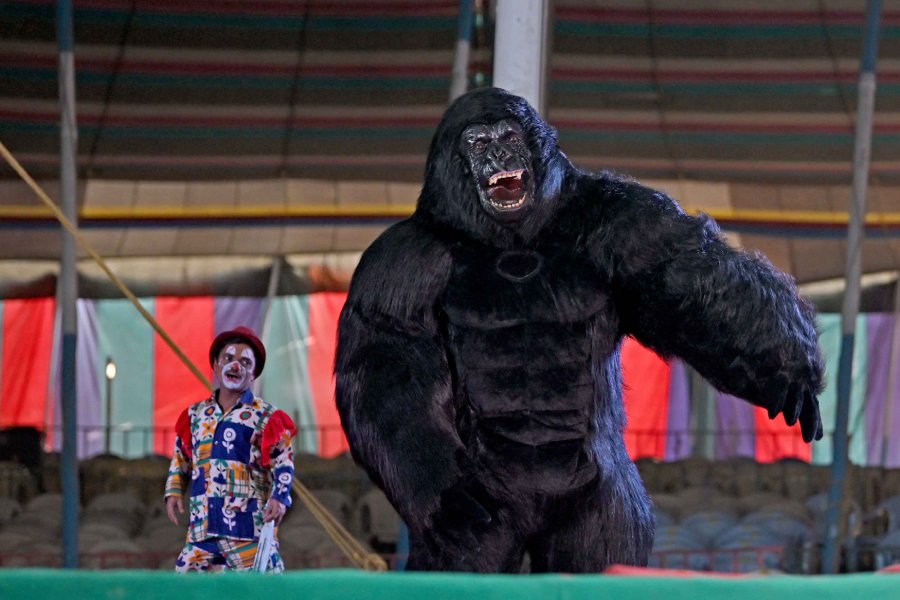
When two performers, dressed as a panda and a gorilla, entered the ring at Ajanta Circus, it felt intentional. Almost like a response to the ban on animals in such shows.
As the two costumed performers imitated the animals’ moves on stage with exaggerated theatrics, the loudest reaction came not from adults, but from children — the same Gen Alpha who shall never know the old school charm of circuses.
Without any background roaring sounds or leaping through hoops of fire, their presence proved that the circus culture still finds ways to refamiliarise the youth of today with the magic of the past.
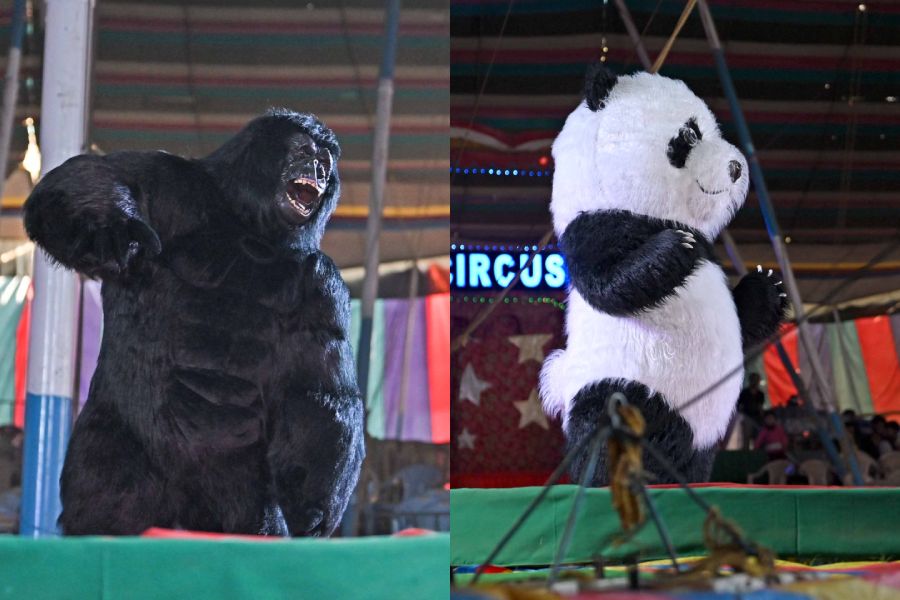
Performers took on the guise of a gorilla and a panda to offer a taste of the old circus to the kids of today
The decision to introduce this brief act this year was not a direct response to India’s ban on animal performances, but a conscious choice to bridge a generational gap.
Ajanta Circus director Rajiv Armand Alexander took a trip down memory lane and recalled the kind of acts the previous generations have grown up watching.
The use of performers dressing up as animals, he said, is a way of giving children a reason to visit and relate to the stories their parents must have told them about the circus of their time.
“We used to see tigers, lions, elephants and horses. But what about today’s kids? They will relate to the clown and the biker acts only,” Alexander, 31, said, adding that children are the most excited when the panda and the gorilla performers step into the ring.

Rajiv Armand Alexander, director of Ajanta Circus
Circuses in India began facing a ban on wildlife acts as early as 1991, when the Environment Ministry banned the exhibition of bears, monkeys, tigers, panthers and dogs. In 1998, the ban was extended to lions. Everything changed in 2018, when a fresh directive phased out all wild animals, including elephants.
“Elephants were confiscated, then horses, dogs and birds,” Alexander said. “It was a very big blow.”
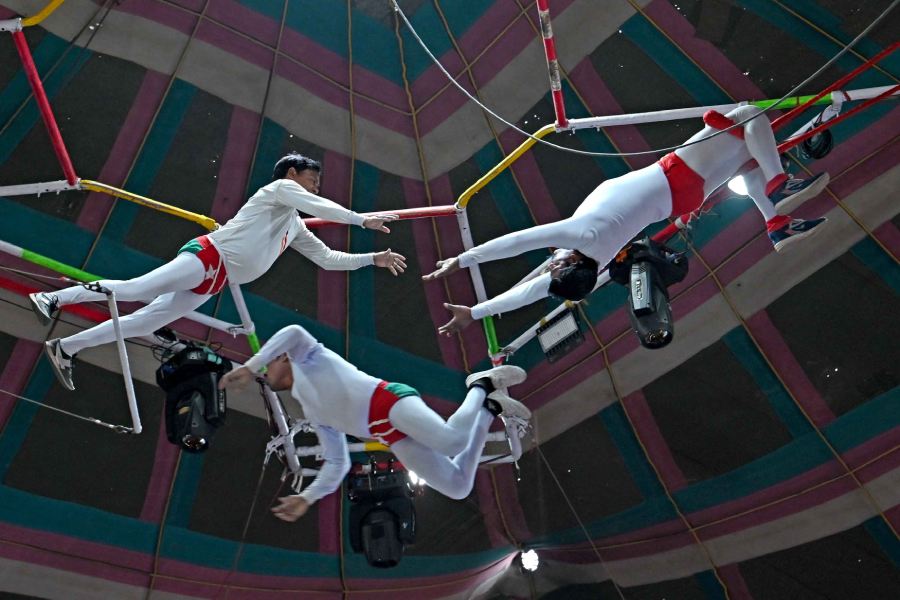
The disappearance of animals compelled circuses to rethink new spectacles to keep the spirit alive. The biggest travelling circus in Eastern India, Ajanta, decided to expand its roster of performers beyond India.
Over the years, troupes from Vietnam, Ukraine, Russia, Mexico, Africa and other countries have worked with Ajanta, putting up shows that are more skill-based, rather than spectacle. “That was a replacement and that's how we're still adapting. But it's still declining,” Alexander added.

Performers from Africa, Mongolia and Ethiopia regaled circus-goers with their acts
Currently, more than 40 artistes are travelling with the circus, including a group of foreign performers.
There was a time when winters meant three things for Kolkatans: picnic, zoo and circus. And the number of people visiting the circus in 2026 tells us that the culture isn’t dead yet.
As Ajanta Circus returned to Park Circus Maidan after more than a decade, the tent now holds over 5,000 seats. Weekend performances draw between 2,000 and 5,000 people per show.
“That’s why we have such a big tent,” the director said. “So people can relax and still get a good view.”

Nuns from the Missionaries of Charity engrossed during a show at Ajanta Circus
The challenges, however, are not from space crunches or audience numbers. It is from the easy-to-consume digital entertainment that is always on the fingertips.
“People are so into their phones and reels,” Alexander lamented. “What you see on a screen has many takes. In a circus, there are no retakes. Everything happens right in front of your eyes.”
In order to reconnect with younger audiences, the circus has begun collaborating with social media influencers, hoping to remind viewers of the importance of live performances. The absence of animals, Alexander believes, has also affected the identity of circuses in general.
“The golden era was wildlife with elephants and horses. That's the old image of the circus,” Alexander said. “Now, it is carried by artistes from various parts of the world bringing in their cultures and diversity.”