If you find scribbling or doodling therapeutic, you might unknowingly be helping your mind heal.
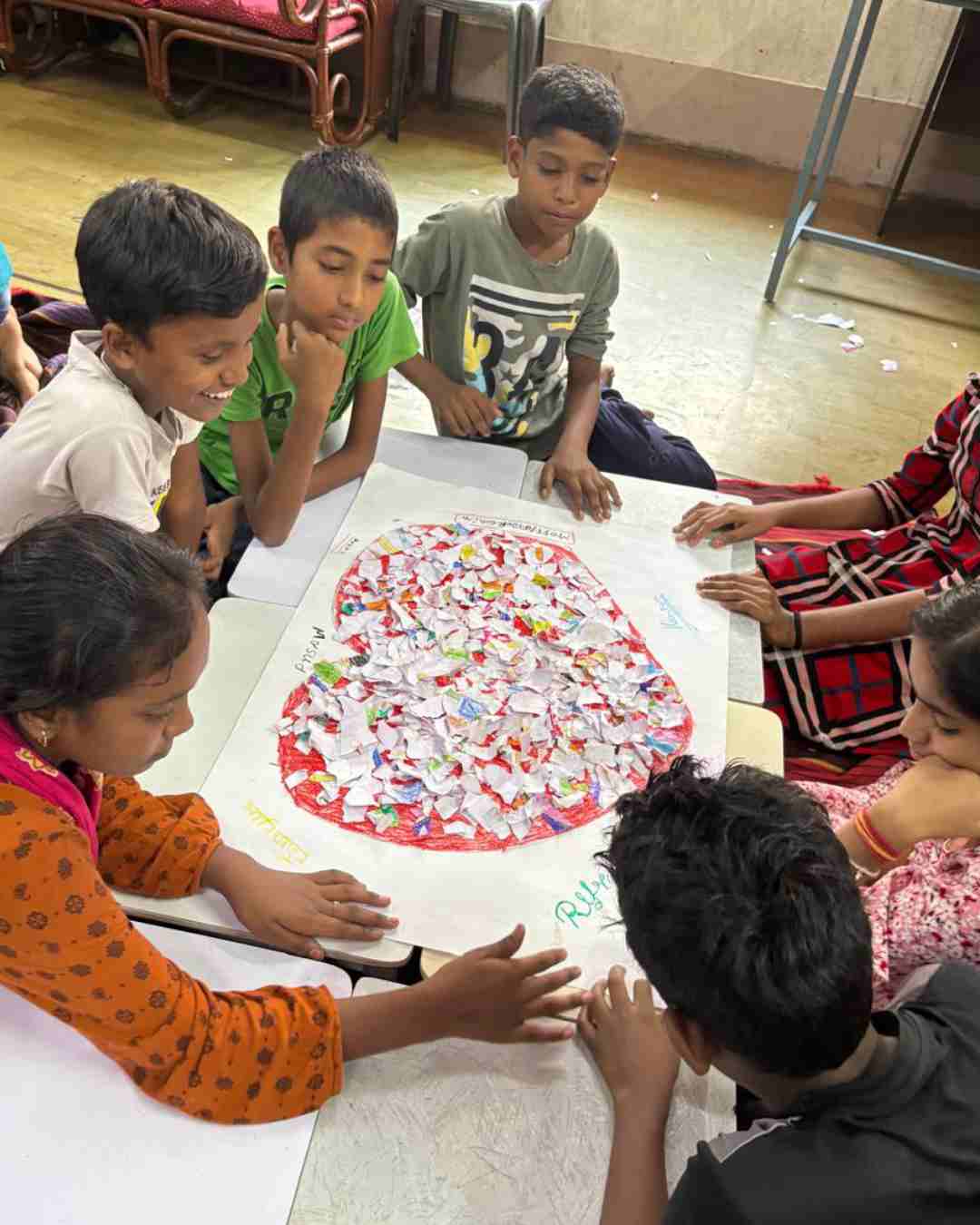
Rimpa Sarkar, a PhD in clinical psychology, explains that art therapy is a therapeutic approach in which creative activities such as drawing, painting, colouring or working with visual forms are used to help people express and understand their emotions.
The goal is not to create something beautiful or artistic, but to use the creative process as a way to explore thoughts and feelings that may be difficult to put into words.
This does not mean art therapy is more or less effective than traditional ‘talk therapy’ — it simply works differently. Some individuals, especially children or people who struggle to verbalise emotions, may benefit more from expressive methods like art. In many cases, art therapy is used alongside talk therapy.
Sourced by the correspondent
Madhuja Banerjee, a practising art therapist, traced the history of the technique. She explained that the term was coined by British artist Adrian Hill and the technique began gaining attention in the US after World War II, when soldiers were seen finding solace in painting.
Banerjee added that in therapeutic psychology there are assessment tools such as the person-tree-house method, where clients are asked to draw a person, a tree and a house. By analysing how these figures are drawn — their structure, placement and details — therapists can gain insights into a person’s emotional state.
However, while art therapy can assist in diagnosing a problem, it is not a cure in itself.
My Kolkata has curated a few simple activities that can help you explore the calming effects of creative expression at home.
Tracing melting ice
Content creator Riya suggests a creative exercise using ice and colours. Place ice on paper and trace its movement with a paintbrush as it melts, letting your mind focus on the swirling patterns while worries slowly fade away.
Explaining how this works, Sarkar said, “Sometimes people may not consciously know what they are feeling, but when they start drawing or creating something, those feelings begin to surface. The activity also engages sensory and emotional areas of the brain, which helps people slow down, regulate their nervous system, and reflect on what they are experiencing.”
Scribble with your eyes closed
Another simple technique involves closing your eyes and scribbling freely on a blank sheet without aiming for perfection. Once done, open your eyes and colour the shapes that appear within the scribbles. Writer-filmmaker Tahira Kashyap has demonstrated this technique.
“Simple activities like colouring or doodling can relax the mind. Repetitive and focussed movements help the brain shift attention away from stressful thoughts and bring it into the present moment,” Sarkar explained.
Turning punched holes into patterns
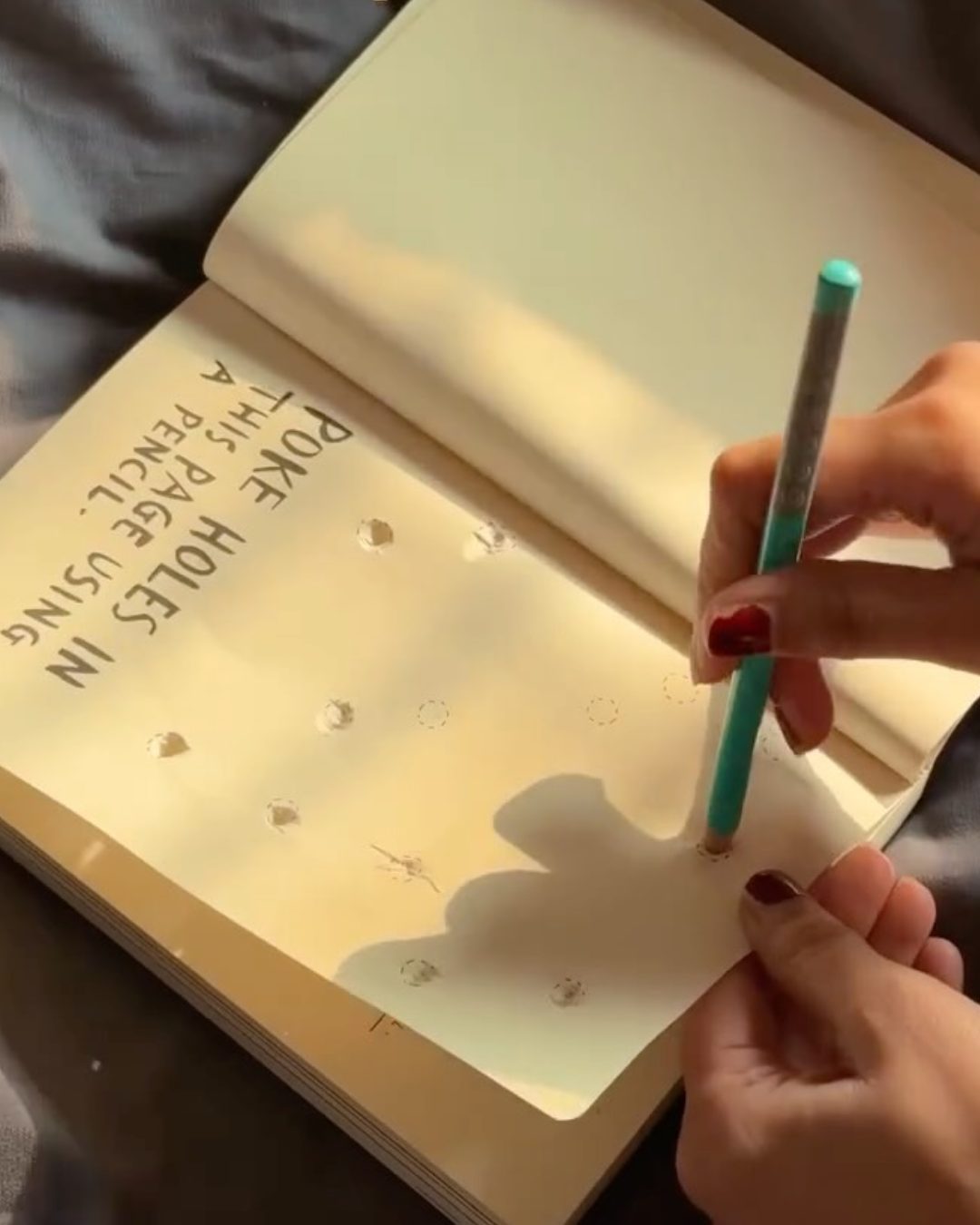
Instagram/@_sakshicreates
This technique does not necessarily involve colours. Use a pencil to punch small holes into a sheet of paper and then draw designs around them, allowing patterns to emerge naturally. Artist Sakshi demonstrates this method.
“This activates a calmer state in the nervous system and reduces mental overload. When people focus on shapes, colours, or patterns, the mind gets a break from constant thinking, which can reduce anxiety and create a sense of calm,” said Sarkar.
Quick colourful sketches
Quick art can also be calming and refreshing. Draw simple shapes or a basic landscape and fill them with vibrant colours to help the mind focus and relax. Artist Awni Chopra shares easy techniques that beginners can try.
Multi-pen drawing
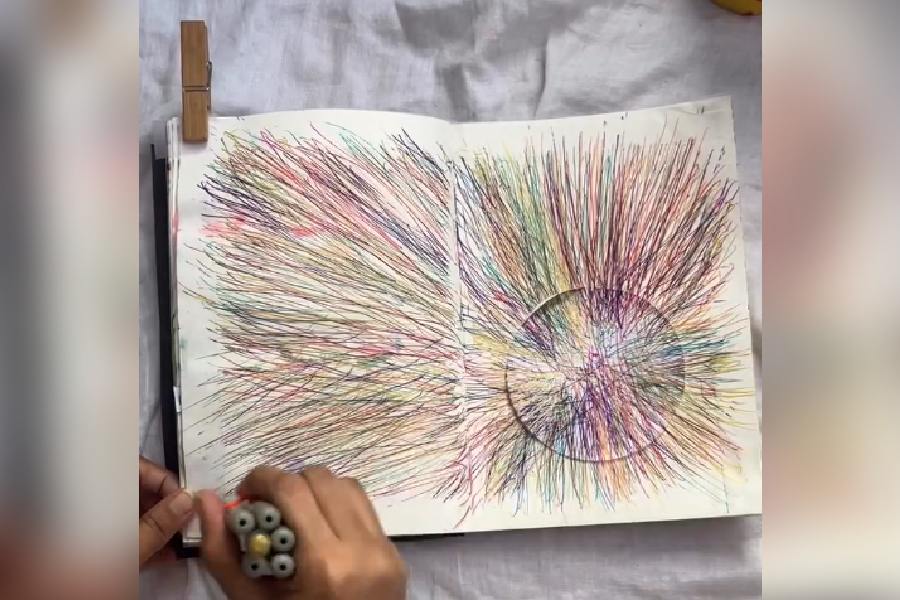
Instagram/@mind.full.of.colours
Take several pens and tie them together using an elastic band. Use them to draw lines freely across a blank sheet. To try, take cues from artist Riya. “Every colour has its own impact, every stroke has its own meaning,” said Banerjee.
Mandala making
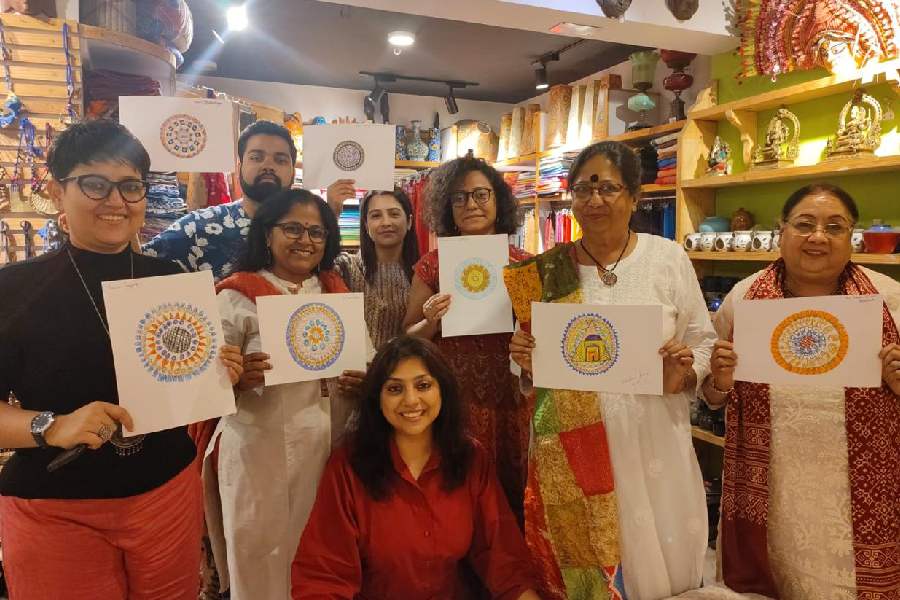
Mandala drawing can also help improve concentration and relaxation, said Banerjee. She explained that Swiss psychiatrist Carl Jung used mandalas as part of a psychotherapeutic process. Since then, mandalas have been widely used as a therapeutic tool around the world.
“Mandala is very Asian in nature — like alpona — which also aids mental relaxation,” added Banerjee. Artist Stuti shares with her followers many mandala designs for them to try.
Banerjee, however, emphasised that art therapy is ideally a guided process, and it is advisable to consult a trained expert before practising it as a therapeutic method.