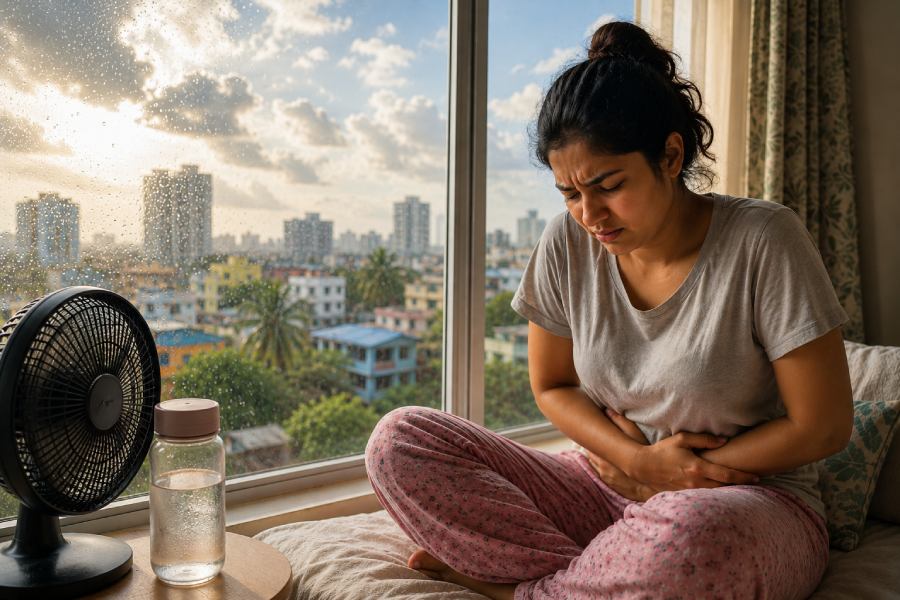
A delayed period, heavier bleeding, an unexpected early cycle or sudden cramps are often associated with hormones, stress or underlying health issues. But what if the changing weather is also playing a role?
Climate change drives more frequent heatwaves, erratic rainfall and extreme weather events. Prolonged exposure to heat, dehydration and climate-related stress may influence the body’s hormonal balance, potentially altering menstrual patterns.
But how can one tell whether a change in their cycle is linked to weather or something happening within the body?
My Kolkata spoke to city experts to learn about the merging connection and signs that can differentiate temporary environmental impacts from underlying hormonal concerns.
Can extreme heat, humidity, or weather changes affect a person’s menstrual cycle?
Menstrual cycles are controlled by the Hypothalamic-Pituitary-Ovarian (HPO) axis, the primary pathway between the brain and ovaries that regulates reproductive function and ovulation. However, if the body is exposed to heat fluctuations, the effect can directly impact the hypothalamus, disrupting its proper functioning, said Rajni Bagai, senior consultant, Gynaecology & Obstetrics, at Narayana Hospital.
She also said that heat stress may ‘theoretically raise cortisol levels’ which could alter pituitary function, thereby affecting the menstrual cycle.
How can one tell if it is the climate or underlying health problems?
Swati Mishra, a fertility specialist from the Birla Fertility & IVF, said that ‘timing and pattern is matters a great deal’.
“If the irregularity surfaces during a brutal summer stretch, there are no other accompanying symptoms, and the cycle settles back on its own within a month or two, a weather-related trigger is a reasonable explanation,” she said.
However, she highlighted that if the disruption carries on beyond two cycles, or comes alongside pain, unusual bleeding or other physical changes with the bleeding duration exceeding seven days, one must seek medical advice.
Tips for supporting reproductive health during summer and monsoon
Experts weighed in on the importance of proper hydration for maintaining a healthy menstrual cycle.
“Hydration matters more than most people realise; even mild, consistent dehydration puts enough physical stress on the body to disrupt hormonal balance over time,” Mishra said.
Bagai added, “Adequate hydration and electrolyte replacement have been shown to reduce menstrual cramps and PMS. Wearing loose clothing allows good air circulation.”
Getting adequate sleep, maintaining regular meal timings, and cutting back on intense exercise during peak heat hours can help the body cope better during these months.