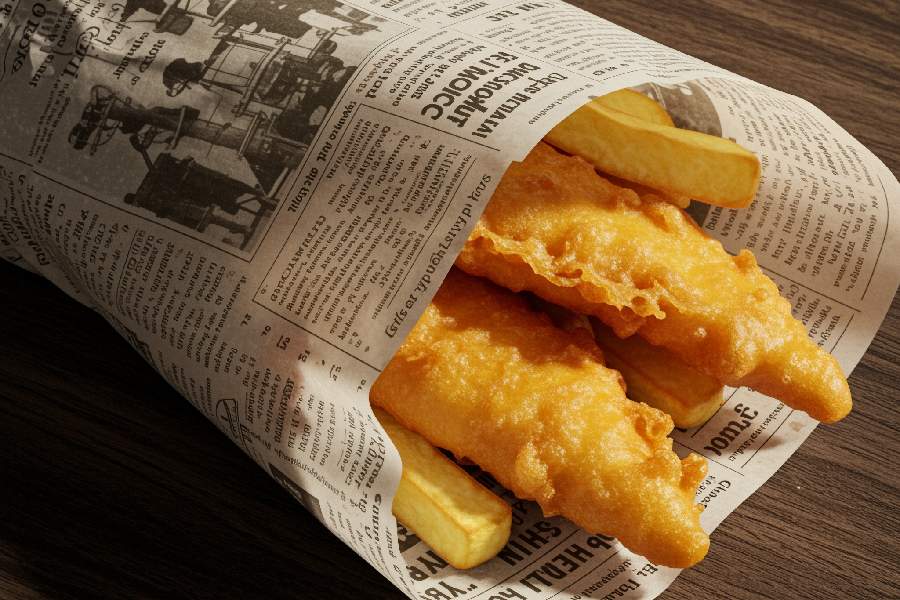
Newspapers are great for knowing the world, but are they that great for wrapping food? Experts say that newspaper wrapping can cause various health hazards, including carcinogenic risks.
The Food Safety and Standards Authority of India (FSSAI) strictly prohibits the use of newspapers for wrapping, serving, or packing food.
“Wrapping food in newspapers is an unhealthy practice and the consumption of such food is injurious to health even if the food has been cooked hygienically,” according to the official guidelines of the FSSAI.
“Indians are being slowly poisoned due to newspapers being widely used as food packaging material by small hotels, vendors, and also in homes instead of absorbent paper,” the FSSAI adds.
Newspaper ink contains heavy metals, toxic dyes and bioactive chemicals. When the ink comes into contact with warm or oily food, these chemicals easily transfer into your meal, says Dr Ashutosh Mukherjee, general physician at Zenith Super Specialist Hospital.
“Printing inks contain heavy metals (like lead), binders, and hazardous pigments. When placed in contact with hot or greasy food, these chemicals easily leach directly into the meal,” he says.
“This can lead to stomach upset and severe stomach pain. Food cooked in a clean setup can be spoiled because the wrapping was in a newspaper.”
Dr Sraboni Mukherjee, chief dietitian at Fortis Hospital Anandapur, says that repeated exposure to newspaper-wrapped food can be dangerous.
“Newspapers can also carry contaminants from handling, transportation, and storage, making them unhygienic for food packaging. Children, pregnant women, and individuals with weakened immunity are particularly vulnerable. It is advisable to use only food-grade paper, containers, or packaging materials for storing and serving food,” she says.
Some newspapers are also made from recycled materials, which can carry additional metallic residues and mineral oils that are toxic when ingested.
Chronic ingestion of newspaper ink components can lead to major complications, including organ damage (kidney/liver), cardiovascular issues, and an increased risk of cancer, doctors advise.