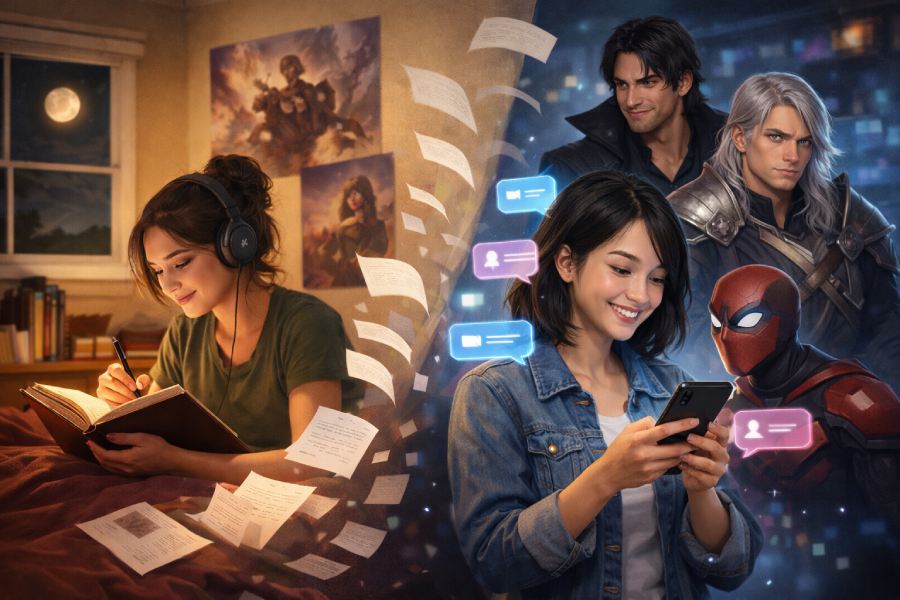
For many late millennials and older Gen Zs, being part of a fandom meant falling down endless rabbit holes of fanfiction after finishing a book, anime or TV show. Platforms like Wattpad and FanFiction.net became playful escapes where fans went beyond fictional universes, rewrote endings and reimagined romantic storylines long after the original narrative had concluded.
Today, however, the fandom experience looks a bit different.
In this day and age, where social media and artificial intelligence dominate, it has become more interactive and immediate rather than long-form and reflective.
Many younger fans are now turning to AI-powered platforms where they can chat with bot versions of their favourite characters to get one step closer to the fictional worlds they love.
The rise of tools like ChatGPT, Instagram’s AI chat studio and dedicated apps such as Character.AI has made these conversations possible.
Although the love for fictional worlds hasn’t changed, the way fans engage with them has evolved, transitioning from the written word to real-time messages that feel almost as if they’re coming straight from the characters themselves. But why?
Sites like Fanfiction.net and Wattpad were the go-to places for fans in the early 2000s. Shutterstock
More interactive, immediate and immersive
For Aishi Chatterjee, a media executive based in Kolkata, AI character chats feel like a natural extension of her favourite fandoms rather than a replacement for them.
“I started using character bots mostly out of curiosity,” the 24-year-old said.
Being already active in several fandom spaces, Aishi found that platforms like Character.AI make interactions feel more immediate. Instead of passively consuming stories, she could directly engage with characters in real time — an act that felt “novel and emotionally-stimulating”.
Despite the growing popularity of chatbots for an interactive fandom experience, Aishi still values traditional fanfiction.
“Fanfiction feels more intentional and crafted,” she explained, while acknowledging that AI chats offer instant interaction and emotional feedback.
The appeal lies in that immersion and immediacy. During stressful times, Aishi said interacting with AI character bots can feel like a “low pressure way to unwind or feel understood”. However, this is not an effort to replace real human connection.

From reading fanfics to chatting with AI versions of K-pop idols, we have come a long way. Shutterstock
Instantly filling the void after a show ends
The reason behind the pull toward fan fiction in any form comes from the feeling of emptiness after finishing a story that hit the right chords.
Jyotirmoy Chatterjee, a Kolkata-based luxury gemstone sourcing strategist at a heritage jewellery house, began experimenting with character chats during his first year of English honours after finishing the supernatural drama The Vampire Diaries.
“When your favourite show ends, there’s this void, numbness and emptiness,” he said.
Chatting with AI versions of his favourite characters like Damon Salvatore and Katherine Pierce allowed him to feel like he was still part of that fictional universe. He had similar experiences after finishing shows like Game of Thrones and House of the Dragon.
While the texts feel robotic at times, the chatbots still offer fans with a possibility that can take away the pain after emotionally-ravaging moments.
“It helps me feel mentally satisfied as I change the outcome albeit hypothetically,” Jyotirmoy said.

‘The Vampire Diaries’ was a huge craze for Gen Zs growing up IMDb
AI roleplay to curb loneliness
An avid fan of Batman, Ahana Bagchi, a student of Comparative Literature, never thought she would take to a different form of fanfiction. Until her friend discovered the application Character.AI on Google PlayStore and recommended it to her.
The 19-year-old initially started creating ridiculous roleplay scenarios involving Bruce Wayne where she assumed the role of Robin.
With curiosity reaching a new height, Ahana went down the rabbit hole and created a chat with her favourite Hogwarts professor Remus Lupin. That experience, however, quickly turned uncomfortable.
“When I sent him a ‘hi’, the reply that came was ‘hello, do you believe in soulmates?’” Ahana said, adding that she immediately stopped the conversation. “That’s when I stopped and deleted everything.”
Ahana pointed out that many users seem to treat these bots as romantic partners. She also believes that there are practical factors behind this shift from fanfiction websites. Many of her friends, she said, complain about accessing Wattpad in India, compelling them to try out newer apps.
But how did we get here?
According to Aditya Ganguly, founder of Omoi Studios, a creative technology collective in New Delhi with several team members from Kolkata, the idea of talking to characters in a chat format isn’t entirely new.
For the longest time, people have found the idea of a digital tool talking back to them as fascinating.
“Eliza was a computer program in the ’60s resembling the modern day chat-based experience,” Ganguly said.
“For a while, prior to AI, chat-based dating simulation games used to be popular (Choices, Episodes, Lovelinks), that allowed you more control into the narrative and a sense of agency and roleplay. These games were a preface to what Character.AI does today,” Ganguly explained.
Taking a stroll down memory lane, Ganguly recalled his earliest experience of such interaction.
“The first instalment of the game series Lifeline involved a character lost in space texting you for help. You didn't need to text it again and again, it would send you notifications as it went on about its life, ask you for help and talk to you. This made you feel that you both existed together without it feeling transactional,” he said.
Ganguly believes the future of AI companions is more ambient, where the companions offer an impression that they exist with the fans rather than merely replying to prompts. Just like the real world where interactions are about shared activities.
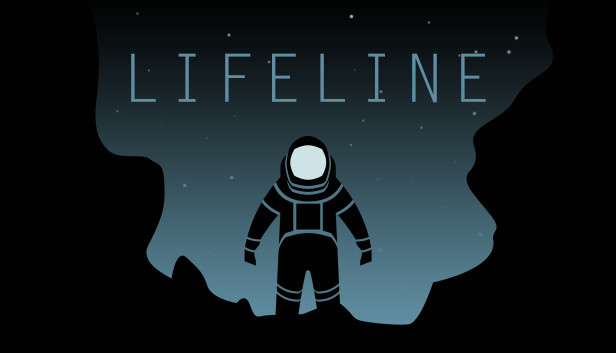
‘Lifeline’ was a 2015 video game developed by Three Minute Games
Why AI companionship feels appealing
Clinical psychologist Rimpa Sarkar believes that the attraction to AI characters goes beyond simple fandom interaction.
“AI character chats offer instant emotional engagement,” she explains.
The characters respond immediately, mirror emotions and offer validation — something that can feel comforting for a generation navigating loneliness, emotional fatigue, shorter attention spans and constant stimulation,” Sarkar said.
Reading fanfiction demands more time, patience and imagination. “Readers and writers reflect, interpret and create alternate realities,” Sarkar said. “That nurtures creativity and a richer inner world.”
In contrast, Sarkar noted, chatbot interactions place users in a more reactive and instant feedback-driven mental state. The emotional experience is faster, more immersive, but less reflective.
While they can provide companionship and stress relief, Sarkar warned that excessive reliance has the potential to reduce tolerance for the ambiguity and emotional effort required for real-world relationships.