As Kolkata bids adieu to the winter, we begin packing up our favourite woollens. Nestled among them are OG pashmina shawls — the final touch to our winter treasure trove.
Picked up from the annual trade fairs, inherited from mother’s trousseaus or brought during a winter trip in the north, pashmina carries stories — but one question often lingers: Are we trusting the right wool? Do we actually possess an authentic pashmina?
One often finds it difficult to differentiate between authentic wool and semi-synthetic or fake materials — often ending up paying a hefty price for the wrong product.
So, before showing off your pashmina shawl at family gatherings or office parties, here’s a quick guide you can follow to identify an authentic pashmina shawl, avoiding any embarrassment.
Pashmina shawls are crafted from the ‘ultra-fine undercoat’ of the Changthangi goat wool, originating in Ladakh, said Kolkata-based fashion designer Sujata Biswas.
She said, “Renowned for its warmth, softness and lightweight quality, this wool is harvested from the thick undercoat of these goats that survive extreme temperatures. Other wools simply don’t offer the same warmth.”
Sujata said one must ask the shawl sellers to produce authentic documents like government-authorised certificates or GI tags attached to the shawls before making any deal with them.
“When you’re spending anywhere between Rs 30,000 and Rs 40,000, one should never compromise on authenticity,” Sujata said.
Kashmiri shawl seller Fayaz Ahmed, who has a shop in Howrah, said that pashmina shawls are very lightweight. He said, “A pashmina shawl made from real pashmina wool can be as light as 180g. And a pashmina stole can even weigh as little as 95g.”
Sujata also advised performing a burn test to check the authenticity of pashmina wool. “A pashmina burn test involves burning a single thread from the fabric to check for authenticity: genuine pashmina burns slowly like a natural fibre, and turns into a fine, powdery ash. Whereas, fakes often melt, smell like plastic, and form hard beads. You can perform this test with a single woollen thread taken out from the shawl,” she said.
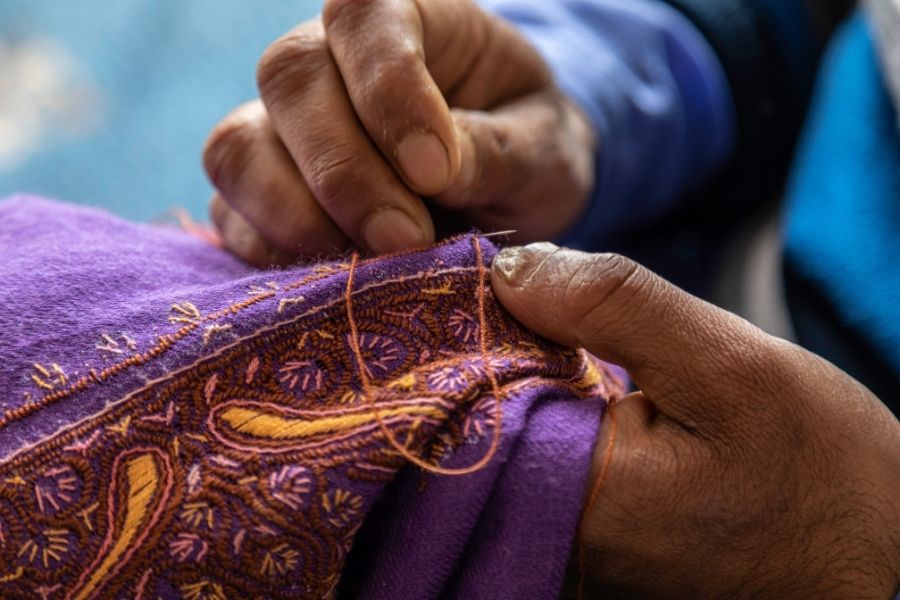
Lastly, one must keep this in mind that pashmina shawls are handwoven. Due to their delicate texture, pashmina shawls can't be produced in a machine like any other woollens, that generally gives a refined finish. So the next time a seller insists on an ‘authentic pashmina’ with a perfectly refined, machine-like finish priced in the thousands, you know exactly what to check — and when to walk away.