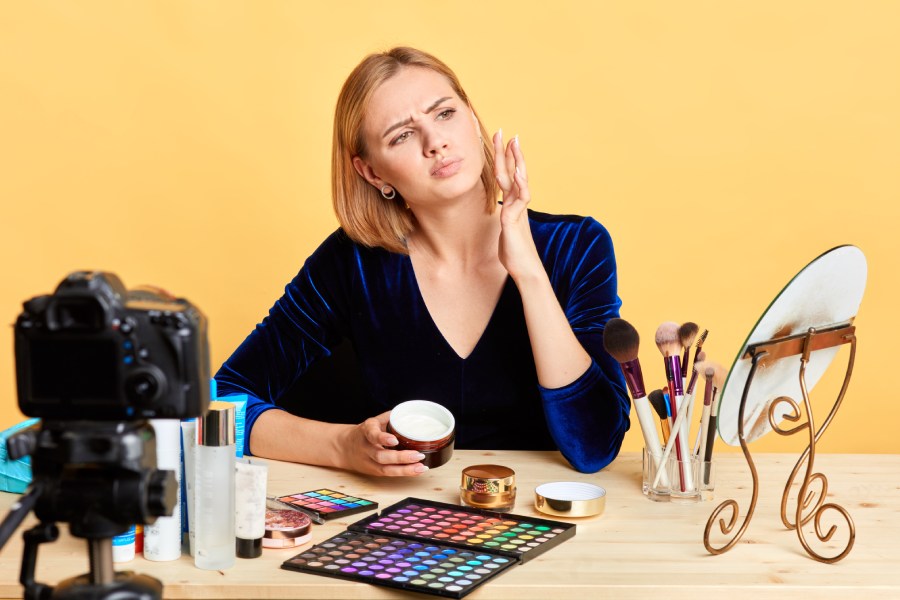
Forgot your blush? Borrow your nude lip shade from your purse. Out of make-up remover? Grab a wipe. No Kajal remover? Why not apply toothpaste to wipe it off quickly? Social media’s beauty-verse is full of unconventional or bizarre hacks that promise quick fixes with whatever’s lying around.
Many viral hacks are based on product multitasking. For instance, using lipsticks as blush or eyeshadow is a common practice. And such a trick might actually work if used in a pinch.
Since several makeup products share similar bases, certain substitutions are unlikely to cause any harm when used sparingly. However, while some of these hacks may seem clever and convenient, experts say not all of them are safe for your skin or eyes.
In fact, many viral hacks raise more concern. A widely shared tip suggests using petroleum jelly instead of mascara to give lashes a glossy finish. While it may create shine, Kolkata-based makeup artist Bridgette Jones pointed out, “It doesn’t provide structure or hold, and can easily migrate into the eyes, causing discomfort.”
Similarly, using regular face wipes instead of makeup-removing wipes might feel convenient in rushed moments, but it is worth knowing that these wipes are not designed for facial skin and may contain alcohol or cleansing agents that can irritate or dry out the skin over time.
Other hacks include using razors to shave facial hair, applying white glue to remove blackheads, using toothpaste to cure pimples or remove kajal, curling eyelashes with heating curlers and using unproven kitchen items as face masks.
Jones said, “Such hacks seem appealing for people with limited time to take care of their wellness. They are quick, creative and often useful in last-minute situations and are alright to apply to occasional emergencies. However, such practices will compromise your skin, and one cannot afford to experiment blindly.”
Products specifically designed for the face are tested for pH balance and skin compatibility, something that household items and other substitutes are not guaranteed to provide.
“Most viral DIY beauty hacks can harm the skin because their ingredients, used in crude or high concentrations, disrupt the skin barrier,” says dermatologist Nisha Agarwal of Woodlands Multispeciality Hospital. She notes that this can lead to irritation, rashes, contact dermatitis and long-term photosensitivity, making skin thin and sensitive.
She adds that certain kitchen ingredients like tomato, lemon or rice water may be used occasionally if the skin barrier is healthy, but not frequently. “Even natural ingredients contain active acids, so overuse can damage the skin instead of helping it,” she cautions.
A clever shortcut might save you time, but when it comes to your skin, prescribed choices will always outlast quick fixes.