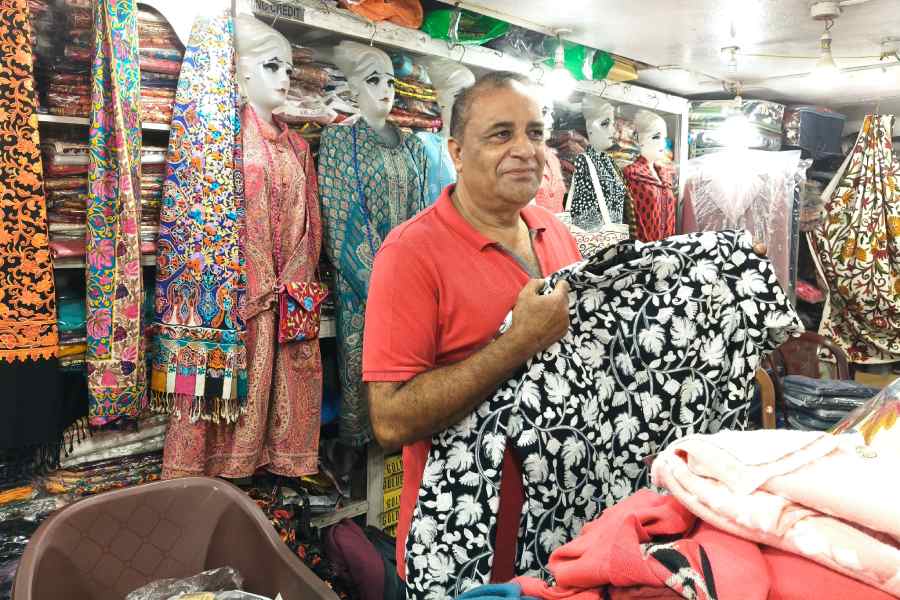
“Bengal is home to me, as much as Kashmir is,” says 50-year-old Fayaz Ahmed from Hazratbal, Srinagar, while arranging pashmina shawls in his dainty little shop, situated at the corner of a street in Howrah.
While the evening settles in and people rush back to their homes, Fayaz keeps waiting for someone, anyone, to pause and turn back at the tapestry of multi-coloured Kashmiri woollens lined up against the wall of his tiny shop.
Winters, during our childhoods, were fragmented memories of big joys found at the cusp of ordinary habits. From peeling oranges while soaking up the sun on our verandah to pulling out favourite woollens, these were some of the quintessential rituals we followed growing up.
Warm clothes play an important role on chilly days — be it covering our bodies to protect ourselves from the cold or simply accenting our style statement. However, when we felt the shortage of ‘that one sweater’ or ‘that one shawl’, we heard a faint knock on our doors. Opening it led us to a man, smiling, waiting to show his large collection of woollens, travelled all the way from Kashmir.
For decades, the arrival of Kashmiri ‘shawlwalas’ has quietly marked the onset of winter in West Bengal, especially in cities like Kolkata and Howrah. Balancing bundles of sweaters, pherans, saris, mufflers and shawls on their cycles, they move through neighbourhoods with an ease born of familiarity — stopping at houses where doors open even before a knock is heard.
Their visits are never hurried; they sit, lay out their wares with practiced care, exchange a few words, remember faces, preferences, and even old bargains.
Over the years, these shawlwalas have become more than seasonal sellers – they are witnesses to our winters, returning each year with the cold, carrying stories of their homes woven into wool, sometimes also placing a few walnuts on a child’s hands.
Mohammed Rafiq Wani, a 43-year-old resident of Eidgah, Srinagar, told My Kolkata that it’s been over 25 years since he has been coming to Howrah to sell his woollens. “There are hardships, yes. Leaving home is never easy. But this is how I earn my living. Every winter, I travel all the way from Kashmir and sell shawls. This is my work,” he said.
“I have my own car back in Kashmir; however, here [Howrah] I sell sweaters on my cycle,” Rafiq added with a laugh.
Zahoor Ahmed Bhat from Srinagar said that he arrives in Kolkata around early November and stays till March. “I’ve been coming to Kolkata for over 17 years now. Customers usually demand saris and shawls, carefully hand-crafted by the weavers of Kashmir. Bengali sellers pay more attention to details, so there's a demand for intricate artwork,” Zahoor said, who sells his products in south Kolkata.
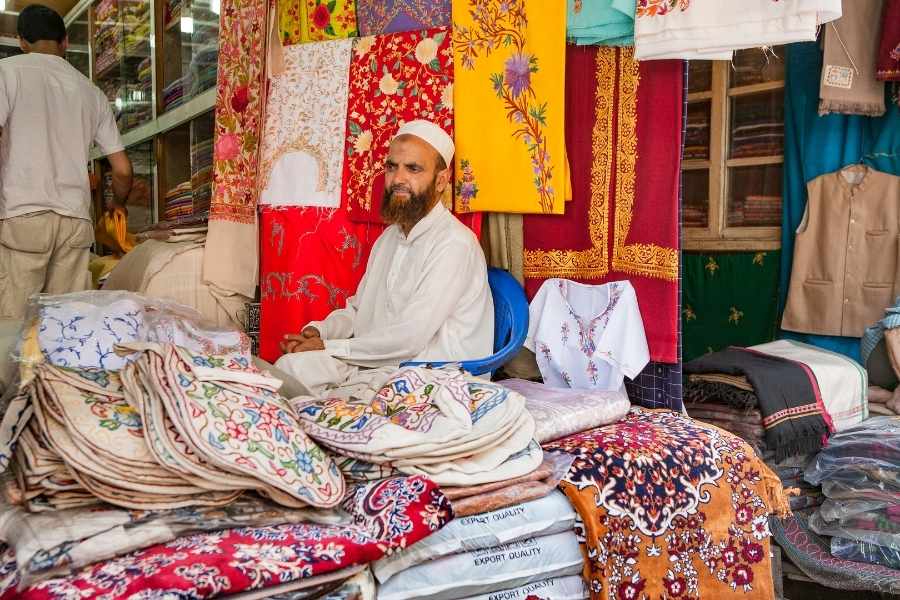
With the rise of shopping on e-commerce platforms, Kashmiri shawl merchants face dwindling demand Shutterstock
However, times have changed, and familiarity alone no longer guarantees livelihood. With the rise of shopping sprees on e-commerce platforms, Kashmiri shawl merchants face struggles in terms of demand.
Fayaz Ahmed, who has a tiny shop in Howrah, said, “With people already bagging woollens from online shopping apps way ahead of winter, we struggle to sell our products. So, yes, demand has fallen.”
On being asked whether he has any other means of income other than selling woollens, Fayaz said, “I have been coming here to West Bengal for the last 36 years. I have been running my shop for over 20 years now. Maybe the demands have dwindled, but this is our profession. I can't think of anything else beyond this.”
However, given the Pahalgam violence that shook the country this year, the question felt unavoidable. Has anything changed this winter — in the way customers behaved or business affected? But the answers were tackled swiftly. Each seller brushed off the subject, choosing instead to speak about work and familiarity.
Mohammed Rafiq Wani said he noticed no difference at all. “Nothing has changed for me,” he said. “People come, talk, buy shawls, just like they always have.”
His sentiments were echoed by Ahmed, who said, “I’ve been treated well here every year, and this time is no different.”
Another shawlwala, Zahoor Ahmed Bhat, paused briefly before answering. “Customers only look at the work, and that hasn't changed,” he signed off.