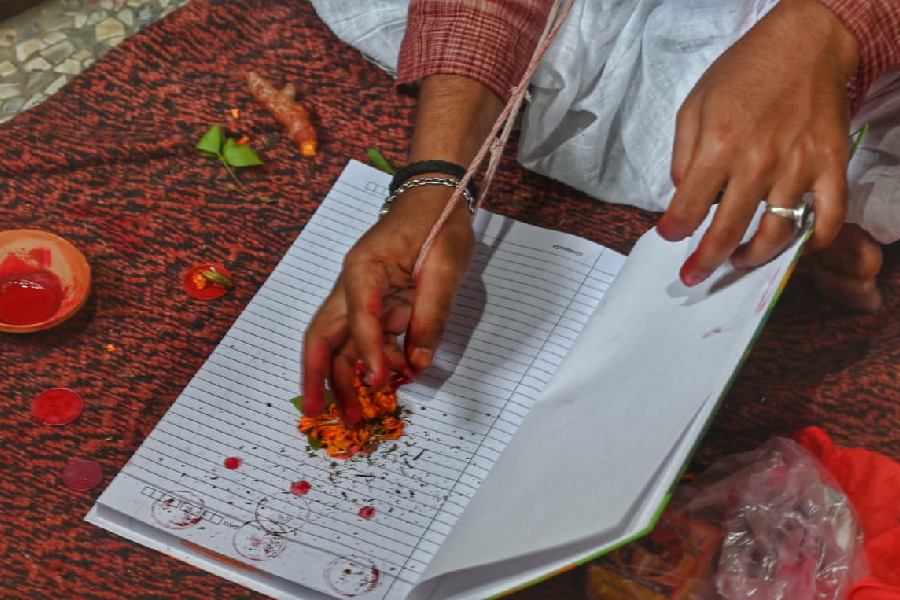
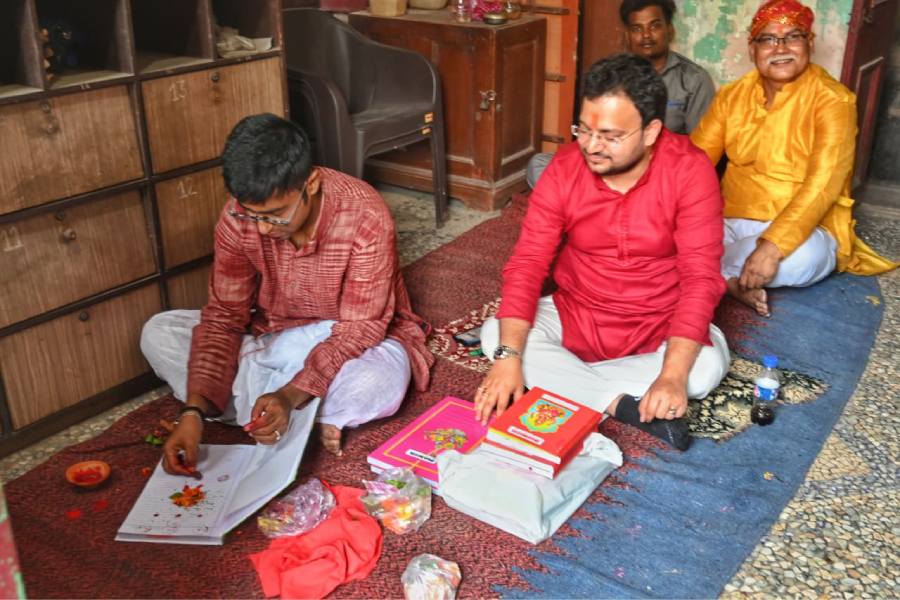
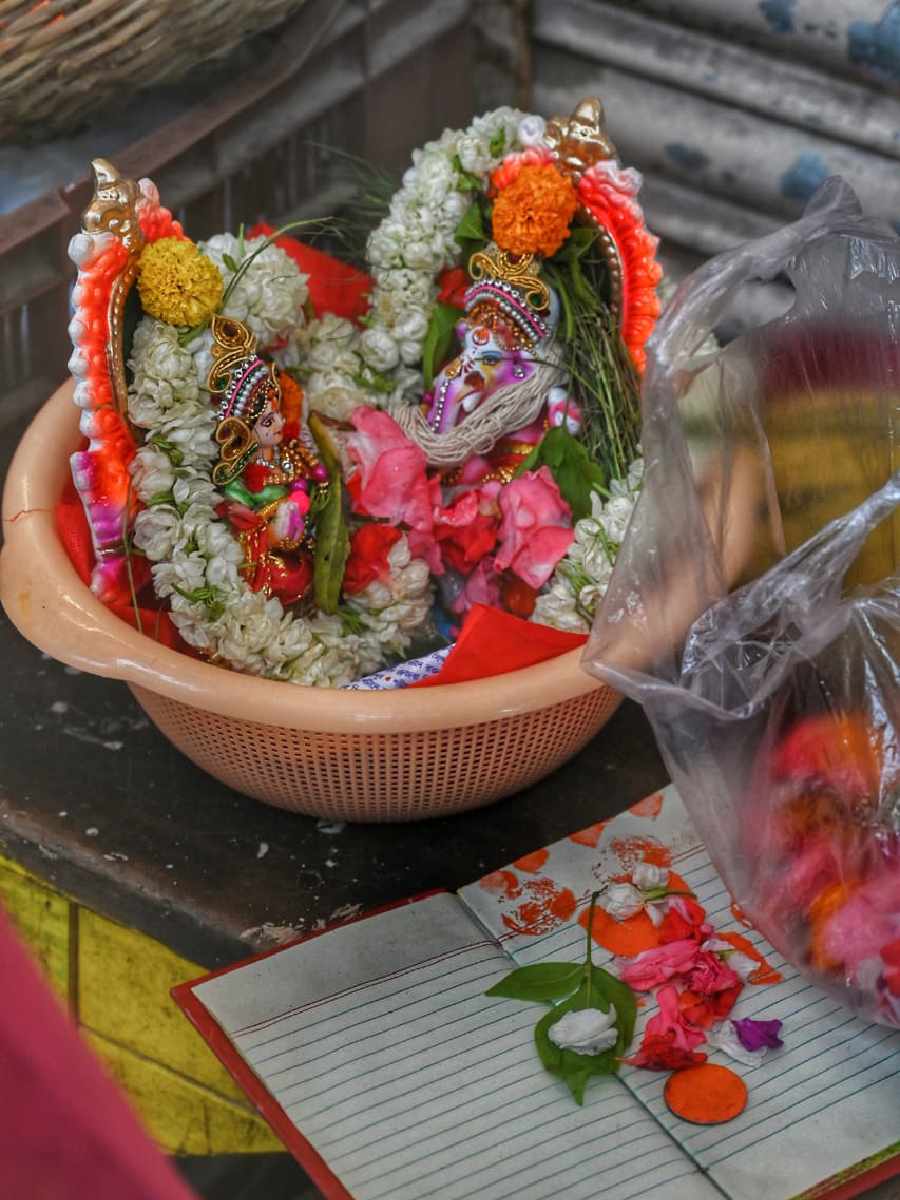
Poila Baishak, apart from the yummiest food, and new clothes and new swag, for many generations has been associated with the haal khata or the change of ledger books for shops on the occasion of the Bengali New Year.
The haal khata marks the day business owners open fresh account books, close past ledgers, and invite customers to reconcile dues.
The haal khata tradition is as old as the Hijri calendar, starting from the time of the Mughal emperor Akbar.
As the cultural significance has changed over the years, the concept of debt keeping has changed for generations as well.
“The rituals of haal khata have changed over the years. We would distribute sweets, salty crackers, and gift a Bengali calendar to all our loyal customers,” said Johnny Ghosh, the owner of a grocery store, Maa Lakshmi Bhandar, in Belgharia.
“Now it is just the calendars, that too in English,” he added.
The haal khata would also keep a record of regular customers and their dues. Nowadays, that culture is on the decline.
“I hardly visit a grocery shop to buy the essentials, even if I do it’s for emergencies only,” said Anik Dutta, a 28-year-old IT professional.
Like most people of his age group, he does most of his shopping from instant delivery apps.
While the haal khata might be diminishing due to online stores and large grocery chains, some aspects of the Bengali cultural exchange remain.
Amlan Dhar, owner of his family business, the Dhar Co jewellers in Baranagar, said there are a lot of customers old and new who maintain monthly instalments for their jewellery.
“We offer sweet packets, and calendars to all our loyal customers and buyers on Poila Baishak. While the bulk of customers are over the age of 40, newer buyers are investing in gold slowly,” said Dhar.
Dum Dum resident Surya Mukherjee, 76, said he is a regular at his local store, which maintains a haal khata.
“I visit the store in my panjabi early morning on the first day of the Bengali calendar to collect my sweets, tally all debts for the year, and start a new account in the haal khata,” said Mukherjee.
“I have been doing this since I got my job in 1974,” he added.
Yes, the haal khata may be disappearing, but it is not extinct. Yet.