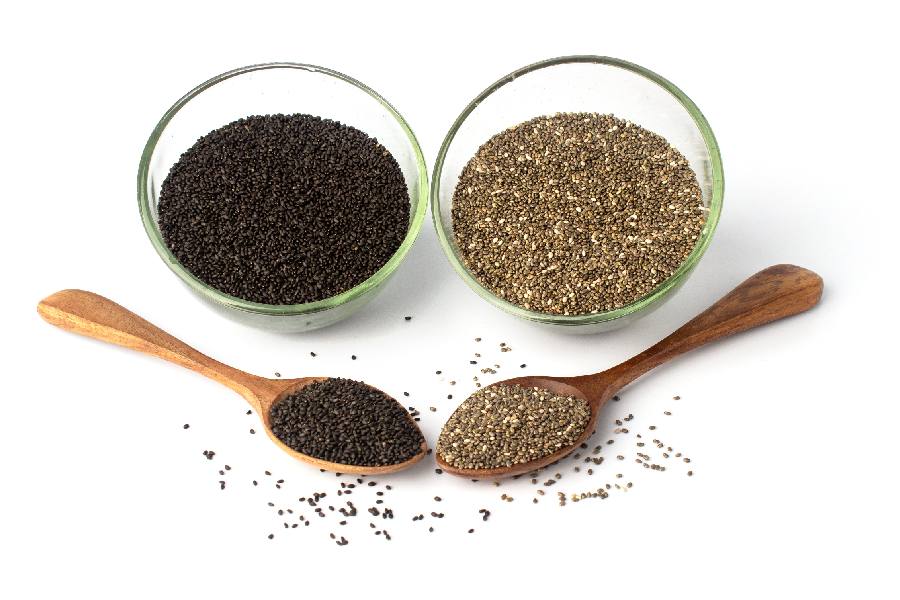
From detox waters to Instagram-worthy smoothies, chia and sabja (basil) seeds have become popular choices for those trying to lose weight. But, the real question is: Which one works better?
My Kolkata spoke to city-based experts to understand the impact of these tiny seeds on our metabolism.
According to Satavisha Basu, senior dietician at Howrah’s Narayana Hospital, both chia seeds and sabja seeds are often recommended for weight management.
“Use both for variety – chia seeds in puddings, sabja in drinks,” she said.
However, a closer look at their nutritional benefits, key differences and recommended consumption guidelines can offer clearer direction, said Aditi Biswas, a Kolkata-based nutrition writer and supervisor.
Nutritional value of chia seeds per 100g
- Calories: 486 kcal
- Protein: 16.5g
- Fat: 30.7g
- Omega-3 Fatty Acids: 17.8g
- Fibre: 34.4g
- Calcium: 631mg
- Iron: 7.7mg
- Magnesium: 335mg
Nutritional value of basil (sabja) seeds per 100 g
- Calories: 233 kcal
- Protein: 4.8g
- Fat: 4.0g
- Omega-3 Fatty Acids: Moderate
- Fibre: 37.5g
- Calcium: 280mg
- Iron: 5.3 mg
- Magnesium: 92mg
Key differences

Shutterstock
Chia and basil seeds differ notably in their soaking time, among other factors. While basil seeds are better suited for quick appetite control and body cooling, chia seeds provide sustained energy and longer-lasting nutritional benefits.
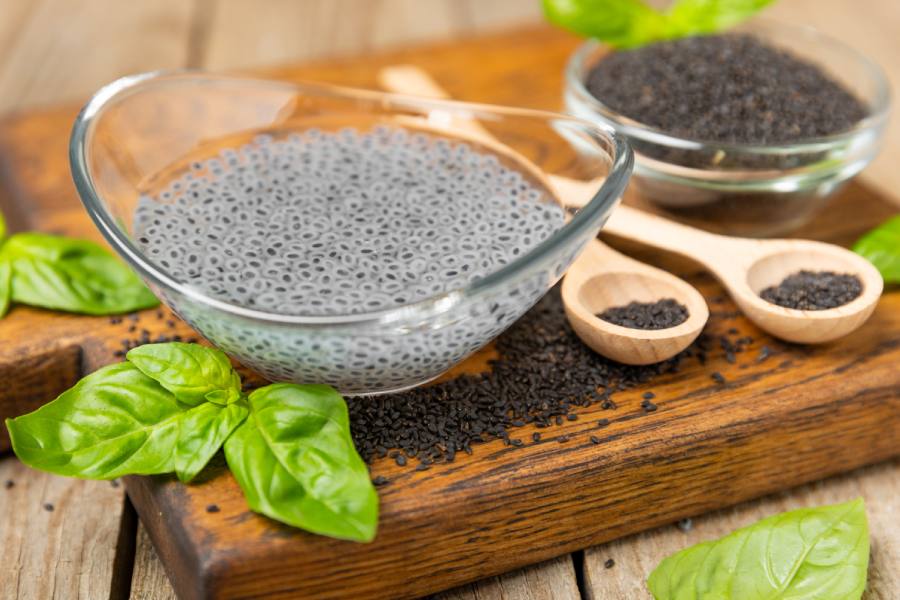
According to Biswas, chia seeds require soaking for at least two hours. Basil seeds, on the other hand, can be soaked for just a few minutes.
However, they must be fully soaked before consumption as dry seeds may pose a choking hazard. Their quick preparation makes them a convenient addition to breakfast porridges and mid-day meals.
Chia seeds provide higher protein and sustained energy. They are rich in soluble fibre, which promotes satiety and helps reduce overall calorie intake.
Basil seeds expand rapidly and are often used in low-calorie beverages such as lemon water.
This combination may aid digestion, support metabolism, and help reduce cravings. “Basil seeds may help relieve constipation, acidity, and bloating due to their gel-like fibre content,” noted Biswas.
Consumption guidelines
Shutterstock
Basil seeds should be consumed in moderation, preferably about one teaspoon in a glass of water to avoid excessive fibre intake, advised Biswas
Chia seeds are a good source of omega-3 fatty acids, which support heart and metabolic health. Their magnesium content is also beneficial for individuals monitoring their weight.
Chia seeds can be consumed daily. The recommended daily intake is 1 to 2 tablespoons (15-30 grams).
Biswas reiterated that seeds alone cannot drive weight loss. Including them in the diet is optional and should be done in moderation, depending on individual tolerance.