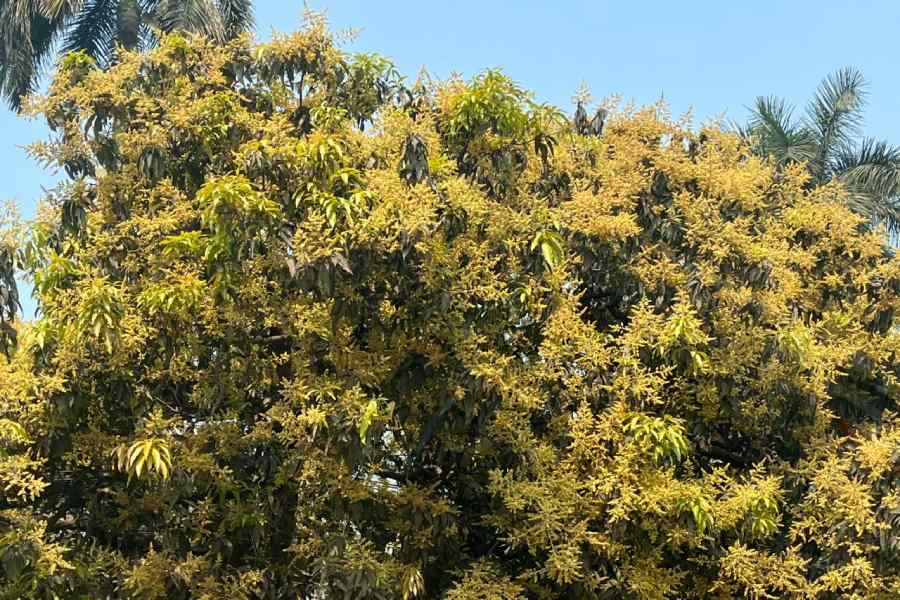
Mango trees across Kolkata are blooming with mukul, or inflorescence (the arrangement and clustering of flowers on a plant’s reproductive axis). Look at any neighbourhood tree and you will see clusters of delicate mukul.
For mango lovers, this signals hope of more flowers, which means more mangoes. But according to horticulture experts, the story of a mango begins long before it reaches you, and most flowers never become fruit.
Joydip Mandal, professor, Department of Horticulture and Post-Harvest Technology, Institute of Agriculture, Visva-Bharati, says that a tree having many inflorescences does not mean that all of them will turn into fruit. “The inflorescences, or the mukul, turning into fruit depend on various factors. Firstly, not every flower will become a fruit. Secondly, the weather conditions will also affect the fruit-bearing capacity, and then there are other factors like infections, how you take care of the plant, etc.”
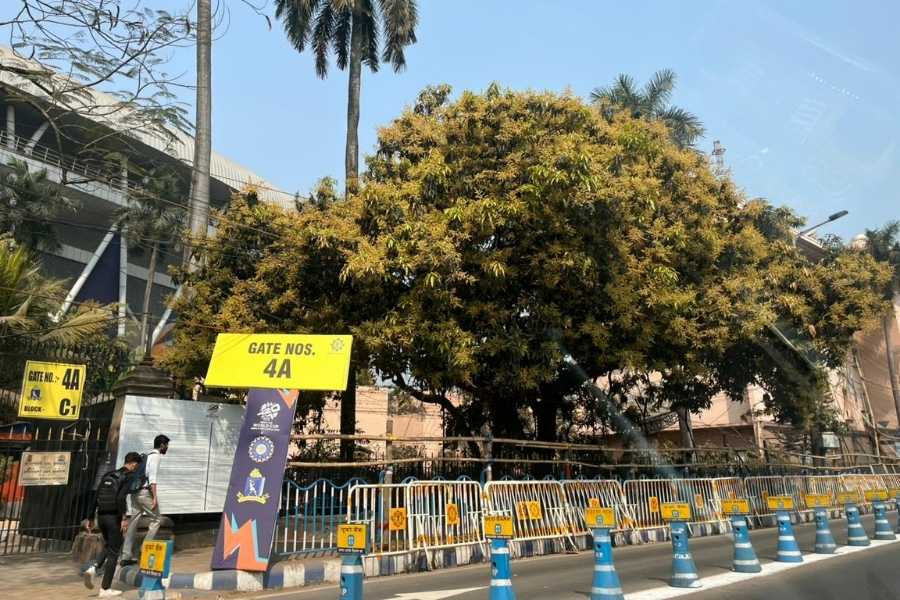
A mango tree outside Eden Gardens full of ‘mukul’
He explains that timing and climate are critical. “A dry and cooler winter from November to January aids flowering. Rains in winter and relatively warm winters promote vegetative growth, suppress flower bud initiation. As soon as the winter recedes, the mukul starts appearing.”
This year, the absence of winter rain in Kolkata has led to trees appearing heavier with inflorescence. The last recorded rainfall, in Alipore, was on November 2, 2025, and if showers arrive on February 24 as forecast, it will be the first rain in about four months. Dry conditions so far have favoured mango flowering; if the weather continues to be favourable, it will help turn the buds into fruits.
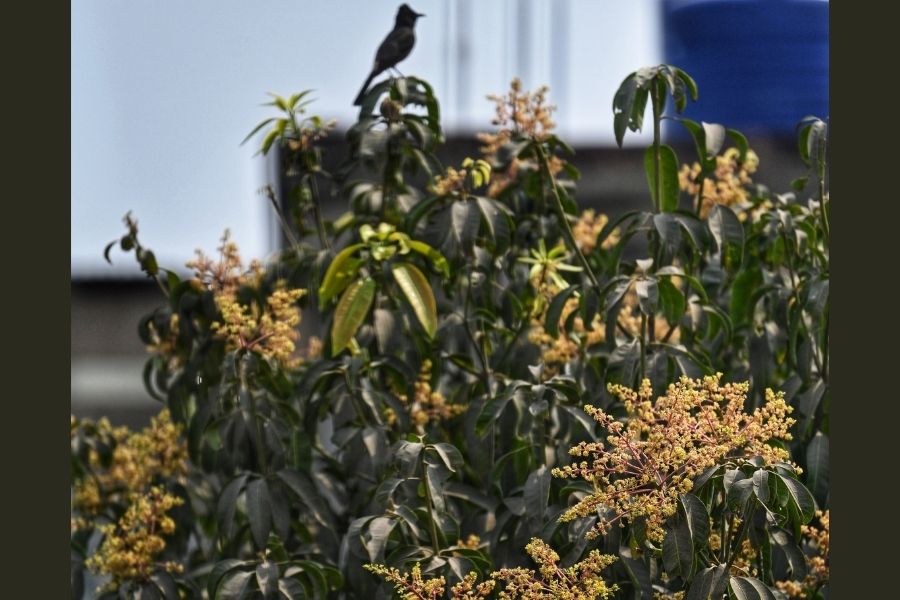
Mango cultivation and harvest depend on several environmental factors Amit Datta
“The inflorescences have two types of flowers, male and hermaphrodite flowers. The hermaphrodite flowers are responsible for bearing fruit. Arranged in large, branched clusters called panicles, each panicle can bear up to 6,000 flowers depending on the genotype. But only one per cent converts into a fruit. Cross-pollination by insects is essential for a high fruit set, as they carry pollen between flowers. Since bees don’t get enough honey from the mango flowers, the crucial pollinators are flies. Dry spring, i.e. February to March, means good insect movement, good pollination, and good fruit setting,” explained Mandal.
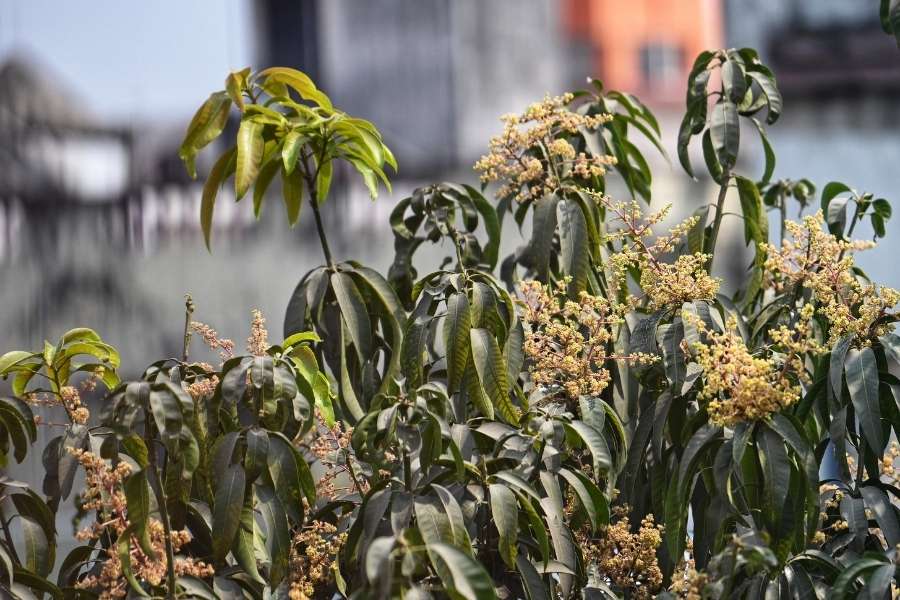
Heavy rain or storms like Kalbaishakhis can cause the tree to lose its flowers and fruits Amit Datta
He also says that rain in spring increases humidity, affects pollination, and invites diseases and insect pests.
Another key factor is the natural rhythm of the tree. “Last year was a good year for mangoes. So this year, it is supposed to be an off-year as most of our common mangoes in eastern India are biennial bearers. However, the weather conditions have supported the growth of flowers so far, igniting hope to turn this into an on-year," he added.
He also stresses that care determines outcome, too. “If you have a mango tree in your house, it has to be taken care of. Irrigation is important, but overwatering should be avoided. The tree will have to be provided with fertilisers and pesticides from time to time. It is better to know what to do and what not to do if you are expecting more fruit on the tree.”