After the East India Company cemented their foothold on India, particularly Calcutta, one of the first things they did was to erase the artisan identity of the Indian craftspeople, potters, weavers and indigenous communities to fuel their own industrial engines, and generate revenues in London markets.
Out went the villages of craftspeople and weavers, and in came the orientalised ‘art’ of India, without any real connection to the indigenous people. Doubly displaced were the santals in this colonial oppression, now the third largest scheduled tribe in India.
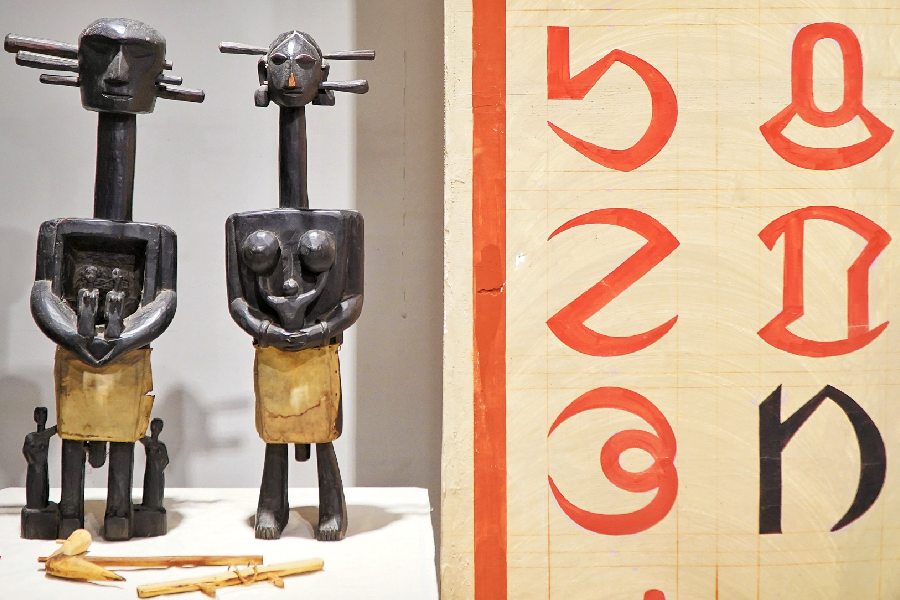
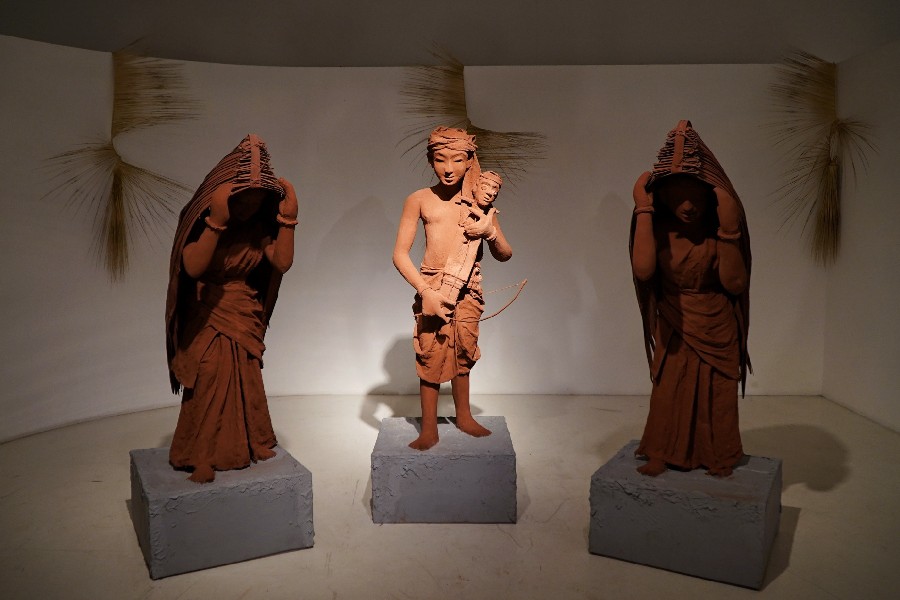
This was part of the discussion at the Kolkata Centre for Creativity (KCC), as it hosted ‘Santal Talks’, a multidisciplinary exhibition and seminar on the evolving identity of the santal community.
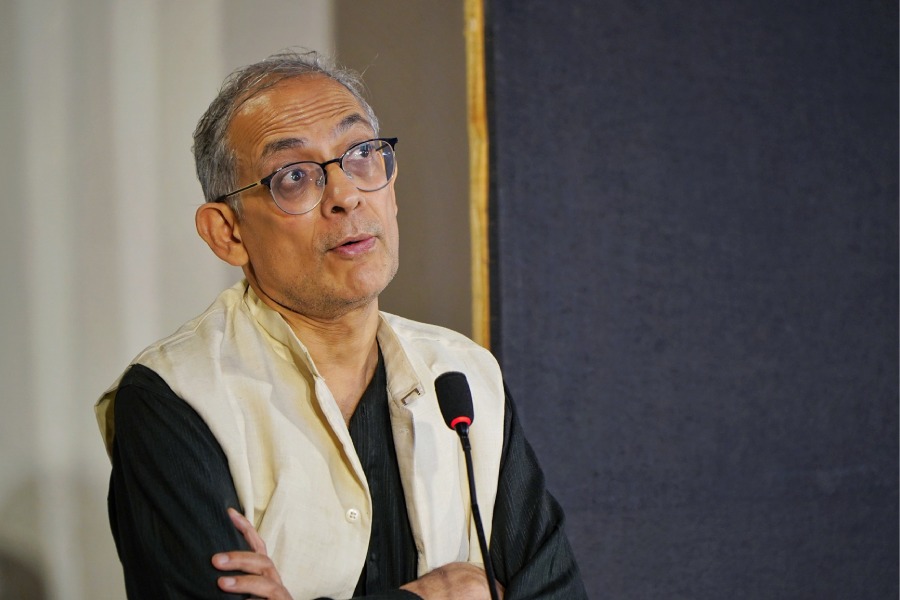
Nobel laureate, professor Abhijit Vinayak Banerjee, spoke on various knowledge systems.
“The first attempts to think about the loss of crafts in India already started in the early 19th century. There were various, often somewhat racially motivated attempts to classify these and to pin down the different cultures through their artefacts,” said Banerjee.
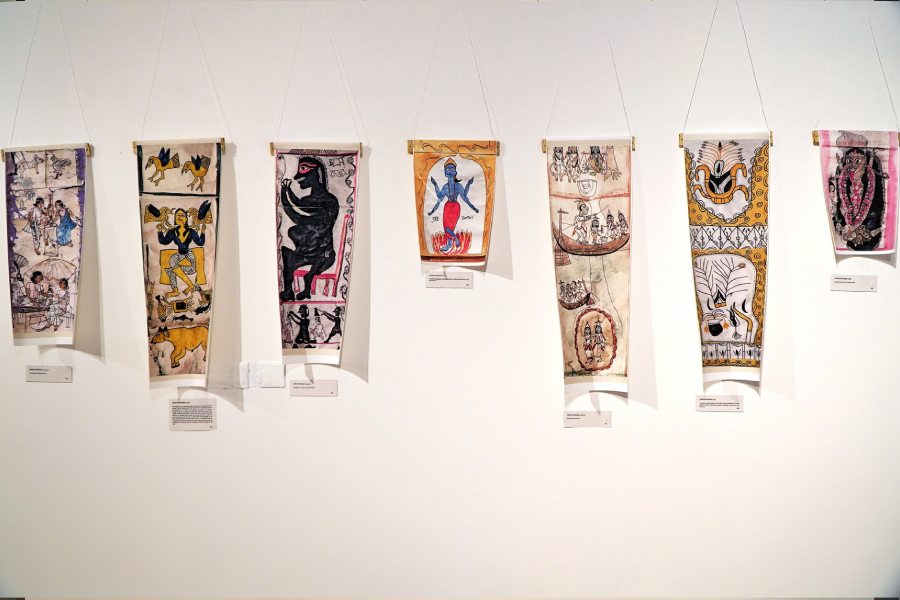
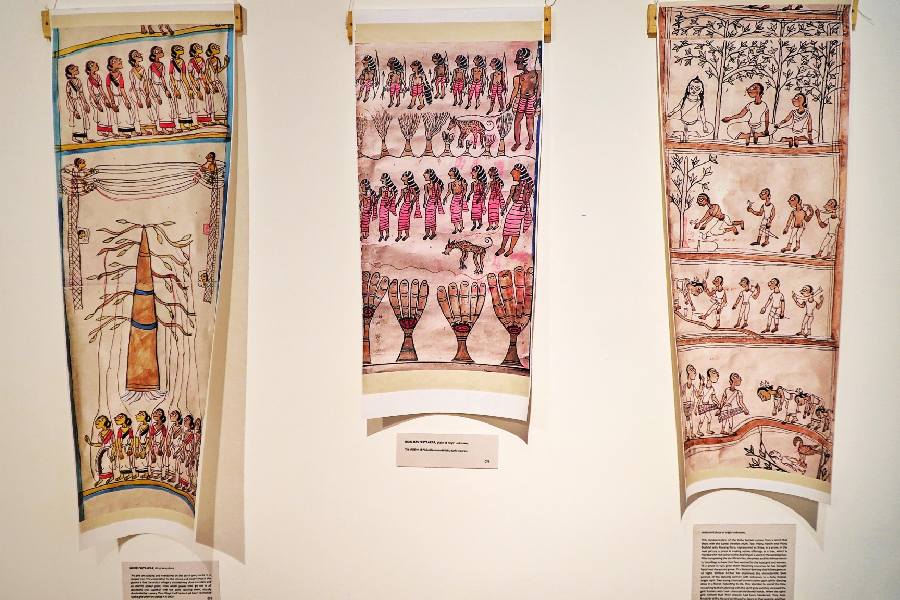
“In India, I spent some time with the patachitra artists in Orissa. One thing you realise there is that the economic survival of patachitra has been essentially abandoned. It is not meant to be something that lives in the modern world,” said Banerjee.
Like patachitra, intricate art has become more niche than mainstream. High-end brands like Prada have recently launched ‘their’ Kolhapuri, which is again, a trend appropriated.
Banerjee explained how today’s artisans and craftspeople can see the disparity in prices of craft materials, and the mark-up prices in which they sell for the elites.
“Most of the younger generation of the artisan families are not going into their family tradition. They are doing MBAs and wanting to start their own business. In Kerala, the boat makers get a hefty wage of around Rs 1,000 to Rs 1,500, yet their kids are not coming into the profession,” added Banerjee.
Banerjee observed how this trend is not just in India, citing examples of Egyptian artists.
“Street of the Khayamiya, or the tent-maker street has the same problem. Their kids do not want to go into applique, but print t-shirts,” said Banerjee.
“I know, for example, that one of India's biggest hand-made carpet makers no longer makes the highest-quality carpets they used to make because they just can't find the people who do the work. One nice side effect of that is that they're moving towards training women,” added Banerjee.
The lineage of artists is being disrupted. Santal culture has its own quirks, its own designs. Fast fashion, or rapid consumerism does not allow for that balance to be maintained.
“I interviewed over a hundred content creators. They explain one very simple thing. They have to wear different clothes every day, ‘costumes’ as they said. So they cannot afford a Jamdani. It just does not fit their fast fashion trend,” said Banerjee.
But soon, Banerjee proposes, AI will take over the little jobs that remain.
“I say that with the full weight of knowing that this is a frightening thought for all of us. A lot of jobs, less skilled jobs, will be killed,” said Banerjee.
What this means is that artists can return to their ancestral fields because that requires a human touch.
“They need to be empowered,” summed up Banerjee.