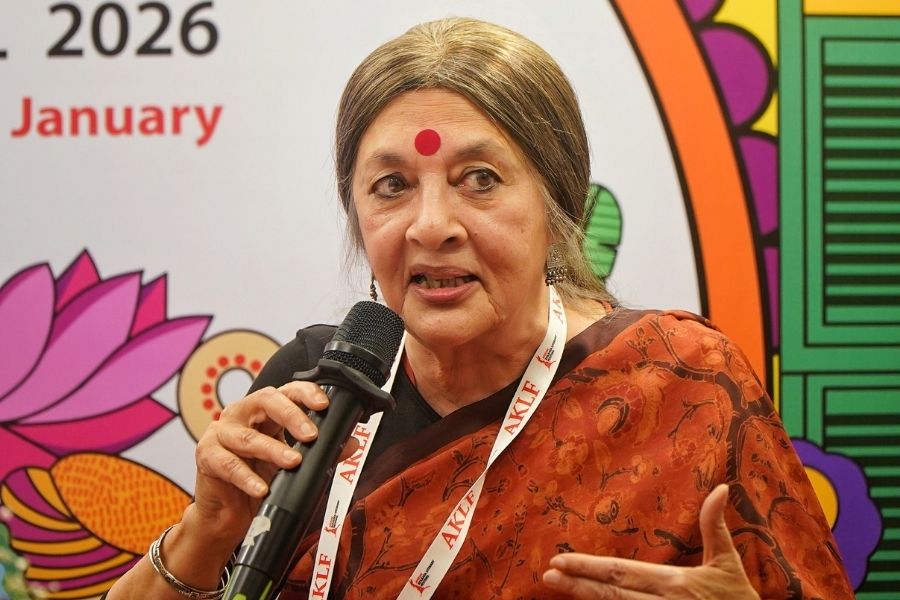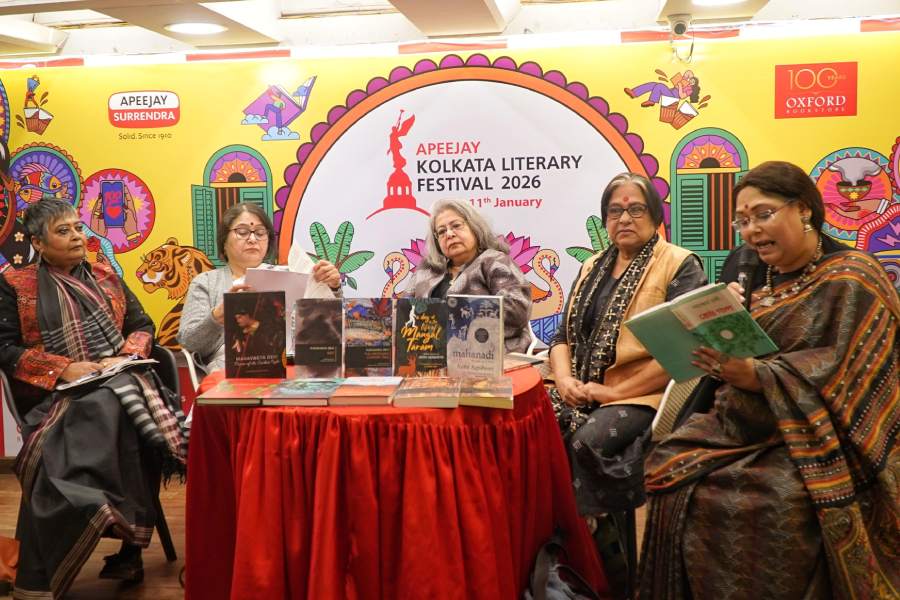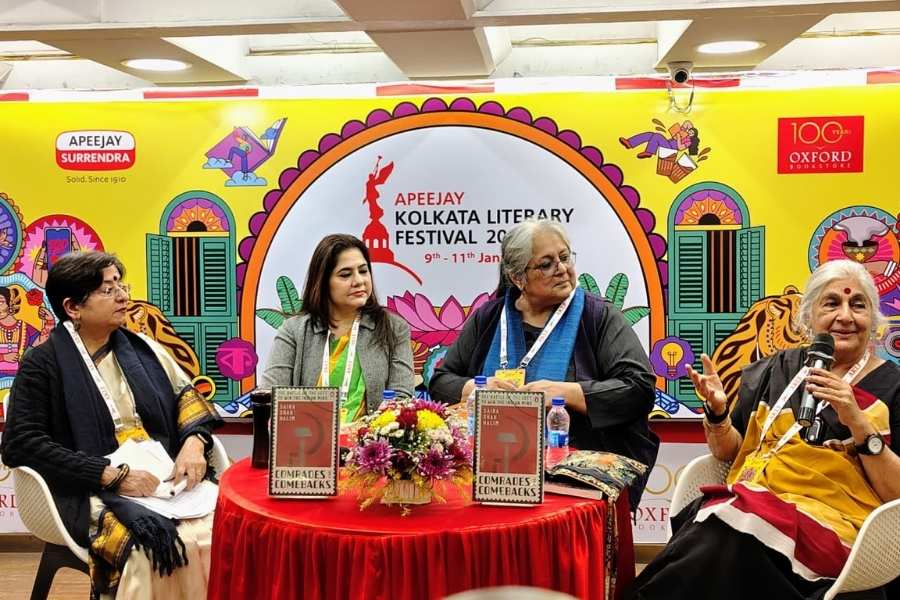
Entrepreneur and politician Saira Shah Halim on Saturday said feminism was fundamentally about equity and equal opportunity, arguing that standing up for women’s rights was unavoidable in a country where violence and discrimination against women remained widespread.
Speaking at the Apeejay Kolkata Literary Festival 2026 during the panel discussion ‘Ghare Bairey: Women, the Nation and Life’, Halim rejected popular stereotypes around feminism. “Feminist doesn’t mean you have to go burn your bra in the streets,” she said. “Feminist means you are fighting for equity.”
She drew a distinction between equality and equity, saying equality assumed men and women started from the same position, while equity recognised structural disadvantages. “When you talk about equity, you go a step further because you’re talking about equal opportunity,” she said.
Referring to her own life, Halim said her feminism was rooted in everyday choices. “I’m a mother of two girls, and we’ve given them every opportunity imaginable — if I had sons, more so,” she said, adding, “If doing that calls me a feminist, then definitely I am one.”
Halim said the continued existence of practices such as dowry and the prevalence of sexual violence made it imperative to speak out.
“We still have the dowry system intact. We have people raping minors and throwing them on the streets. We have young girls being hanged from trees and literally nothing gets done about them,” she said.
She emphasised the importance of women supporting one another, while noting that patriarchy was not sustained by men alone.
“Sometimes it’s not just men who perpetuate patriarchy. Sometimes women also perpetuate patriarchy because they’re used to a certain way of living,” she said, citing family structures where mothers and mothers-in-law often reinforce discriminatory norms.
Calling patriarchy a “draconian system,” Halim said silence only strengthened it. “It’s very important to stand up against all of that,” she said. “There’s nothing wrong in being a feminist. I’m proud to be a feminist.”
The panel was moderated by Kavita Punjabi and also featured Subhashini Ali and historian Aparajita Dasgupta-Sengupta.