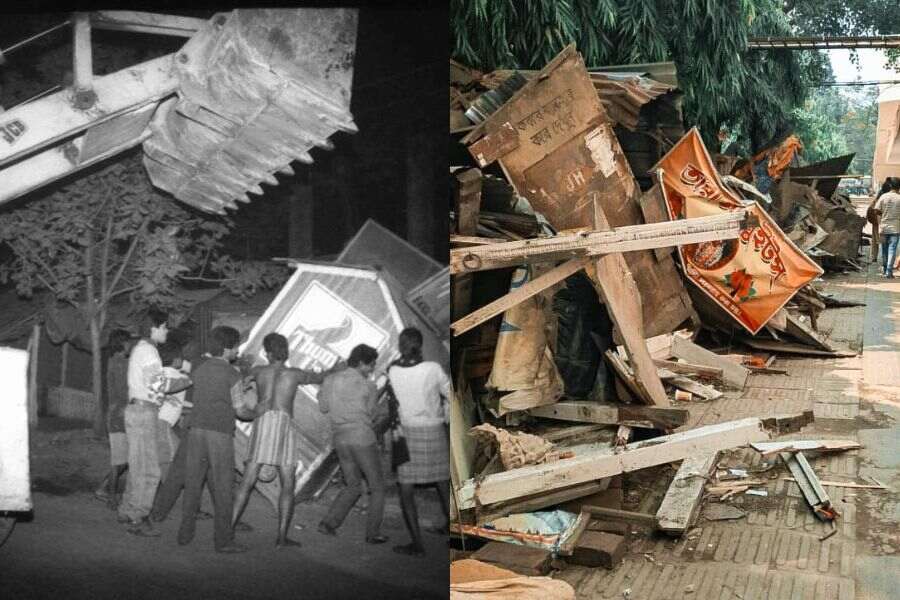
Government officials, with bulldozers and uniformed personnel, turned stalls to dust in the dead of night, leaving hundreds of hawkers jobless in minutes. This was during Operation Sunshine in Calcutta in November 1996.
The message propagated by the then-ruling Left Front government was the same as that is being propagated by the BJP government now.
“Footpaths are for walking and pedestrians deserve clear footpaths,” then minister Subhas Chakraborty had said.
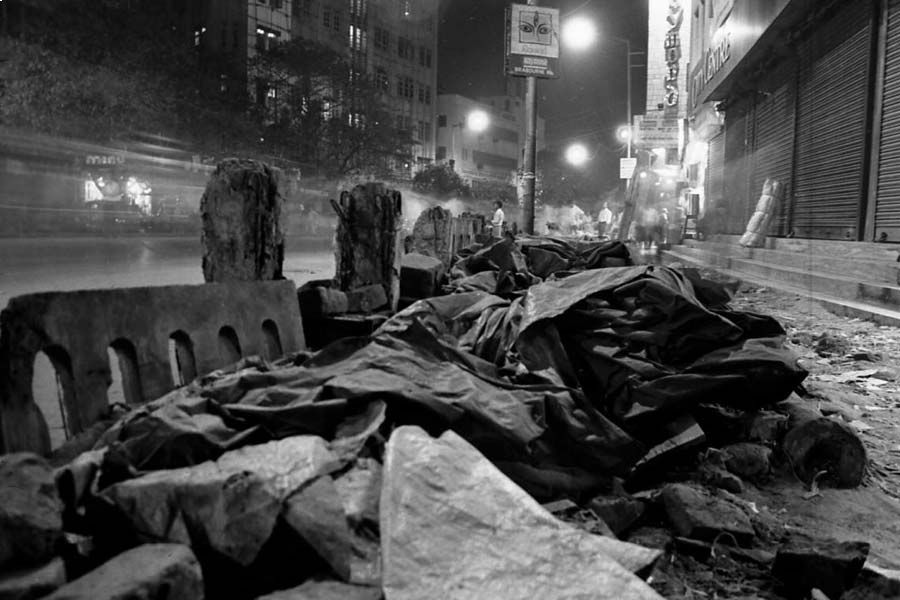
Hawkers being evicted at Brabourne Road under Operation Sunshine. TT Archives
Cut to the present, the demolition drives against hawkers and their stalls in places like Howrah station and Jadavpur have struck fear into the hearts of the thousands of people who sell their wares on the streets of Kolkata.
“My husband works day and night. I cannot do heavy physical labour after my pancreas operation. All I have is this stall,” said Arati Halder, who sells coconuts on the streets of New Town.
“Evicting me will be like starving my family. I have kids still in school. All of us will be left with no security at all,” she said.
Who is a hawker?
Shutterstock
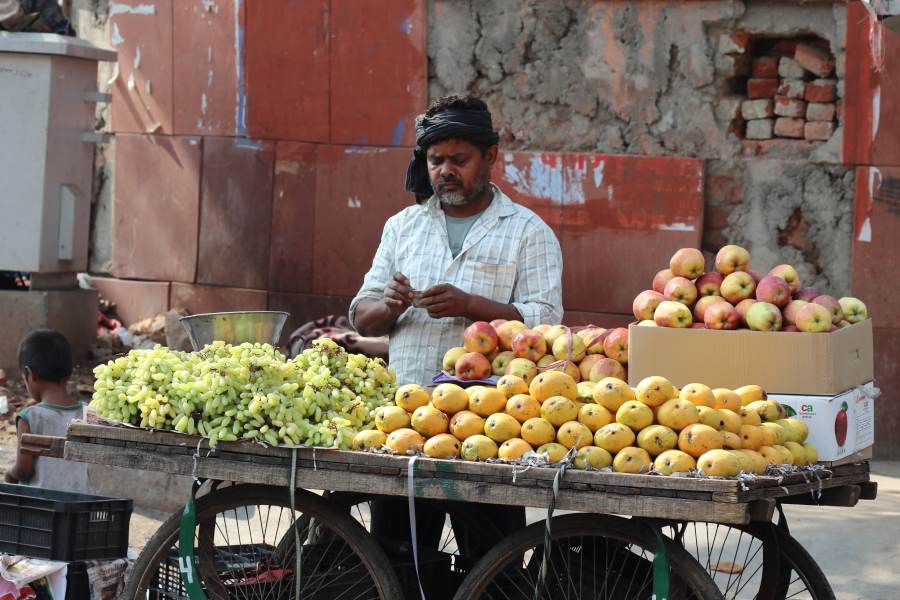
Hawker is derived from a German word, hoken, which means “to peddle”. A hawker is thus anyone who can sell commodities on the streets, in a non-permanent stall.
The advent of hawkers in Calcutta and Bengal goes back to colonial rule, but a major wave started during Partition in 1947.
“Squatting on Calcutta’s sidewalks and parks on a large scale began during the famine of 1943, when thousands of people from Bengal’s rural areas — especially Midnapore and 24-Parganas — entered Calcutta in search of food,” said Ritajyoti Bandyopadhyay, associate professor of history at IISER, Mohali.
Bandyopadhyay has recorded the hawker movements and the history behind who the hawkers were in his book, Streets in Motion: The Making of Infrastructure, Property and Political Culture in Twentieth-century Calcutta.
Hawking was the easiest means of livelihood thousands of refugees could muster in the shortest time.
In present-day Kolkata, pavement hawking is an everyday phenomenon.
Hawkers represent one of the largest, most organised and most militant sectors of the informal economy.
Where did Calcutta’s hawkers come from?
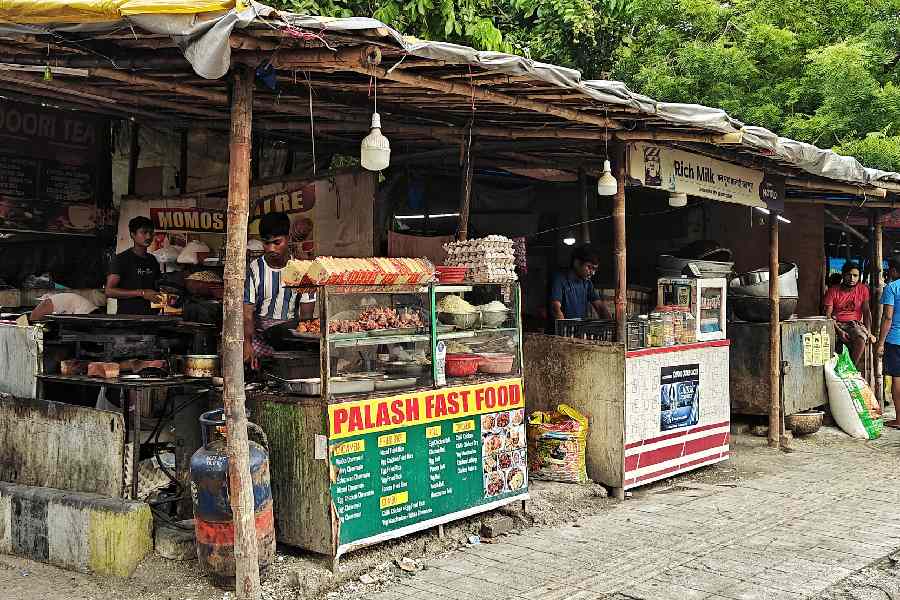
Hawkers opposite DLF building in Newtown Soumyajit Dey
“A section of the poor, especially those who migrated from Bengal’s rural districts, make the sidewalks their home, and stay there for years and decades,” wrote Bandyopadhyay.
There were 55,000 street dwellers recorded in a census in 1987. This section mostly became the hawkers of Kolkata.
On average, every stall at Jadavpur station is 60 years old, the hawkers say. These stalls have been handed down through generations.
“I got this shop from my father,” said Biswajit Ghosh, a hawker who sells t-shirts, jeans and such items on Jadavpur station’s platform number one.
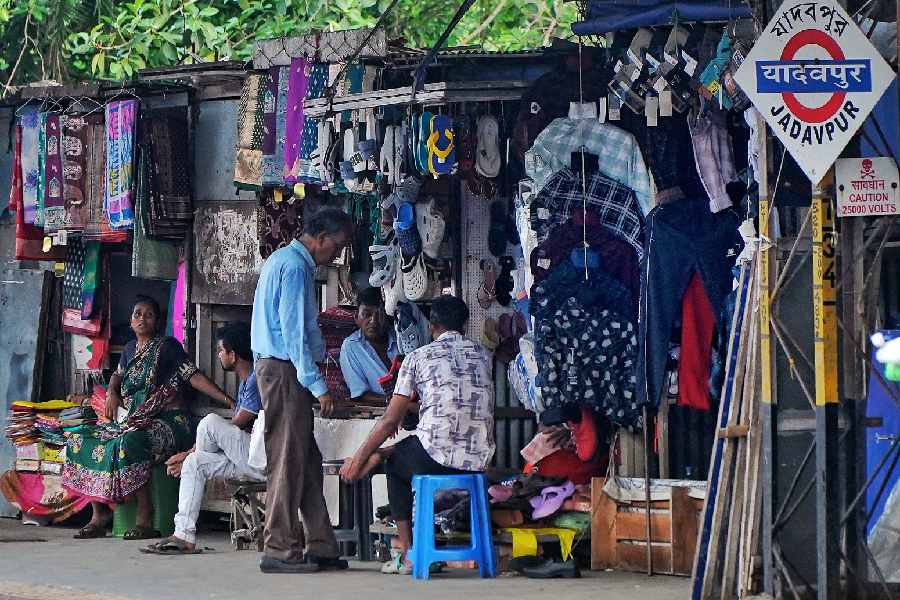
Hawkers at Jadavpur railway station Soumyajit Dey
In the early ’60s, Ghosh’s father used to run on the platforms selling his wares.
“Then he got a stall made and I have been here since,” he said. “I support the movement to evict us from the platforms, but not without rehabilitation.”
Sankar Seat, a key-maker sitting on the platform, said: “I voted for the new government, I am a citizen of this country, I am 75 years of age. If we are cast aside like rubbish, what remains of the society?”
Seat also showed bills, for “maintenance and security”, purportedly issued by Trinamool workers.
“Every month they took Rs 340 from each of us,” said Seat.
Kesto Tamang, who sells lassi in the Jadavpur station area, said he got his stall after 2011.
“I have had to pay ‘toll’ to party cadres and have also joined in their rallies. I have the papers and everything for my stall. Evicting me without proper rehabilitation will be very unethical,” he said.
Tamang, too, has got monthly “bills” to show.
At the other end of the city, in the Newtown DLF area that is far more recent than Jadavpur, food stall owners like Palash Mondal insisted they have papers and documentation.
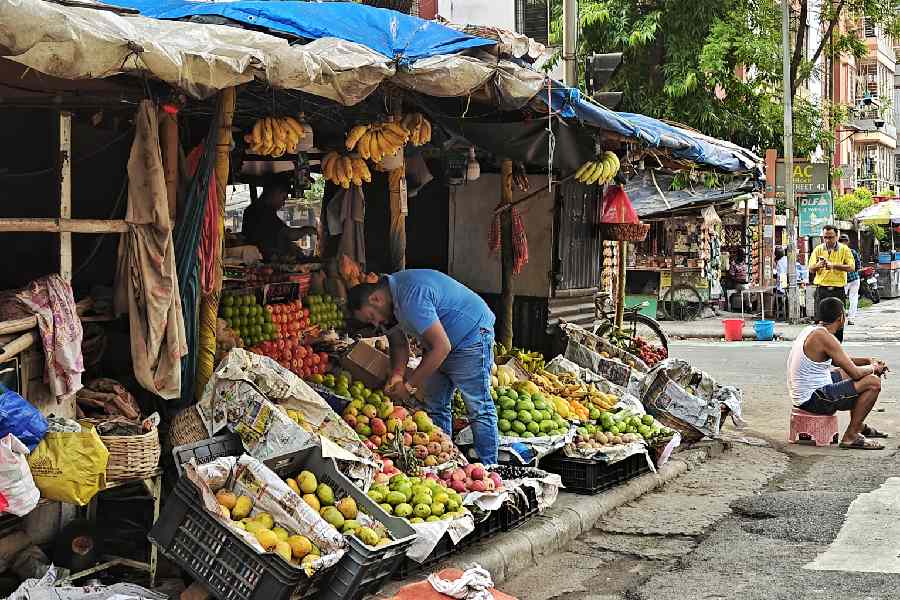
Fruit sellers in Newtown Soumyajit Dey
“I live in Sodepur; I have rented a flat here for my parents and I stay here to look after them. I sell fruits. I have had no problem with eviction before. It is illegal to drive us away without any proper alternative,” he said.
Mondal sources mangoes from Burra Bazar and although he starts business around 2pm, his day starts in the dead of the night.
“I have to reach Burrabazar by 1am, when auctions are held. If you are late, you do not get the quality fruits,” he said.
Hawkers and the law
Shaktiman Ghosh, veteran activist for various hawker unions and societies, insisted that hawkers are the backbone of Kolkata.
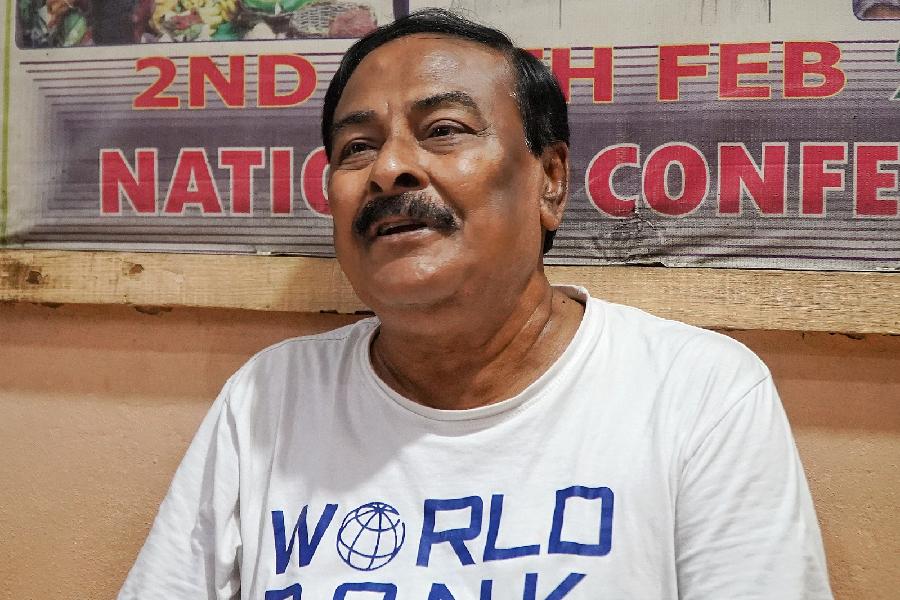
Saktiman Ghosh at his College Street residence Soumyajit Dey
“If 60 lakh people stay in Kolkata, 30 lakh people come to the city from the peripheries. The hotels and restaurants cannot provide their daily meals. Hawkers are the only option they have,” Ghosh said.
“The World Health Organisation conducted a survey to check the hygiene of the food hawkers and found out they have better standards than most three-star hotels. They cook their food fresh; they have no refrigeration, so there is no option to recycle yesterday’s food,” he added.
The lowliest hawkers say they earn Rs 500-1,000 per day. Most of that money goes into buying the next day’s stock from a wholesale market, they say.
“If we do not earn Rs 500 at least, it is a loss,” said Anjali Das, who sells bottled water at Jadavpur station. “I am the sole working member of my family; my husband is too sick to work. If my stall goes, we will have to starve to death.”
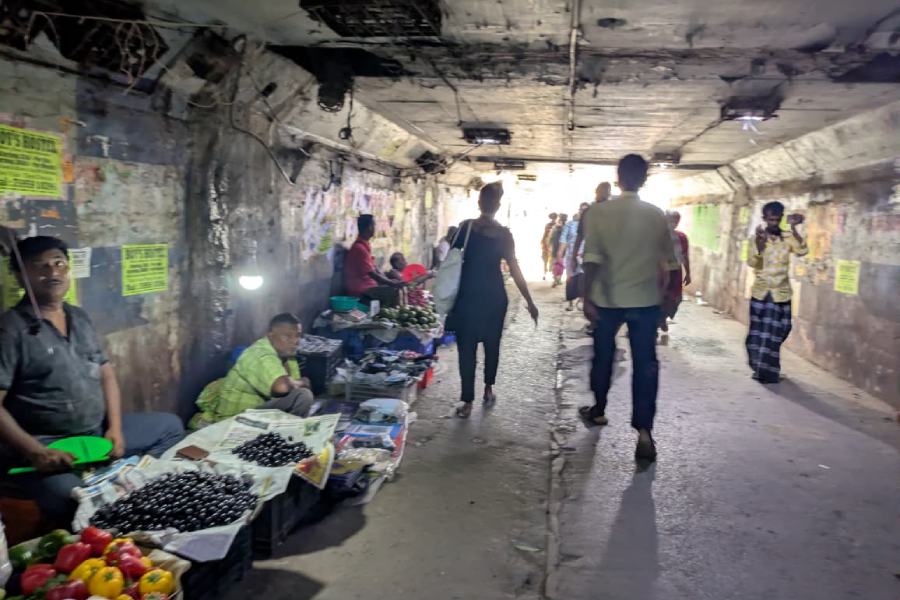
Hawkers under Dum Dum rail bridge Amit Datta
In 2007, the Supreme Court of India ruled that under Article 19 (1) (g) hawking was a fundamental right, a historic first in the world. In its extensive report, the apex court said: “Street hawking is a fundamental right, but this right is not absolute and can be subject to reasonable restrictions under Article 19(6).”
The court emphasised that street hawking should not impede public convenience, vehicular traffic, or pedestrian movement.
Street hawking in Kolkata is governed by the Street Vendors (Protection of Livelihood and Regulation of Street Vending) Act, 2014 and the West Bengal Urban Street Vendors (Protection of Livelihood and Regulation of Street Vending) Rules, 2018.
The Kolkata Municipal Corporation (KMC) and the Town Vending Committee (TVC) enforce regulations on zoning, stall size and pedestrian space.
“Hawkers cannot occupy more than one-third of a pavement,” Shaktiman Ghosh explained.
“No hawker is permitted to set up stalls directly on the blacktop portion of the road, on carriageways, or within a 50-metre radius of major road crossings. Stalls cannot block or clog the entry/exit points of residential houses, shops, offices, hospitals, and educational institutions.”
Perennial cat and mouse game
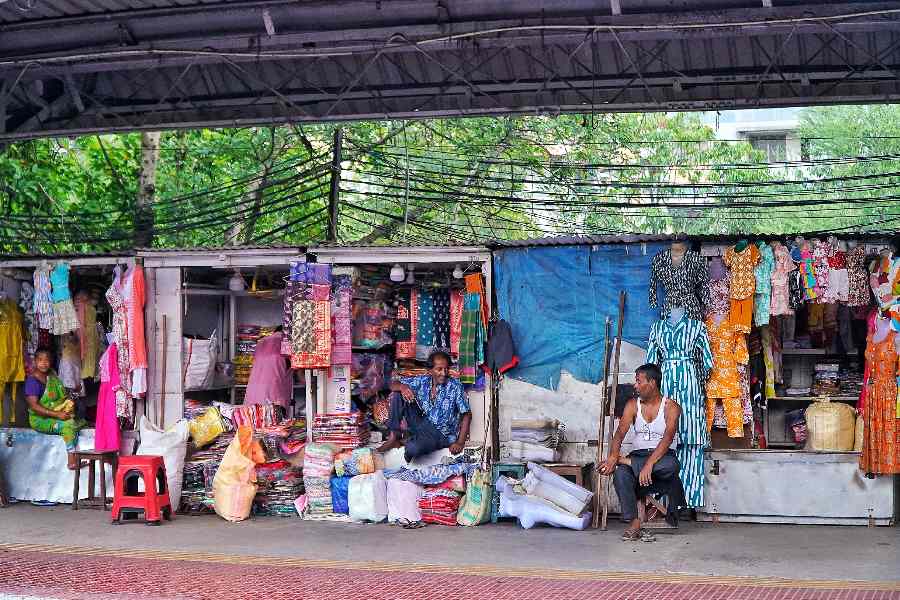
Soumyajit Dey
The law versus street vendors has always been a cat-and-mouse game. And the arguments on both sides have also remained the same. All anti-hawker drives have always been labelled anti-poor.
“Now it is being said that we are rich people and need not be provided an alternative space. Had this been true, I would not be sitting here in the blazing sun, risking eviction,” a hawker at Gariahat had told a newspaper reporter in 1996.
A veteran journalist who covered Operation Sunshine remembered: “As soon as the police vans went away, the tarpaulins and wicker buckets came back. Where there’s a supply, there will always be demand.”
This is happening at Dum Dum station now. After the stalls were bulldozed overnight, the sellers have shifted to under the rail bridge.
Operation, operation, operation
Dr Bidhan Roy, chief minister of Bengal from 1950 until he died in 1962, wanted to clear the footpaths of College Street of hawkers so that the grand architecture of Presidency College (now university) and the Medical College could be seen. This was named Operation Hawker.
Professors and teachers requested him to let Boi Para be, telling him that it was the backbone of students in Bengal.
Roy backed down and built Refugee Hawkers Corner in Kalighat, which was demolished during the Trinamool era to build a skywalk towards the Kalighat temple.
During the Left Front era, under the leadership of Kanti Ganguly and Subhas Chakraborty, Operation Sunshine had targeted Hatibagan, Garia, Grey Street and other prominent areas of Kolkata.
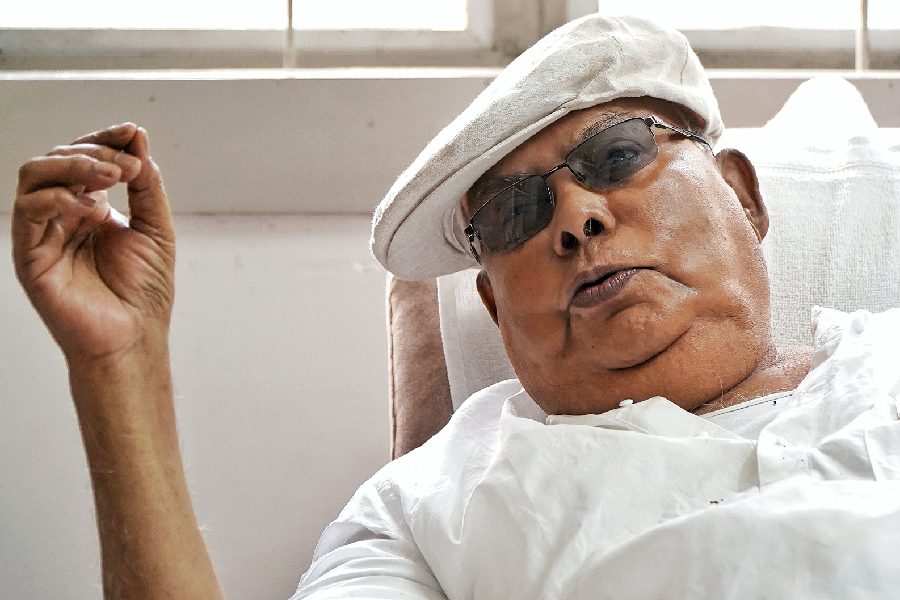
Kanti Ganguly, the mind behind Operation Sunshine Soumyajit Dey
“We built permanent stalls for hawkers on Galiff Street, which remains empty,” Ganguly told My Kolkata. “Hawkers refused to move because of various political motivations. We had tried not to harm anyone.
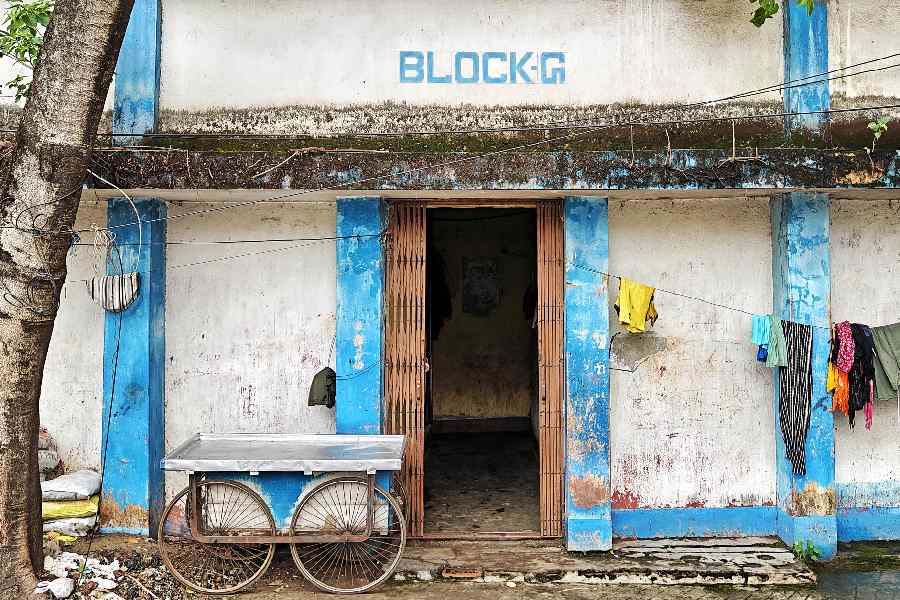
Stalls for hawkers on Galiff Street remain empty Soumyajit Dey
“It used to take a pedestrian to cover Garia to Kalighat an average of one hour. The streets were so congested that it was necessary to evict them from the street. Every place we evicted hawkers, we built a replacement place for them to conduct their livelihood,” added Ganguly.