From intricate paintings and folk narratives to surreal dreamscapes and layered abstractions, CIMA Art Gallery's latest exhibition makes a compelling case for the philosophy that more can indeed be more.
Opened on Friday, Summer Show 2026: Maximalism in Indian Art brings together works spanning the nineteenth century to the present, exploring the many manifestations of maximalism in Indian art.
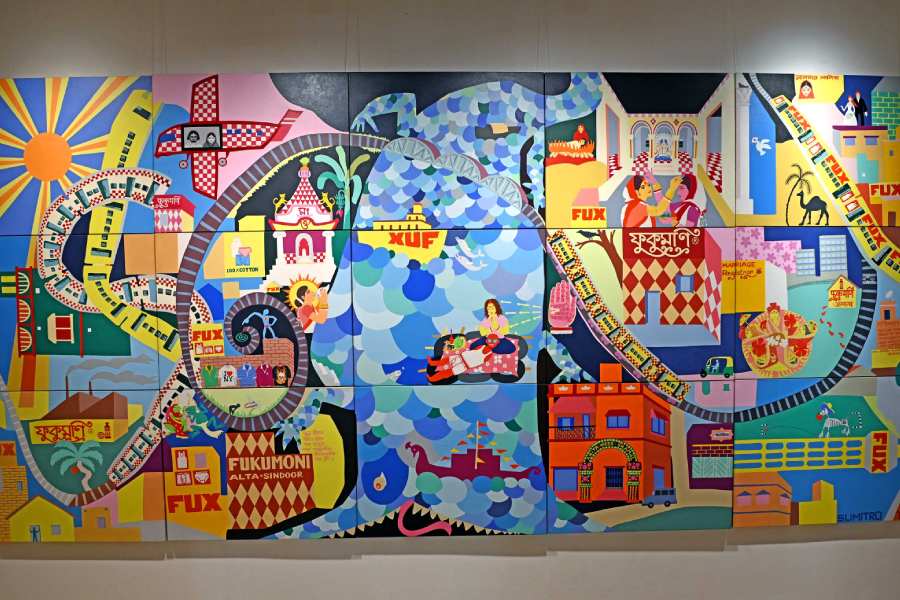
The exhibition brings together nineteenth-century masterpieces and contemporary works under one roof
Curated by Rakhi Sarkar, founder and director of CIMA, the exhibition is accompanied by an insightful essay tracing the roots and relevance of maximalism.
While maximalism re-emerged as an artistic movement in the West during the 1960s as a response to decades of minimalist aesthetics, Sarkar argues that the idea has always been deeply embedded in the Oriental world. From frescoes and textiles to temple ornamentation and decorative architecture, Indian artistic traditions have long embraced abundance.
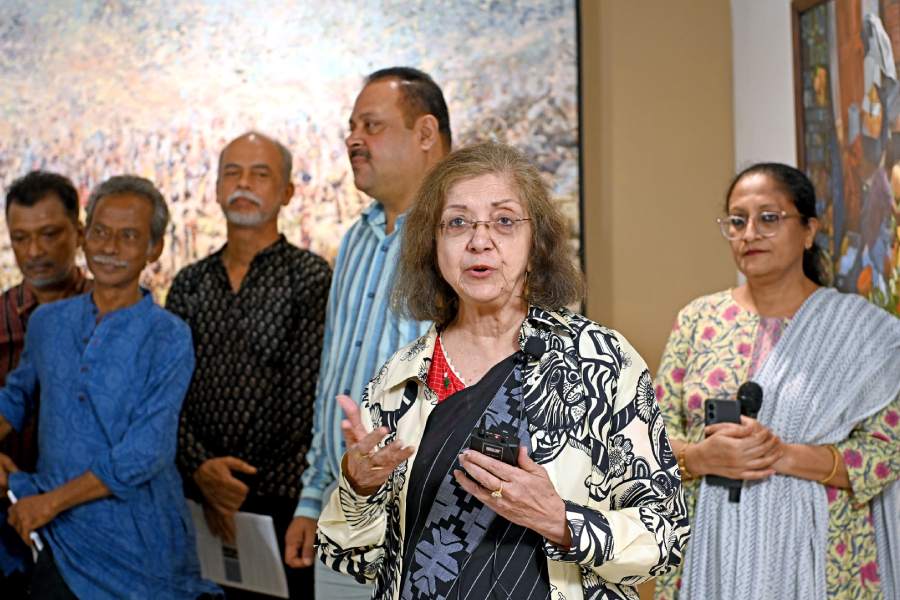
Rakhi Sarkar spoke about the many expressions of maximalism in Indian art
"We recently did an exhibition titled ‘Less is More’, and we felt maximalism would be an appropriate counterpart. Maximalism comes very naturally to Indian civilisation, carrying within it memories, diversity and overlapping cultural traditions that define our heritage. This exhibition is about celebrating that," Sarkar told My Kolkata.
She added that the show also introduces audiences to several young artists alongside senior practitioners whose works have never before been exhibited at CIMA.
"India is a melting pot of various art forms and artists," she said.
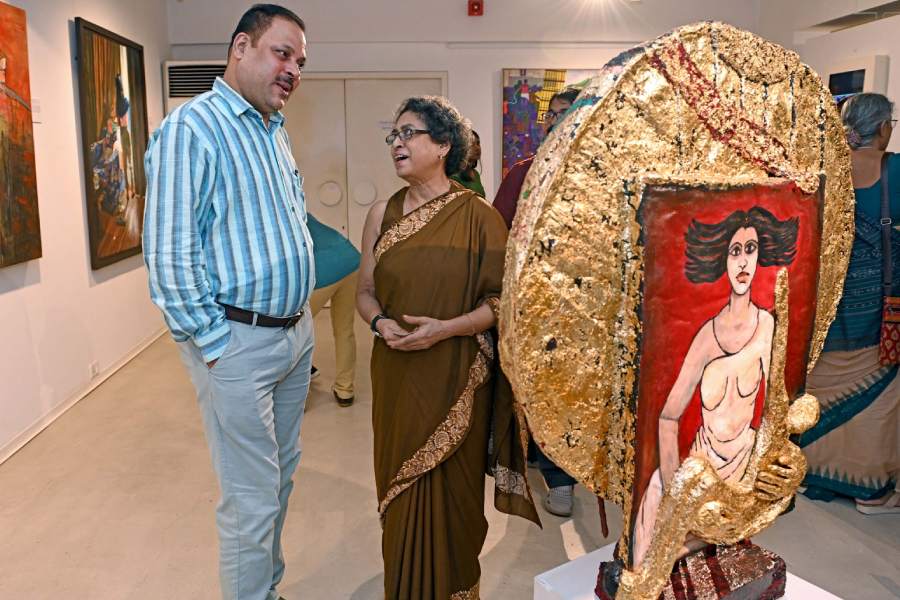
Rahas Kumar Mohanty, of Lalit Kala Akademi, called the exhibition ‘a wonderful show’
The exhibition was inaugurated by Dr Rahas Kumar Mohanty, regional secretary of Lalit Kala Akademi, Kolkata.
"I am not an artist born with a brush but with a pen. I am a writer and researcher. I have spent over 26 years in government service working closely with artists, so I have had the good fortune of living among them. This is a wonderful show," he said.
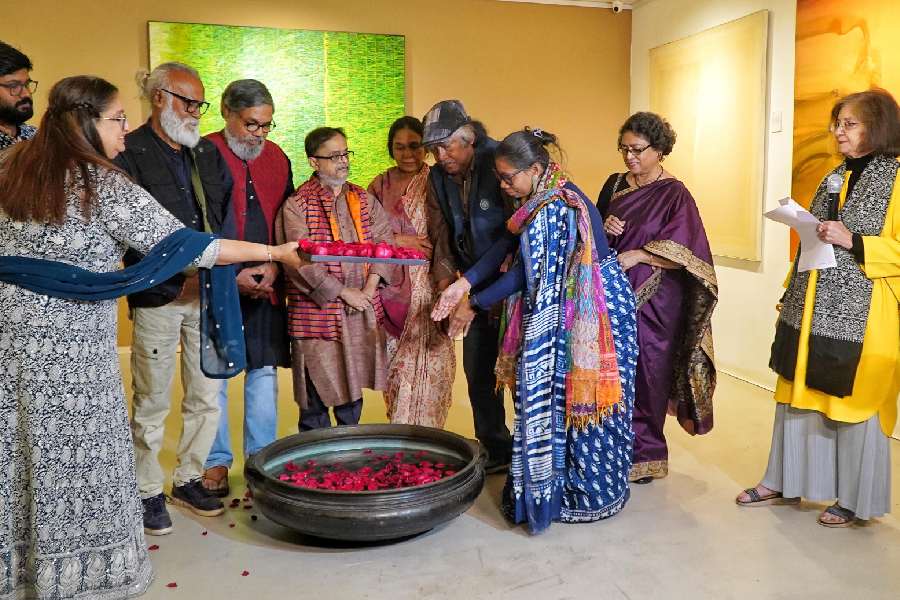
In a symbolic gesture marking the opening, all participating artists placed flower petals into a large vessel.
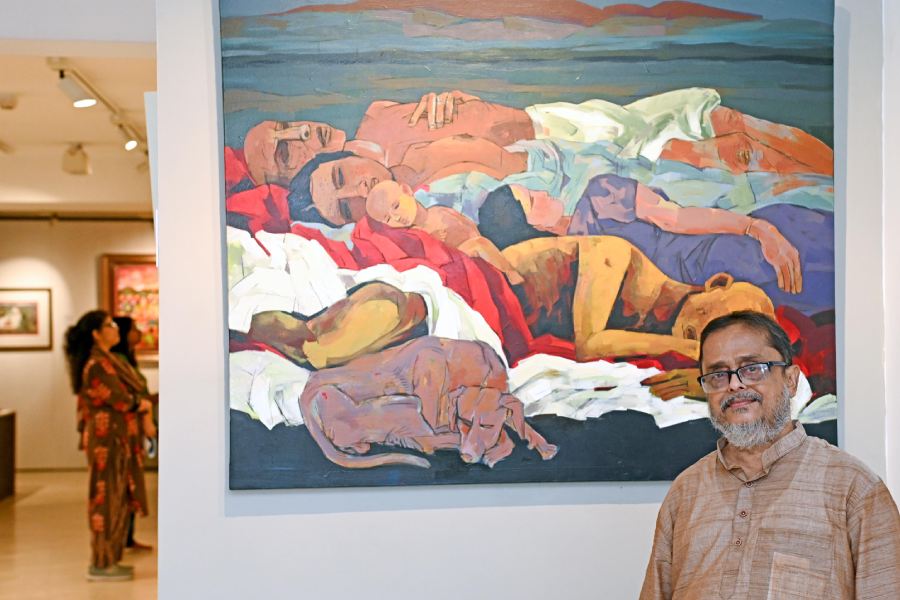
Ashoke Mullick's portrait reimagines the lives of Kolkata's street dwellers
Painter Ashoke Mullick's artwork draws inspiration from Kolkata's streets and the lives of its pavement dwellers.
"I grew up in north Calcutta and watched many street dwellers going about their daily lives. My artwork lends an imaginative dimension to their existence while exploring the unspoken relationship they share with passers-by," he said.
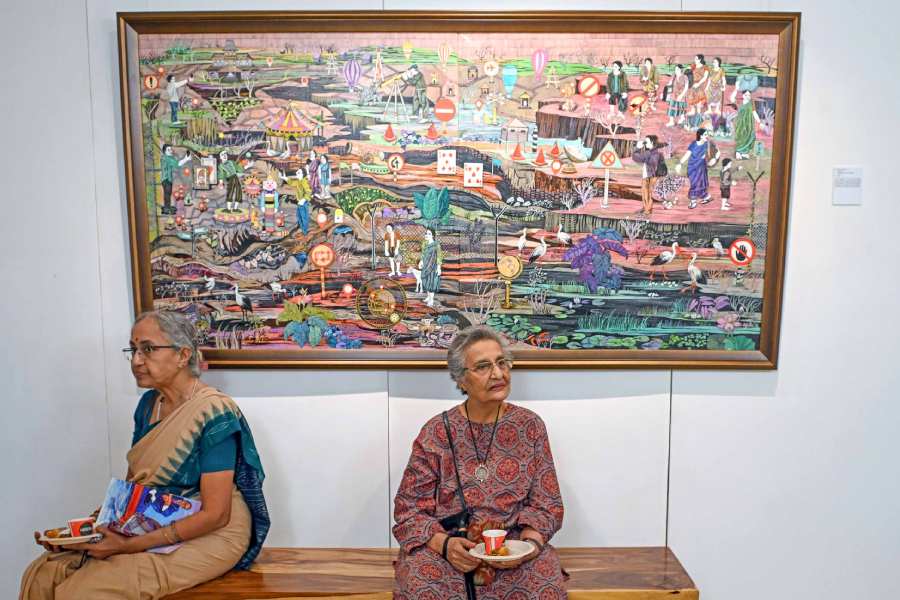
Arpita Sengupta's ‘Transience’ reflects on the fleeting journey of life
Arpita Sengupta's surreal and intuitive paintings delve into dreams, emotions and the subconscious. Her work Transience reflects on the fleeting nature of human life and its many phases.
The exhibition also showcases early twentieth-century Rajasthani miniature paintings depicting royal life and mythological narratives through vibrant colours, meticulous detailing and exquisite craftsmanship.
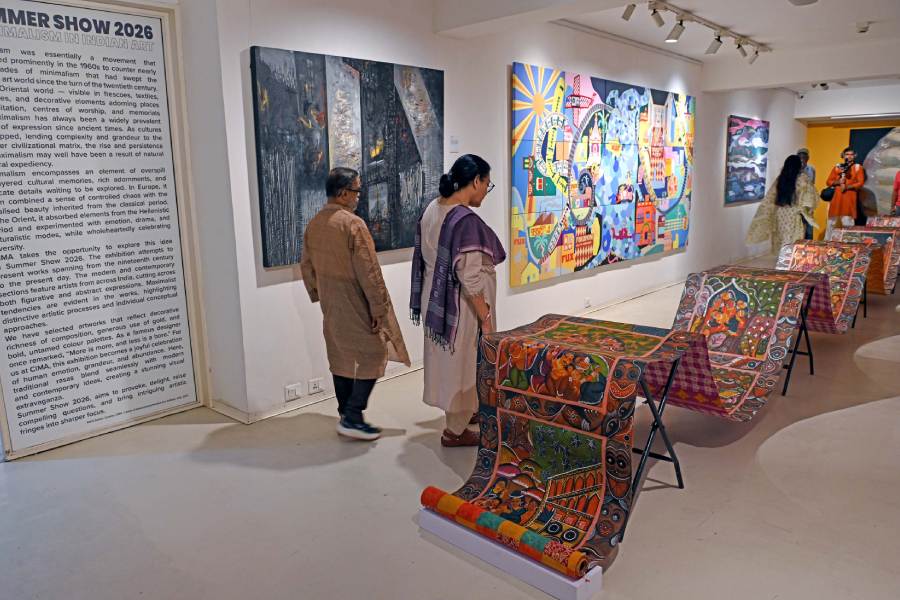
Equally striking is the scroll painting Corona Virus Full Story by Swarna Chitakar, a leading practitioner of Bengal's Patachitra tradition.
Several portraits on display weave together personal crises and broader social tensions, encouraging viewers to reflect on identity, belonging and the complexities of contemporary existence.
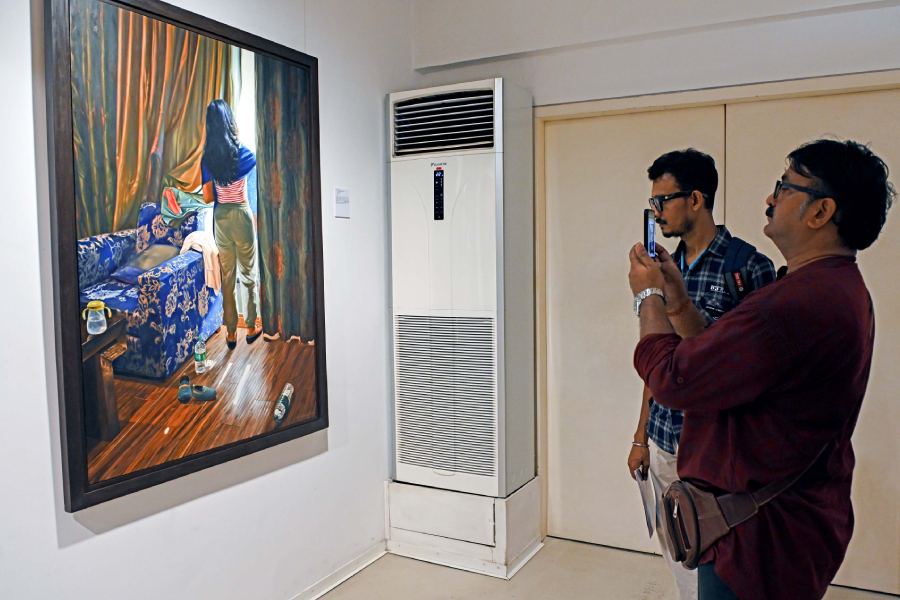
Every canvas reveals a world of colour, texture and intricate detail
The exhibition will remain open until August 14. Visiting hours are 3pm to 7pm on Mondays and 11am to 7pm from Tuesday to Saturday. It will remain closed on Sundays and public holidays.
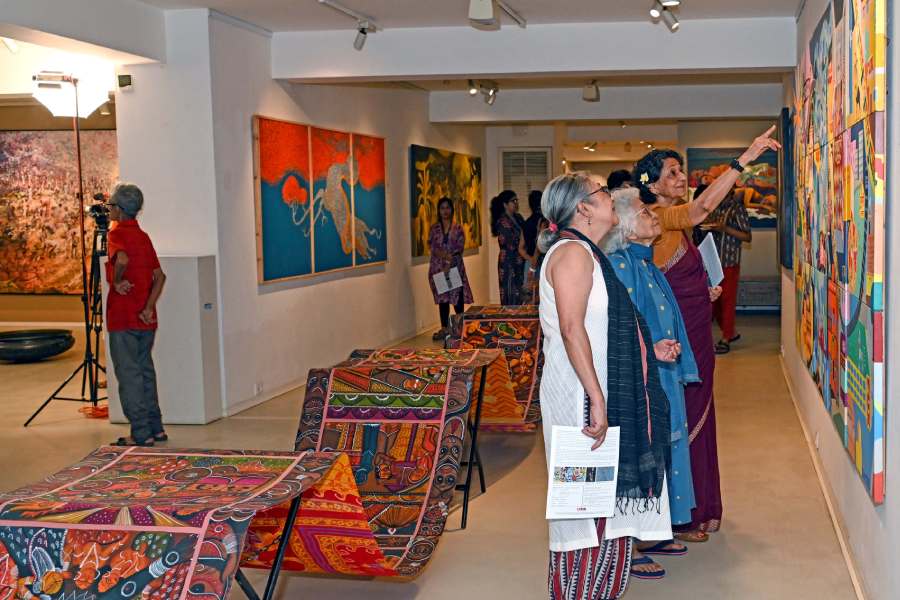
Every corner of the gallery celebrates colour, detail and storytelling
Founded in 1993, the Centre of International Modern Art (CIMA) was established under the guidance of leading galleries and museums in London and New York. Over the past three decades, it has emerged as one of India's foremost art institutions, curating nearly 200 exhibitions featuring artists from India and around the world.