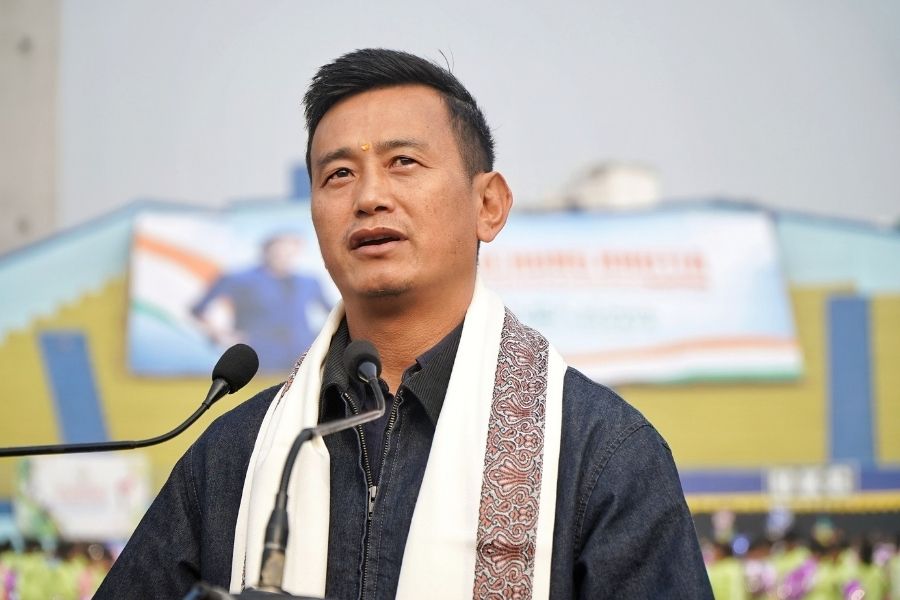
Indian football needs to be rebuilt from scratch, former Team India striker Bhaichung Bhutia said Saturday, arguing that the system requires more sportspersons and fewer politicians and diplomats at the helm of affairs.
The reason for India’s lack of success in football is not the absence of talent but the way the game is run in the country, Bhutia told My Kolkata on the sidelines of an event he attended in Kolkata.
“The first thing is the structure and the system,” Bhutia said. “What we have right now has to be completely changed.”
Bhutia, a striker who was considered the torchbearer of Indian football in the international arena, also reflected on his experience of working at the grassroots and managing clubs.
“From the federation to the state level, most people are working in honorary positions. When you work for honorarium, the commitment is not there,” said the 49-year-old who has been a player, a club owner, a coach, in administration, and an advisor for football teams.
The absence of accountability, he said, weakens the machinery.
“There is lack of finance, lack of infrastructure,” Bhutia said. “And when the person in charge is also a politician, a bureaucrat or a businessman, the priority of the sport becomes zero.”

Bhaichung Bhutia lights the torch to declare the DPS Ruby Park sports day open at Gitanjali Stadium
Bhutia was speaking at Delhi Public School Ruby Park’s 21st Annual Sports Day, held at Gitanjali Stadium on 20 December 2025. The day unfolded with ceremonial warmth, from the hoisting of the school flag to performances by students from Nursery to Class VI.
Asked how young athletes should balance dreams and reality, Bhutia was pragmatic.
“If by class 11 or 12 you are playing for an ISL or I-League club and pushing for the national team, then you can take that gamble,” he said. “But if you are struggling even to make it to your school team, you have to balance academics and sport.”
Walking away from sports, he said, should never be an option. “Sports teaches you many things in life which school lessons don’t. That mental strength will help you succeed.”

Receiving medals from the football legend was the highlight for most students
On mental health and failure, Bhutia rejected sanitised narratives. “Life is about ups and downs,” he said. “You will lose matches, you will fail, and you have to feel bad. If you don’t feel bad after losing, what is the point of playing?” What mattered, he added, was the response. “You lose, and then you think, how do I come back. That is where growth happens.”
Fitness, he reminded students, is non-negotiable. “If you are not fit, you cannot play any sport,” Bhutia said, pointing to modern role models who have redefined discipline. Fitness, he added, is something anyone can work on, at any age.