 |
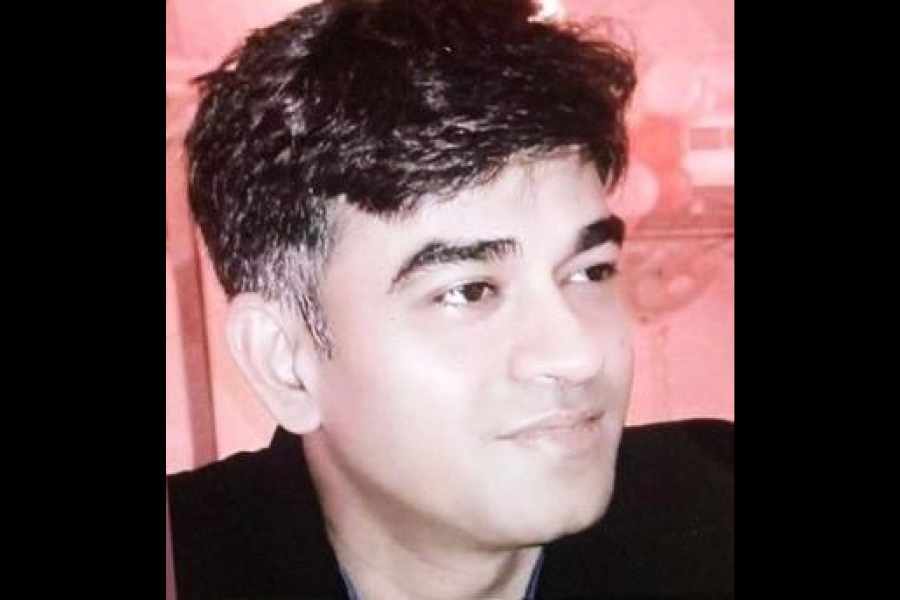
| Shekhar Sen plays the character of Tulsidas |
The histrionics of singer-actor Shekhar Sen was at its best once again! A packed Kala Mandir on July 2 saw Tulsidas emerge out of the chapters of medieval history. The audience, dominated by a sect of Calcuttans who were well familiar with Hindi, was in a trance till the mono-act musical play Tulsidas, presented by Sangeet Kala Mandir, was on.
That, Tulsidas was a saint poet, who composed an immortal epic based on the life of Rama, is known to all ? especially after the super hit serial Ramayan. But very few know about his background, about his devoted love for his wife Ratnavali diverting towards the peaks of piety, about the charges of blasphemy he faced for scripting Ram-Charit-Manas in his native Avadhi dialect, about the social reforms he aimed at once he reached the masses through his immortal works, about the life he led ? fraught with pain and hardships.
Sen stringed all these sequences with minute details. He scripted this in-depth research in Hindi with a generous smattering of Avadhi to attain both dramatic climax and authenticity. He relied more on narration than the subtle nuances of acting. Aided by the faultless enunciation and a voice that could change in a jiffy, his dialogue delivery etched all the characters in brilliant colours.
But Sen as a singer impressed the most though the songs were restricted to two lines each. With amazing precision of the sur and taal the lines were coordinated with the recorded background score and each song reflected the versatility of the singer cum composer.
The dhrupad-based Shankar Mahadev did not touch, even fleetingly, the murkis that were in abundance in other bhajans. The traditional melody of chaupaee singing was extremely effective since the whole of Hindi belt relates Ramayana- paaraayan with it. The inimitable Payoji maine Rama-ratan-dhan and Jab Jaanaki-naath were reproduced with dedicated sincerity of a devotee in true Paluskar style. Sen as a music composer followed the mood of the lyrics to a great extent but a taan describing the hint of a shy smile in Siya muskani could do with a soft, romantic glide. The loud background music drowned the dialogues at Ratnavali’s death.
The lights, designed by Tapas Sen and handled by Pankaj Mang, simple sets by Pathikrit Mukherjee, sound by Ashok Pawar and music track management by Ajay Pingle provided the desired effect.