 |
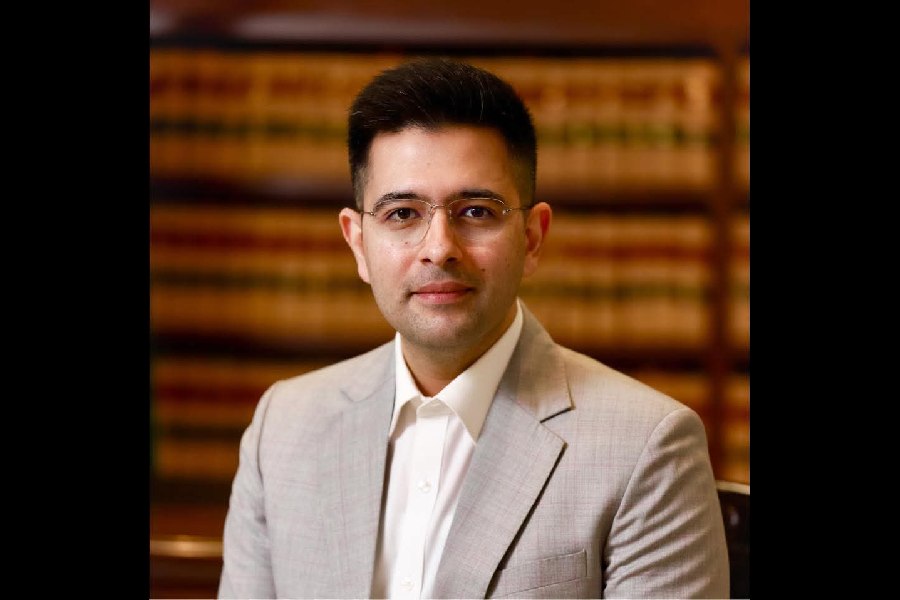
| Satyendra Dubey (above) paid with his life for blowing the lid off corruption in the PM’s Golden Quadrilateral Project |
When he was alive, Satyendra Dubey waged a futile war against corruption. In his death, the Bihar engineer may well have won his first battle. The death of Dubey — who sought to expose corruption in the Prime Minister’s Golden Quadrilateral Project — has turned the public eye on a Bill that has been gathering dust for the past two years. Mounting pressure from the public and various government quarters following Dubey’s murder in November is likely to force the government to act on the draft whistleblower’s protection law, formally called the Public Interest Disclosure (Protection of Informers) Bill. The draft — prepared by Justice B. P. Jeevan Reddy — was submitted to the government as a recommendation in December 2001 when Reddy was the chairman of the Law Commission of India. Last year, the Constitution Review Commission had recommended that the law be enacted to protect those exposing corruption.
By simple definition whistleblowers are those who speak out against waste, fraud and corruption in the government. The Law Commission’s draft of the whistleblower’s protection law is structured along the lines of the US Whistleblowers Protection Act of 1989 (amended in 1994). The US law protects public interest disclosures by federal employees. An Office of Special Counsel (OSC) has been created under this law to help whistleblowers in their investigation and in warding off retaliatory actions against them. Reddy said in an interview recently that had the government acted on the draft bill and passed a law, Dubey would not have died at the hands of unidentified mafia. “The recommended law specifically provides for keeping the whistleblower’s identity confidential to let him disclose information without putting his life at risk.” The recommended draft even has a counterpart of OSC, the “competent authority” in government offices, comprising an outsider appointed by the Central Vigilance Commission.
Inquiries by the competent authority on the accused would be confidential. However, the draft Bill provides for withholding the whistleblower’s identity on two conditions. First, the whistleblower would be required to request for the confidentiality of his identity. Also, the competent authority would have to be satisfied that the request is in public interest or for the safety of the whistleblower.
The Indian clone of the US law also offers protection, like in the foreign inspiration, against the squealer employee being subjected to retaliation, such as victimisation by a superior. Besides, it has safeguards for protecting witnesses. The recommended Indian law, however, also seeks to safeguard the rights of people framed in corruption charges. A frivolous, or incorrect, blowing of the whistle may lead to a maximum of three years in prison. Lawyers and activists believe that the draft law, if enacted, can help fight corruption to a great extent. Senior Supreme Court lawyer Prashant Bushan stresses that the country should adopt more of the laws that “bring transparency”, such as the proposed law to protect whistleblowers, and “less of such laws as the Official Secrets Act, which protect the corrupt”. The move also enjoys support of such influential bodies as the National Human Rights Commission (NHRC) and Transparency International, a global body which monitors corruption levels in the world.
 |
| Daniel Ellsberg (above) exposed a top secret Defence Department document on the Vietnam War which showed how successive US presidents had dragged the country into an unwinnable war |
In the US, public opinion in favour of protection of whistleblowers began building up as early as 1971 when Daniel Ellsberg, a former marine who was working as an analyst at Rand Corporation, exposed a top secret Defence Department document on the Vietnam War which showed how successive US presidents had dragged the country into an unwinnable war, and had lied to Americans about the war’s course and outcome. These documents, which became famous as the Pentagon Papers, had played a major role in reversing the tide of public opinion on the war. The US administration prosecuted Ellsberg under 12 charges; if convicted, he could have been in prison for 115 years. The Dirty Tricks Department of the Nixon White House engaged the Watergate Burglars to break into Ellsberg’s psychiatrist’s chamber, in an obvious bid to prove him to be out of his mind. His telephones were bugged. Thugs were employed to hit him on the street. The government tried to influence the trial judge with the offer of making him the next director of the FBI. It boomeranged on the government as the plots were exposed and the judge had to acquit Ellsberg. Nixon’s sinister plots to arraign the whistleblower form the basis of two of the articles of impeachment against him.
As the Nixon era background to the 1989 US law shows, blowing the whistle on public institutions is often easier said than done. At least it requires complementary support of the judiciary and the media. In India, a law for protecting whistleblowers, together with the recently enacted Freedom of Information Act, could perhaps have thwarted the reach of the contractor mafia and saved the life of a public-spirited government employee like Dubey. But the mere law would not have been enough. No individual can successfully blow the whistle on corruption unless there are strong public interest groups all around, like the National Whistleblower Center in the US, or the Public Concern At Work in the UK. When an individual wages a war on the system, he can hope to win only if there is a chorus of support from the public. Like Ellsberg heard it in his battle against the Nixon administration.