
Thanks to Swachh Survekshan 2017, the capital is learning to get the best out of waste.
Ranchi Municipal Corporation's (RMC) idea of composting biodegradable waste at places like hotels, restaurants, lodges, hostels, banquets and markets, where use of vegetables is more than households, has found many a taker.
Apart from the three vegetable markets, where the civic body provided composting pits last month, several noted hotels, banquet halls and even hostels have adopted the eco-friendly way of converting organic matter into manure.
Swati Raj, city manager of RMC, said: "We provided pits at Pandra main vegetable market, Nagababa Khatal and Madhukam market. There are plans to cover other vegetable markets too, but what is really overwhelming is that hotels, hostels and banquet halls have started composting as well."
Leading the bandwagon is Yuvraj Palace, where composting is being practised for the past 15 years and the fertiliser, thus generated, is used to nurture in-house plants.
"It is an excellent move by the RMC. If everyone starts following this simple process, lesser garbage will be generated in the city and plants will get more chemical-free manure," Sudhir Kumar Chopra, owner of Hotel Yuvraj Palace, told The Telegraph.
Some of the others that have chosen to take the path shown by RMC are Radisson Blu, Hotel Shivani International, Celebrations banquet, the Army mess in Deepatoli, Central Academy School's residential premises, Chandan banquet hall, St Michael's School for the Blind, XISS hostel and Banerjee Lodge.
Chandan Kumar Singh, manager of Shivani International, said, "Earlier, we had a separate small pit in which we put rotten vegetable peels for composting over a year, but now we are using the pit provided by the RMC."
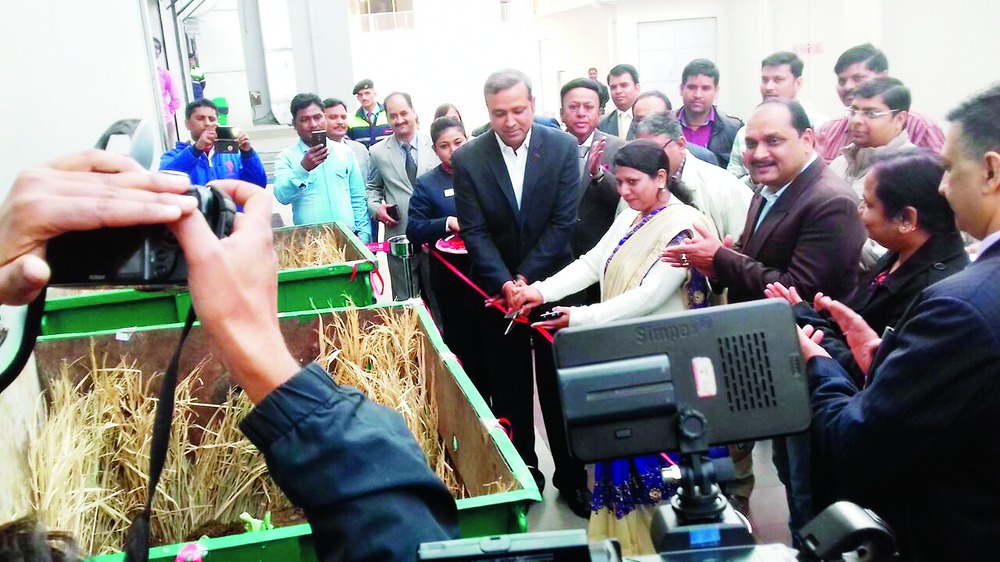
At each market, the RMC has made provision for three tin boxes of 4x4x5ft dimensions and with holes on the sides. The boxes, which have an initial layer of six inches of compressed hay or dried coconut, were filled with three feet of bio-waste and covered with a mixture of cow dung, curd and jaggery and then another layer of bio-waste and dried leaves. Finally, these were covered with jute bags.
"It will take nearly 45 days for the rotten vegetable and the leftovers to get transformed into fertiliser/ manure. We are just keeping our fingers crossed for the first production," said Swati Raj.
However, she added that they were facing problems at the vegetable markets where the "pits were being treated as garbage bins". "As the markets deal in huge amounts of veggies, we need to address this problem," she said.
Installation of pits for biodegradable waste is one of the criteria for gaining points in Swachh Survekshan. Each participating city has been given a target of setting up composting pits at 20 places. Ranchi has already done so at 15 places.