 |
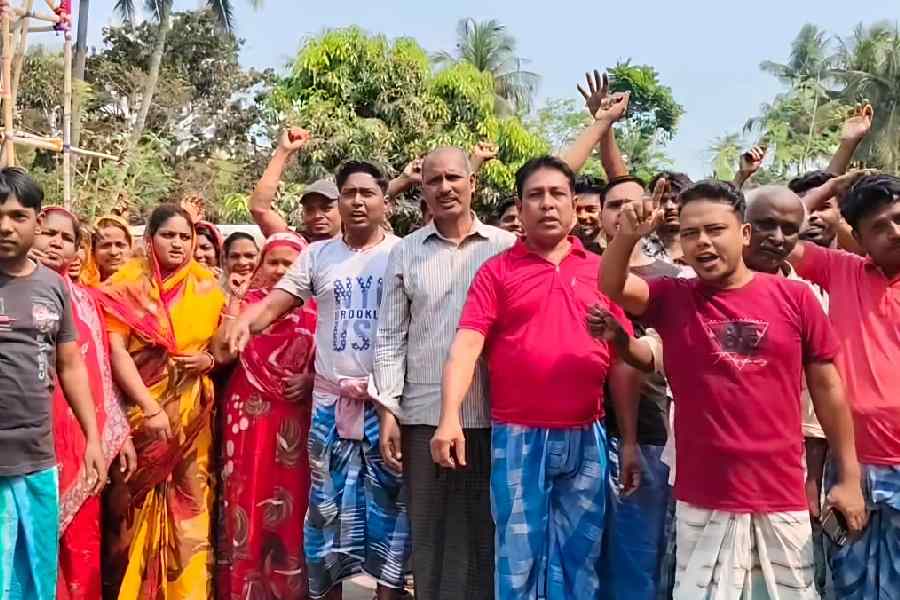
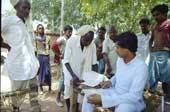
| Increasingly, villagers are displaying more faith in their educated counterparts rather than the mankis and mundas. A Telegraph file picture |
Administrative poaching and a loss of respect from villagers have brought about a decline in the status of ?Manki?, a head of 10-12 villages or the peer chief and Munda, the village head.
The ?Mundas? have been assigned various legitimate rights under the Wilkinson Rule in Kolhan-Porahat (West Singhbhum).
The British regime legalised then existing customary laws of the Mankis and Mundas and were awarded the administrative, judicial and other rights in 1837.
Englishmen had divided the Kolhan-Porahat region into various peers and sub-peers, a cluster of several villages, for an effective administration.
Mankis and Mundas of the villages were allowed to conduct certain police duties, including the general and the collection of land revenue.
For police purposes, the Mankis were made chief police officer and the Mundas were enrolled as subordinates. These village chiefs were authorised to apprehend offenders of every nature.
The president of the Manki-Munda Sangh, Antu Hembrom, said the Central government conducted the first panchayat poll across the country, including the Kolhan-Porahat region, during the 1970s.
?This grassroot-level poll led to encroaching the rights of Manki and Munda. The elected village heads were given power, which were earlier executed by the traditional the Mankis and Mundas,? Hembrom said.
He added the Kolhan-Porahat region of undivided Singhbhum possessed the powerful administrative system, which has been successfully functioned for a long time.
?And the newly appointed village heads under the panchayat poll were assigned various development-related works. It was the superimposition of power over the Mankis and Mundas. This government policy declined the status of traditional village and peer chiefs,? Hembrom, said.
Chandra Bhusan Deogam, whose younger brother Sundi Deogam, inherited the post of Manki in Dumbisai peer under Sadar Chaibasa, spoke about the declining social sanctity of Manki-Munda, said: ?At a grassroot--level, the problem lies in the post holders. The majority of them have not passed the board examination. Somehow they managed to get through the primary level.
?And are not aware about their fundamental rights under the Wilkinson rule,? Deogam said.
He said the parents encouraged individuals who were not academically inclined to inherit the post of Manki and Munda.
?My father Dulu Ram Deogam, who was popularly known as ?Rai Sahab? allowed his youngest son, Sundi Deogam, to inherit the post of Manki. He managed to complete his primary education in S.P.G Mission school in Chaibasa.
?The other sons were not interested in traditional work of the Mankis and Mundas,? he added.
Deogam, who retired from the Union ministry of law and justice?s legal department of as the publication-cum-sales manager said, the majority of Mankis and Mundas did not possess the good academic backgrounds.
?The villagers are highly qualified. They have grabbed government and private jobs. The economic status of villagers has improved, but the traditional village chiefs? position unfortunately dipped.
?Educated villagers did not give much importance to Mankis and Mundas,? Deogam said.
A tribal researcher, Dr. Ashok Sen, held the government responsible for diluting the status of Mankis and Mundas in the Kolhan-Porahat of the Singhbhum-Kolhan division.
?The British regime honoured the customary system and legalised the Wilkinson Rule. But conducting the panchayat poll in the scheduled area, badly affected the role of village and peer heads in Kolhan,? Sen, said.
?The majority of them are not aware of their rights. Many villagers opted for higher education and joined the government, including the army. Naturally, the educated job seekers? social and economic condition improved to a great extent than their counterparts ? the Mankis and Mundas,? said Sen.
Shiv Charan Padiya, a Manki of Sikur Sai in Sadar Chaibasa blames the large section of the Mankis and the Mundas for deteriorating their status.
?Many village heads do not know their fundamental rights under the Wilkinson Rule. Rights are related to the administration and judiciary, but these rights are unknown to large section of village and peer chiefs,? Padiya, said.
Chandan Honhaga, a village Munda of Kotsona village, under the Khuntpani block of West Singhbhum, said the conditioning of Mankis and Mundas had been deteriorating for years.
?The district personnel do not know the sanctity of the traditional head of the peer and the village. Officers work independently and avoid consulting the village Munda. This sort of trend developed in Kolhan,? Honhaga said.
Monthly pay structures of the Mankis, the Mundas and the Dakuas (messenger) have been recently improved by the government.
The Mankis currently get Rs 1,500, Mundas Rs1,000 and Dakuas Rs 500 as a monthly salary for assisting the district administration and collecting revenues.
The numerical strength of the Mankis, the Mundas and the Dakuas are 87, 1150 and 1234 in the district respectively.
Anupam Rana