
Ranchi, Jan. 18: More children in Class V in Jharkhand can read simple English sentences from two years ago, though the state's percentage is much lower than the national average, the 11th Annual Status of Education Report (ASER) 2016 released in New Delhi today by Pratham Education Foundation, said.
In 2014, of the Class V children surveyed by ASER, 14.6 per cent could read simple sentences in English. In 2016, the percentage has increased to 14.8 per cent children. However, the national percentage of Class V children who can read simple sentences is 24.5.
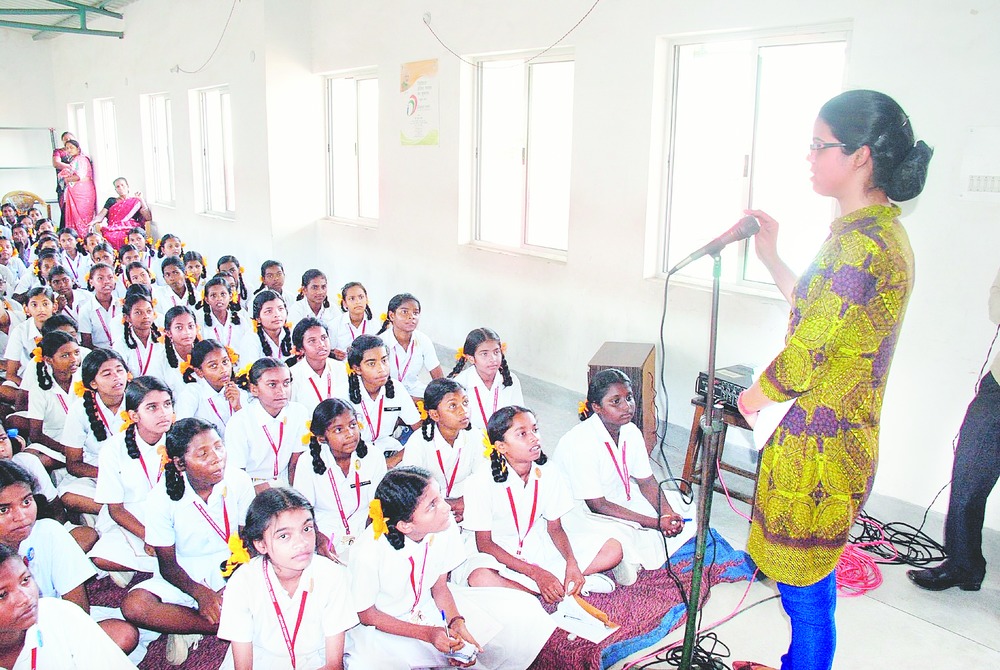
A Pratham spokesperson in Jharkhand said though the children surveyed spanned the age groups between three and 16 years, they concentrated on Class V to show the broad learning trends till the end of primary school.
However, Jharkhand children seem to be learning better now. In 2014, 47.8 per cent of Class V children in Jharkhand could read words while in 2016 the percentage has gone up to 63.8 per cent.
The ASER survey, which also checks children's competence in subtraction and division, two steps in arithmetic that they find the most difficult, also founding improvement among Class V children in Jharkhand.
In 2016, 23.6 per cent students enrolled in Class V could divide and 20 per cent could subtract numbers. In 2014, 21.4 per cent schoolchildren could divide and 19.5 per cent subtract numbers.
Aradhana Patnaik, secretary of state education and literacy department, said whatever improvement has been evinced was due to consistent efforts by the department since last two years, which mainly included recruiting teachers at primary level, distributing teaching and learning materials under programme Buniyaad, and introducing spoken English classes in government schools.
Citing reasons for marginally better levels of learning among schoolchildren, principal of a government middle school at Hindpiri, Amarkant Pathak said teachers now made students read in class. "In my school at least, I see teachers asking students to read instead of reading aloud to the class," Pathak said.
But, schooling standards are still abysmally low. The new segment introduced by ASER, on whether Class V recognised numbers between 10-99, the percentage of students was only 28.7 per cent. It means that over a third of students can't recognise all numbers till 99 despite being in Class V.
ASER is the largest annual household survey in rural India that focuses on the status of children's basic learning in government and private schools.
In Jharkhand, the survey, carried across 24 districts included 40,000 schoolchildren in the three-16 age group across 700 villages and 14,000 households. Nationally, ASER covering over five lakh children in over three lakh households at 17,473 villages in 589 rural districts. Nationally, reading ability improved especially in early classes in government schools.