Israeli military completes wide wave of attacks across Iran
Israeli military says it completed wide wave of attacks across Iran.
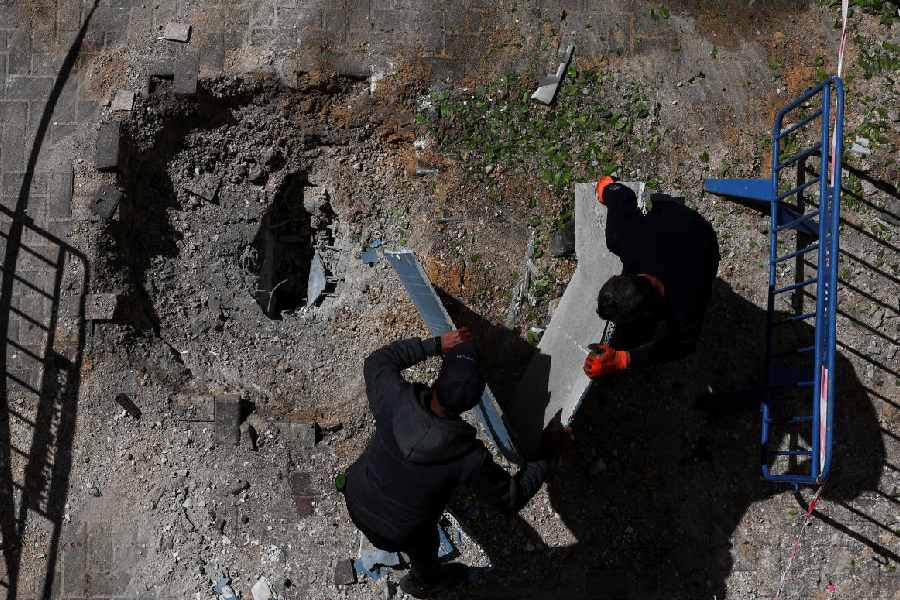
Strike hits railway bridge in Iran’s Kashan killing two, IRNA citing provincial official.
Strike targets bridge on Tabriz‑Zanjan highway in Iran’s northwest, EtemadOnline reports.
Iran’s Revolutionary Guard warns neighbouring countries, 'restraint is over'
Iran’s Revolutionary Guard warns neighbouring countries that restraint is over, says it will target US and partners’ infrastructure and threatens to disrupt regional oil and gas supplies for years.
A senior guard official says if the US crosses red lines, the response will be beyond the region.
Iran's Kharg Island targeted with several strikes
Iran's Kharg Island targeted with several strikes - Mehr News
Tehran sets preconditions for US talks, rejects temporary ceasefire: Senior Iranian official
Iran has set preconditions for talks on a lasting peace with the United States, a senior official told Reuters on Tuesday, including an immediate halt to strikes, guarantees that attacks will not be repeated, and compensation for damage.
The official said Tehran rejects any ceasefire with the U.S. that is only temporary.
He added that a permanent peace deal should allow Iran to demand fees for ships passing through the Strait of Hormuz, which would vary depending on the type of ship, its cargo, and prevailing conditions.
Explosion heard in Iranian capital, Tehran
Explosion has been heard in Iranian capital, Tehran, as reported by Mehr News Agency.
India govt official: Aviation sector passes through serious operational and financial situation amid war
Aviation sector passing through serious operational and financial situation amid Iran war, says India government official.
India has cancelled over 10,000 flights due to Iran War.
Gunfire heard near Israeli consulate in Istanbul
Gunfire was heard near the building housing the Israeli consulate in Istanbul on Tuesday, a Reuters witness said.
One attacker was killed and two others were wounded in an extended gun battle with police outside the building on Tuesday, according to authorities.
Two policemen have been injured at the incident on Tuesday, reports Turkish State Broadcaster.
Turkish justice minister has said three prosecutors will carry out diligent investigation into the shooting incident.
Iran targets Saudi Arabia's petrochemical complex in Jubail: Report
Iran has targeted Saudi Arabia's petrochemical complex in Jubail, as reported by Fars News Agency.
At least 18 people killed in airstrike targeting Alborz province, says Iran's state media
An airstrike targeting Iran's Alborz province, northwest of Tehran, killed at least 18 people, state media reported on Tuesday.
The strike also wounded another 24 people, the judiciary's Mizan news agency reported.
It wasn't immediately clear what had been targeted.
A series of intense airstrikes have pounded Iran's capital, Tehran, including a possible weapons depot in the mountains and residential neighborhoods. The Israelis have conducted a campaign of airstrikes killing top officials in the theocracy and its military.
14 million Iranians, including himself, have volunteered to sacrifice their lives in war: Iran's president
Facing a looming US deadline, Iran's president said Tuesday that 14 million Iranians, including himself, have volunteered to sacrifice their lives in the war.
President Masoud Pezeshkian made the comment on X just ahead of US President Donald Trump's deadline to bomb power stations and bridges in Iran if it doesn't loosen its chokehold on the Strait of Hormuz.
The figure is double other figures mentioned by state media in the past about volunteers the government had been soliciting by text messages and media as the war went on.
Iran is home to 90 million people. Many remain angry at the government over its bloody crackdown on nationwide demonstrations and the 14 million figure likely is aimed at trying to dissuade the promised American bombing campaign.
"More than 14 million Iranian people have declared their readiness to sacrifice their lives in the (self-sacrificing) campaign," Pezeshkian wrote. "I too have been, am, and will remain ready to give my life for Iran."
Bahrain reopens King Fahd Causeway link to Saudi Arabia
The King Fahd Causeway, a key bridge linking Saudi Arabia and the island of Bahrain, reopened Tuesday morning after closing for hours over possible threats from Iran.
The King Fahd Causeway Authority made the announcement in a post on X, saying the only route by road between Bahrain and the Arabian Peninsula had reopened.
An Indian resident in Bahrain told The Telegraph Online on Tuesday morning: “As of now the bridge is open for repatriation buses and essentials like food and other things. Private vehicles are still asked to hold. Hopefully they will open for all. Don’t know what will happen tomorrow.”
Bahrain's airport has been closed over the Iranian attacks for weeks.
The hours-long closure of the causeway came after a ballistic missile attack from Iran targeted Saudi Arabia and may have done damage to energy infrastructure there. The kingdom has not elaborated on the damage from that attack.
IEA chief: current oil and gas crisis worse than 1973, 1979, 2022 together
The current oil and gas crisis triggered by the blockade of the Strait of Hormuz is "more serious than the ones in 1973, 1979 and 2022 together", Fatih Birol, the head of the International Energy Agency (IEA), told Le Figaro newspaper.
"The world has never experienced a disruption to energy supply of such magnitude," he said in an interview with the French newspaper released in its Tuesday edition.
He said the European countries, as well Japan, Australia and others will suffer, but the countries most at risk were developing nations which will suffer from higher oil and gas prices, higher food prices and a general acceleration of inflation.
The IEA member countries agreed last month to release part of their strategic reserves. Some of this had already been released and the process continues, said Birol.
In reaction to the strikes by Israel and the U.S., Iran has almost entirely blocked the traffic in the Strait of Hormuz, through which about 20% of world oil and gas regularly flows, creating a surge in energy prices.
Israeli military tells people in Iran to avoid using trains
The Israeli military on Tuesday told people in Iran not to use trains or go near railway lines.
"For the sake of your security, we kindly request that from this moment until 21:00 Iran time, you refrain from using and travelling by train throughout Iran," the military posted on its Persian-language account on X.
"Your presence on trains and near railway lines endangers your life."
Israel together with the U.S. has been at war with Iran since their initial attacks on the Middle Eastern country on February 28.
Bridge linking Saudi Arabia to Bahrain closed over Iranian threats as Trump's deadline nears
The King Fahd Causeway, a key bridge linking Saudi Arabia to the island kingdom of Bahrain, closed early on Tuesday over threats from Iranian attacks.
The King Fahd Causeway Authority made the announcement in a post on X.
It said vehicle movements had been "suspended as a precautionary measure" over Iranian attacks targeting Saudi Arabia's Eastern Province.
The 25-kilometre (15.5 mile) bridge is the only connection by road for Bahrain, home to the US Navy's 5th Fleet, to the Arabian Peninsula.
US President Donald Trump has issued an ultimatum for Iran to reopen the Strait of Hormuz and threatened to bomb Iranian power plants and bridges if it doesn't by Tuesday 8 pm EDT.
Pakistan efforts to stop Iran war are reaching 'critical' stage, Iran's Ambassador to Pakistan says
Pakistan's "positive and productive" efforts to stop the U.S.-Israeli war with Iran are approaching a "critical, sensitive" stage, Iran's Ambassador to Pakistan Reza Amiri Moghadam said in a post on X on Tuesday.
Ambassador Reza Amiri Moghadam's comments came amid reports that Pakistan was making hectic efforts to bring the US-Iran conflict to an end by arranging a ceasefire and following it up with detailed talks.
Pakistan's "positive and productive endeavours in Good Will and Good Office to stop the war is approaching a critical, sensitive stage...,” the Iranian diplomat said in a post on X.
He ended his brief statement with muted optimism by writing: “Stay Tuned for more.” Earlier, in an interview with the state-run IRNA news agency, Moghadam said a complete cessation of war, accompanied by guarantees against renewed aggression, remains Iran's maximum demand in ongoing peace diplomacy efforts.
Moghadam said Iran prioritises diplomacy but insists that any negotiated outcome must ensure a permanent resolution to the conflict.
The ambassador also warned that proposals lacking credible guarantees would fail to address the root causes of the conflict and could risk further instability.
Moghadam reiterated that Iran remains committed to diplomacy but stressed that any meaningful peace process must lead to a comprehensive and lasting end to the conflict, rather than a temporary ceasefire.
Oil prices climb as Hormuz stays shut ahead of Trump deadline
Oil prices extended gains on Tuesday as a U.S.-imposed deadline loomed for Iran to open the Strait of Hormuz or be "taken out", with U.S. President Donald Trump threatening to order attacks on Iranian bridges and power plants.
Brent crude futures rose $1.74, or 1.6%, to $111.51 a barrel by 0530 GMT, while U.S. West Texas Intermediate crude futures were up $3.45, or 3.1%, at $115.86.
Trump has threatened to rain "hell" on Tehran if it fails to comply with his deadline of 8 p.m. EDT Tuesday (0000 GMT Wednesday) to reopen the strait, through which about a fifth of global oil supply is normally shipped, if a deal is not reached.
Responding to a U.S. proposal through mediator Pakistan, Tehran rejected a ceasefire and said a permanent end to the war was necessary, and pushed back against pressure to reopen the strait.
Iran's rejection of the U.S. ceasefire proposal has kept tensions elevated and left diplomacy hanging by a thread, said Priyanka Sachdeva, senior market analyst at Phillip Nova.
"Oil is holding its gains because the battlefield risk is no longer theoretical. Attacks on energy and shipping assets continue, and traders fear that even if the war ends, damage to infrastructure could sideline barrels for months, not days," she said.
Exports from several Gulf producers have already collapsed due to restricted flows through the Strait of Hormuz.
Iranian forces effectively shut the strait after U.S. and Israeli attacks began on February 28.
"Clock-watching is now playing almost as big a role in oil markets as the fundamentals themselves in the run-up to Trump's ultimatum deadline," said Tim Waterer, chief market analyst at KCM Trade.
"The potential for a ceasefire deal offers some counterweight and could spark a relief move lower if it gains traction, but persistent supply worries from the Hormuz chokepoint and damaged energy facilities are keeping the floor under prices."
The U.N. Security Council is expected to vote on Tuesday on a resolution to protect commercial shipping in the Strait of Hormuz, but in significantly watered-down form after veto-wielding China opposed authorizing force, diplomats said.
Attacks in the region continued with explosions heard in the Syrian capital, Damascus, and surrounding countryside on Tuesday that were caused by the Israeli interception of Iranian missiles, Syrian state TV reported.
Saudi Arabia said on Tuesday it intercepted and destroyed seven ballistic missiles launched towards its Eastern Region, with debris falling near energy facilities.
The conflict has squeezed global crude supply, sending spot premiums for U.S. WTI crude surging to record highs as Asian and European refiners scramble to secure replacement supplies amid disrupted Middle Eastern flows.
Saudi Arabia's state oil company Aramco raised the official selling price of its Arab Light crude to Asia for May delivery, setting a record premium of $19.50 a barrel above the Oman/Dubai average.
Adding to supply concerns, Russia on Monday said Ukrainian drones attacked the Caspian Pipeline Consortium's terminal on the Black Sea, which handles 1.5% of global oil supply. Russia reported damage to loading infrastructure and storage tanks.
OPEC+ agreed on Sunday to lift oil output quotas by 206,000 bpd in May, though the increase will be largely notional as key members cannot boost production because strait closures are curbing exports.
Iran's new supreme leader makes a rare statement
Israel struck a key petrochemical plant in the South Pars natural gas field, saying it was aimed at eliminating a major source of revenue for Iran. The field, the world's largest, is shared with Qatar and is Iran's biggest source of domestic energy for its 93 million people.
The strike appeared to be separate from Trump's threats. An earlier Israeli attack there in March prompted Iran to target energy infrastructure in other Middle East countries, a major escalation.
Israel also killed the head of intelligence for Iran's paramilitary Revolutionary Guard, Maj. Gen. Majid Khademi, according to Iranian state media. And Israel said it killed the leader of the Revolutionary Guard's undercover unit in its expeditionary Qods Force, Asghar Bakeri.
"We will continue to hunt them down one by one," Israeli Defence Minister Israel Katz said of top Iranian officials.
New Supreme Leader Mojtaba Khamenei, who still has not been seen or heard in public, issued a rare statement expressing condolences over Khademi. Israeli strikes have killed dozens of top Iranian leaders, including Khamenei's father.
Israel's military also said it struck three Tehran airports overnight - Bahram, Mehrabad and Azmayesh - hitting dozens of helicopters and aircraft it said belonged to the Iranian Air Force.
A Tehran resident said, "constantly there is the sound of bombs, air defences, drones," speaking on condition of anonymity for her safety. Another detailed taking sleeping pills to get through nightly bombardments, and said people worry about power, gas and water cuts.
Trump says Iranians are willing to suffer' for freedom
Trump has issued ultimatums to Iran before, only to find ways to back off. But he was more explicit this time on plans to follow through.
"Every bridge in Iran will be decimated by 12 o'clock tomorrow night," he said, and all power plants will be "burning, exploding and never to be used again."
Asked if he was concerned about accusations of war crimes, Trump responded, "No, not at all." He suggested that Iranians want the US to carry out its threats because it could lead to the end of their current leadership.
Iranian citizens are "willing to suffer," he said, "in order to have freedom." But there has been no sign of an uprising in Iran as residents shelter from bombardment.
International warnings piled up against expanded strikes. "Any attack on civilian infrastructure is a violation of international law and a very clear one," United Nations spokesperson Stephane Dujarric later told journalists.
Egyptian, Pakistani and Turkish mediators had sent Iranian Foreign Minister Abbas Araghchi and US Mideast envoy Steve Witkoff a proposal calling for the ceasefire and the reopening of the Strait of Hormuz, two Mideast officials told the AP. The officials spoke on condition of anonymity to discuss the private negotiations.
Iranian and Omani officials were also working on a mechanism for administering the strait, through which a fifth of the world's oil is shipped in peacetime. Iran's grip on it has shaken the world economy.
Tehran has refused to let US and Israeli vessels through after they started the war on Feb. 28.
Iran urges youths to protect power plants, Saudi Arabia closes bridge as Trump's deadline nears
Saudi Arabia closed the only road linking it to Bahrain on Tuesday after Iran fired missiles at its oil-rich Eastern Province. Tehran's latest strikes came as Iranian officials urged youths to form human chains around power plants to protect them, as the latest deadline set by US President Donald Trump for Iran to reopen the Strait of Hormuz drew closer.
Trump has threatened to bomb all of Iran's power plants and bridges if Iran does not meet his Tuesday 8 pm EDT deadline to allow shipping traffic to fully resume through the strategic waterway, through which a fifth of the world's oil transits in peacetime.
"The entire country can be taken out in one night," Trump said.
Israel's military warned Iranians in Farsi to avoid taking trains throughout the day, likely telegraphing intended strikes on the rail network.
"Your presence puts your life at risk," the warning posted on X read.
Iran choked off shipping through the strait after Israel and the US attacked on Feb. 28, starting the war. On Monday, Tehran rejected a 45-day ceasefire proposal and said it wants a permanent end to the war.
Early Tuesday, Tehran launched seven ballistic missiles at Saudi Arabia, which authorities said rained debris on the ground near energy facilities as they were intercepted. Defence Ministry spokesman Maj. Gen. Turki al-Malki said the damage was being assessed.
In the meantime, Saudi Arabia said it was closing the King Fahd Causeway, a bridge that links Saudi Arabia to the island kingdom of Bahrain, over the threat of more Iranian attacks targeting the Eastern Province.
The 25-kilometre (15.5-mile) bridge is the only connection by road for Bahrain, home to the US Navy's 5th Fleet, to the Arabian Peninsula.
Elsewhere, activists reported a new wave of strikes on Tehran, for which Israel later claimed responsibility. Iran also fired on Israel, with reports of incoming missiles.
Trump's threats to bomb civilian infrastructure prompt warnings of war crimes
Iran's attacks on the energy infrastructure of its Gulf Arab neighbours, coupled with its stranglehold on the Strait of Hormuz, have sent oil prices skyrocketing and are causing global economic problems.
In early spot trading, Brent crude, the international standard, was above $111 per barrel, up more than 50 per cent since the start of the war.
Under growing pressure at home as consumers feel the pinch, Trump has demanded that Iran open the Strait of Hormuz to all shipping traffic or see power plants and bridges wiped out. The threat to hit civilian infrastructure has sparked widespread warnings about possible war crimes.
New Zealand Prime Minister Christopher Luxon on Tuesday urged Trump not to follow through, saying the "focus needs to be on not seeing this conflict expand any further."
"Any of those actions, including bombing bridges and reservoirs and civilian infrastructure, would be unacceptable," Luxon told Radio New Zealand.
Iran sought to up the ante, calling on "all young people, athletes, artists, students, university students and their professors" to form human chains around power plants ahead of the threatened strikes.
"Power plants that are our national assets and capital, regardless of any taste or political viewpoint, belong to the future of Iran and to the Iranian youth," Alireza Rahimi, identified by Iranian state television as the secretary of the Supreme Council of Youth and Adolescents, said as he issued the video call in a newscast.
Iran has formed human chains in the past around its nuclear sites at times of heightened tensions with the West.
UN Secretary-General António Guterres warned the US that attacks on civilian infrastructure are banned under international law, according to his spokesperson. Trump, speaking with reporters, said he's "not at all" concerned about committing war crimes with such attacks.
As the deadline neared, efforts were still underway to reach a negotiated solution. Even though Iran has rejected the latest proposal from the US, officials involved in the diplomacy say that talks are still ongoing.