 |
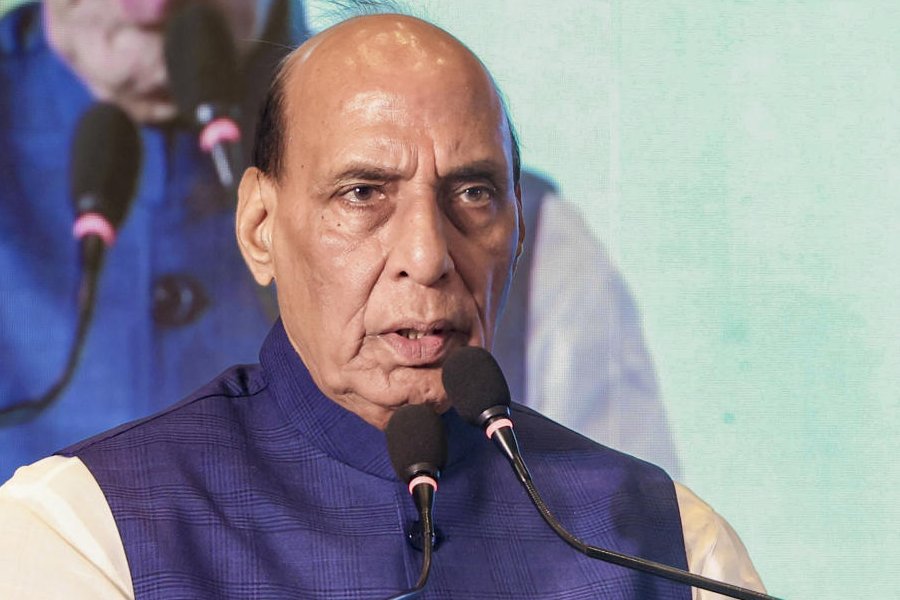
| Director of Indian Lac Research Institute Bangali Baboo believes a combination of research and brains is necessary for the sector to grow. Picture by Hardeep Singh |
India is and will remain the leader in lac trade says the Indian Lac Research Institute (ILRI) director Bangali Baboo, who believes that a combination of research and brains are necessary for the sector to grow.
ILRI has pioneered a lot of research into the lac sector, some of which has been appreciated abroad. The research activities have given Baboo?s tenure as ILRI director a boost. As for recent developments, the institute has recognised a new lac host ? the Ganda Babool tree.
Baboo, who has been director for the past three years, has been stressing on improvement of both quantity and quality of Indian lac produce. India to date is the world leader in lac production and meets 75 per cent of the world?s requirements.
Large-scale and professional efforts are on at ILRI, not only to meet this requirement, but also to improve on it. ILRI has also been vouching to play a role in related sectors such as high-level research in improving forest produce and in dye and paint industry.
Baboo holds a M.Tech in agricultural engineering besides a PhD. in mechanical engineering. He was selected for the Agriculture Research Service in 1976 and has since then worked in various posts as a scientist in crop research institutes across the country. Close to a hundred of his papers have been published in agricultural and technical bulletins.
Baboo specialises in design and development of machines, equipment, structures for processing and storage of commercial crops. He spoke to S. Shekhar on the functioning and future plans of ILRI.
lAre you satisfied with the research carried out by ILRI in the past, or do you think it could have performed better, taking into consideration that it is the only institution of its kind in South Asia, and that it is funded by Centre for Scientific and Industrial Research?
ILRI has always been active. We have found a number of new hosts for lac insects and have always looked into providing commercial dimensions to our research. We have also been in the forefront in officially establishing that Indian lac is the best in the world. ILRI has also played an important role in ensuring that the entire industry has become export-oriented.
lThe institute has recently developed a very handy lac processing unit. Can you tell us more about it?
It is a machine that can be both electrically and manually operated. We designed it with the intent that it can be used in villages where power supply is highly intermittent. One quintal of lac can be processed if the machine is manually operated. When electrically operated, the same machine can process three to four quintals of lac.
lWhere does lac actually find its use?
Lac is useful in the textile and dye industry. It is also used as an additive in food products. India exports 75 per cent of its produce and the varieties exported are of three types. Lac currently carries an average price of Rs 125 per kg.
lIs ILRI only active in Jharkhand? What role has it played in actually improving lac yield in other states?
We are more active in Jharkhand because the climate here supports lac cultivation. Otherwise, we have been doing a lot of work in states such as Bengal and Gujarat. We found that farmers in Jharkhand were more aware of the commercial benefits of lac than those in Gujarat.
lCan you produce some figures that point out the quantity of lac production in Jharkhand?
Jharkhand produces 10,000 to 12,000 tones of lac per year. This is quality lac that can be used in industries in a number of segments. However, cultivation of lac in proper conditions can give this figure a boost. For an example, ILRI cultivates 75 tonnes of lac in just 40 acres, which is a good figure. Lac is basically produced on Babool and Kusum trees here.
lConsidering that lac has such a tremendous export potential, do you think that the average farmer is getting the direct benefits of what he produces?
No, but something must be done to ensure that he does. There are middlemen involved who have contacts with the markets and take away the major portion of financial benefits.
Farmers need to be more aware about how they can best sell their produce. This is why not only farmers, but the most qualified people can join this industry.
lCan farmers export their produce directly? Or can a group of farmers who produce a good quantity of lac find a buyer abroad?
Yes they very well can. There are export councils that also help in this regard. For an example there is the Shellac export council in Calcutta is the closest body that can help a farmer from Jharkhand. They can form small co-operatives and then can such steps together.
Such co-operatives can also set up small industrial units, which can use lac as raw material. That could be a paint or textile manufacturing unit. Such co-operatives have been formed in Bengal. The basic point is that drives would remove the involvement of a middleman.