
Inquisitiveness is the key to invention.
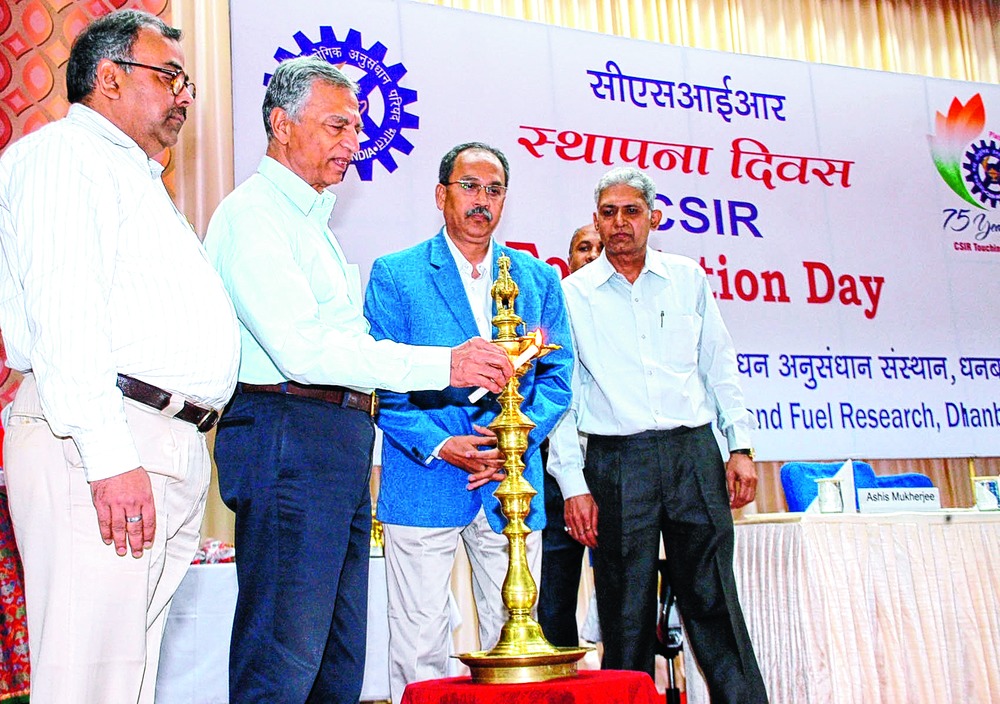
Eminent scientist Eshwarahalli Dwarakadasa, who was also a professor of Indian Institute of Science (IISc), Bangalore, from 1961 to 2003, pointed this out at the 74th foundation day of Council of Scientific and Industrial Research (CSIR) at Central Institute of Mining and Fuel Research (CIMFR) in Dhanbad on Friday.
"The natural tendency of children to ask questions should be encouraged in order to groom the scientists in them," said Dwarakadasa while delivering the guest lecture on the topic "Pursuit of excellence; need of the hour".
He said involvement of each student should be ensured in classrooms. "A survey of schools revealed that majority of the students fear punishment while asking questions from teachers. This situation should be avoided. The students should be trained to face all situations from childhood, which will help them in life. The teaching in schools should be made enjoyable by making the child overcome his inhibition," said Dwarakadasa during his hour-long speech.
Dwarakadasa, who is at present the chief executive officer and managing director of Karnataka Hybrid Micro Devices, further said: "We need to overcome our inhibitions in our respective spheres of work. We should not hesitate to talk and ask questions to our colleagues, seniors and juniors, share information, knowledge and data, which will in turn help us keep ourselves updated."
He went on to talk about the need to feel confident and have self-esteem.
"We should feel proud of our achievements and unique features. Self-esteem encourages us to work with renewed energy," Dwarakadasa said.
He then cited the example of Indian Space Research Organisation, which succeeded in launching 37 satellites out of its 39 moves. "It is better than the record of developed countries like Russia (40 per cent success rate) and USA (60 per cent)," Dwarakadasa said.
He added the excellence could be achieved by analysing the system and asked the Indian scientists to set new benchmarks in the field of research and development.
Earlier, CIMFR director Pradeep Kumar Singh welcomed him.
As many as 30 former staff, who retired earlier this year and completed 25 years of service, were also felicitated during the function.