Tuesday, 07 July 2026
Tuesday, 07 July 2026
Tuesday, 07 July 2026
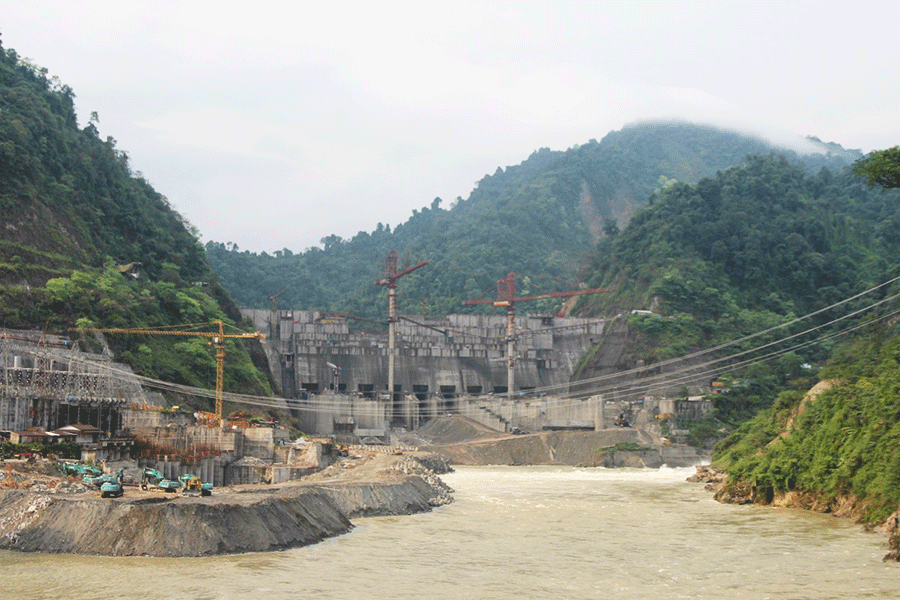
India’s largest hydropower developer, the state-owned NHPC Ltd, on 3 December notified the Bombay Stock Exchange (BSE) and the National Stock Exchange (NSE) that the test synchronisation of 250 megawatts (MW) out of the planned 2,000 MW at the Subansiri Lower Hydroelectric Power Project straddling the Assam-Arunachal Pradesh border with the national grid had been successfully completed.
It means power from this corner of India can be used in India’s northeast and the rest of the country. It’s a crucial step in a long journey for the northeast to be the “nation’s powerhouse”.
The following day, the NHPC’s stock began to attract significant investor attention.
However, as India’s largest hydroelectric power project nears commissioning, urgent warnings over the survival of a vital elephant corridor in Assam and Arunachal Pradesh is falling on deaf ears.
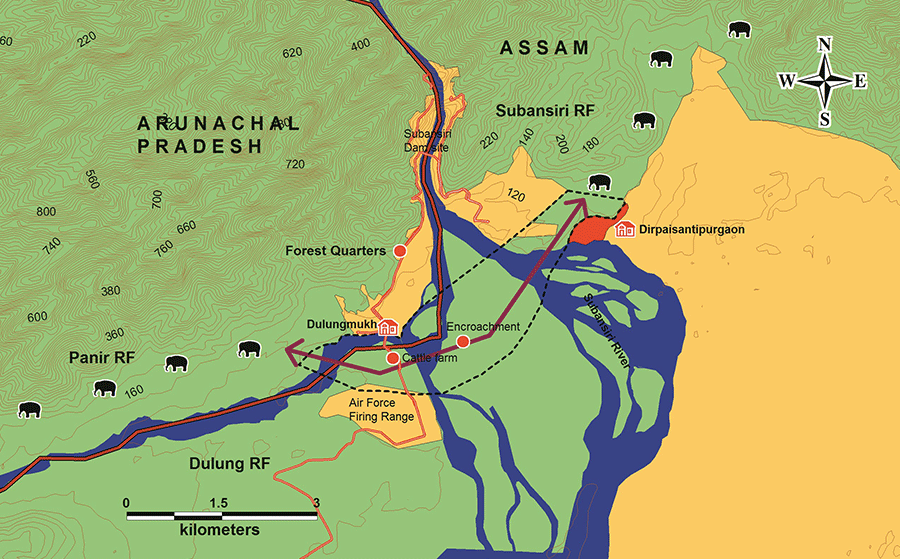
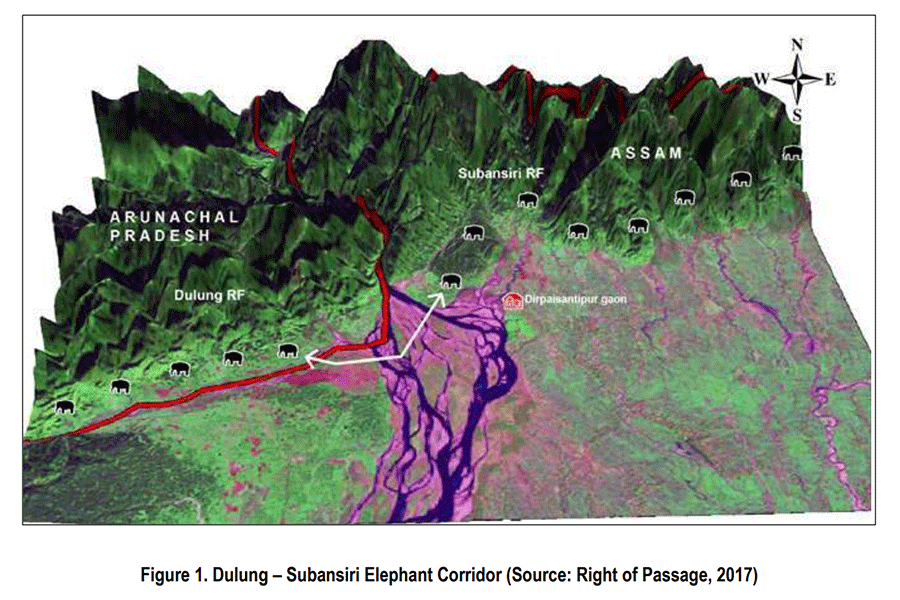
The 2,000-megawatt Subansiri Lower Hydroelectric Project, built by the NHPC, has been lauded as a cornerstone of India’s renewable energy ambitions. Yet, its location is fraught with ecological sensitivities; the dam sits amid a biodiversity hotspot and immediately upstream of forests and riverine tracts that form a critical elephant corridor.
The project witnessed a test run in October.
It’s also been 22 months since the Wildlife Institute of India (WII), India’s apex wildlife institute, warned in a report that unless urgent action is taken the project’s powerful surges of water, known as hydropeaking, could “wash away” elephants, particularly calves attempting to cross the river.
Recurrent incidents “could trigger behavioral avoidance of the vulnerable stretches resulting in functional loss of the corridor”.
The WII states that this is “an extremely crucial link” in maintaining elephant habitats along the Himalayan foothills in India’s northeast. At its worst, the fallout could be catastrophic.
‘Restrain from hydro-peaking’
The WII recommended that the NHPC should restrain from hydro-peaking until a multi-seasonal hydrological modelling study in relation to impacts on elephants and their habitat is carried out.
Although the recommendation was made to the standing committee of the National Board for Wildlife (SC-NBWL) in January 2024, the study has not been commissioned as yet.
The NHPC officials met the member secretary of the committee a day before the body met officially on 30 January 2024 for its 77th meeting and objected to the WII recommendation.
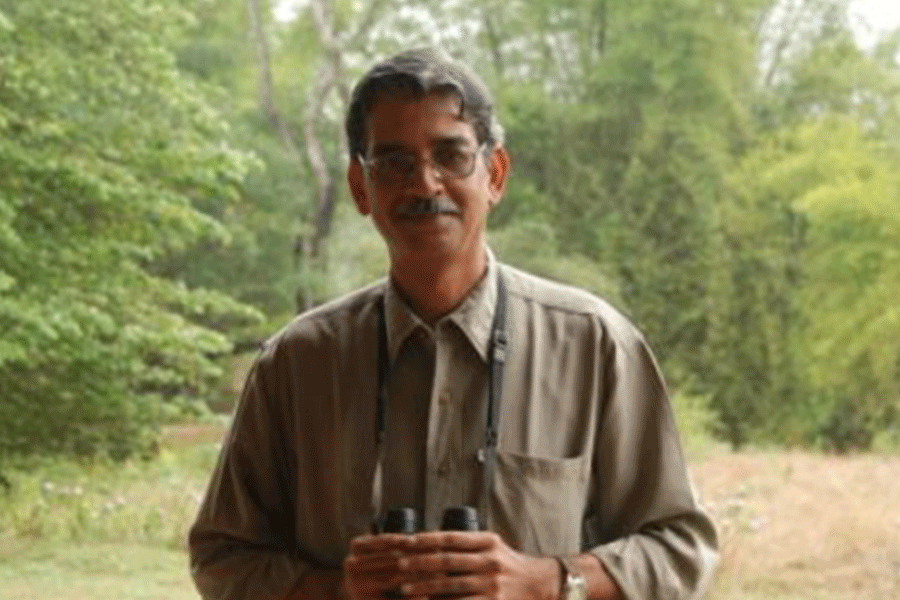
“The habitat of the elephant along the eastern Himalayan foothills, from Nepal eastward through Bengal, Assam and Arunachal Pradesh is extremely tenuous at several places, including the downstream area of the Lower Subansiri hydel project,” Raman Sukumar, ecologist and one of the foremost experts on Asian elephants, told The Telegraph Online:
“This is the reason that the standing committee of the National Board for Wildlife emphasised the protection of land and functionality of the elephant corridor here."
Sukumar added that the SC-NBWL has not rejected any of the recommendations made in the WII report, including the need for a hydrological study in the context of elephant movement.
“Such a study should be carried out and an action plan for the hydel operations as well as enhancing the conservation status of the corridor land prepared,” Sukumar said.
The non-commissioning of the study for almost two years shows that the NHPC seems to have had its way until now. Three additional units are expected to be commissioned in December, with the entire project scheduled for completion by March 2027.
“While hydro-peaking is indeed beneficial from a power sector perspective per se, there are several hydropower projects which do not carry out hydro-peaking for various reasons,” Neeraj Vagholikar, who has closely tracked environmental governance issues with respect to large hydropower in the eastern Himalayas, told The Telegraph Online.
“It is not a sacrosanct holy cow which has to be implemented even if elephants and other wildlife are at risk of being washed away.”
He pointed out that the WII has only asked for the process of hydro-peaking to be restrained pending completion of the multi-season hydrological study which will indicate whether hydro-peaking should be carried out or not, and if yes, to what extent.
“Even without hydro-peaking, the project will still generate the same units of electricity in any 24-hour period, only spread through the day instead of a few hours during hydro-peaking,” Vagholikar added.
‘Move away from the river’
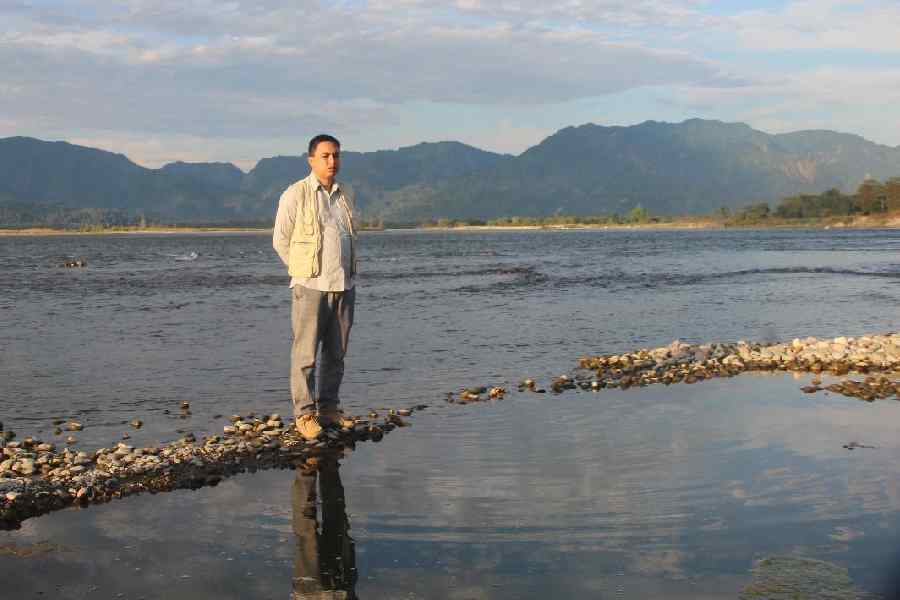
Keshoba Krishna Chatradhara, 46, has grown up in the lush, rolling forests along the downstream of the Subansiri river and has been witness to the anxieties and protests that surround the birthing process of the dam, and is alarmed.
Speaking to The Telegraph Online from Gogamukh in the Subansiri valley, he was clear that before commissioning of the dam the NHPC must accept the recommendations of the WII to ensure elephants can cross downstream safely.
“Hydro-peaking must be stopped as it will impact both downstream communities and major wildlife populations. This is a request to safeguard wildlife; the elephant issue is not just about a corridor, but about ecological balance. Blocking the corridor will cause irreparable environmental damage,” Chatradhara said.
Hydro-peaking refers to the practice of releasing large volumes of water through the turbines from a hydropower project at specific times, typically during peak electricity demand, to optimise power generation.
While hydro-peaking helps grid operators balance the fluctuations in the electricity grid and ensures a reliable power supply, it creates dramatic, sudden changes in downstream river flow. These surges can transform a gentle stream into a torrent within minutes, catching both wildlife and humans off guard.
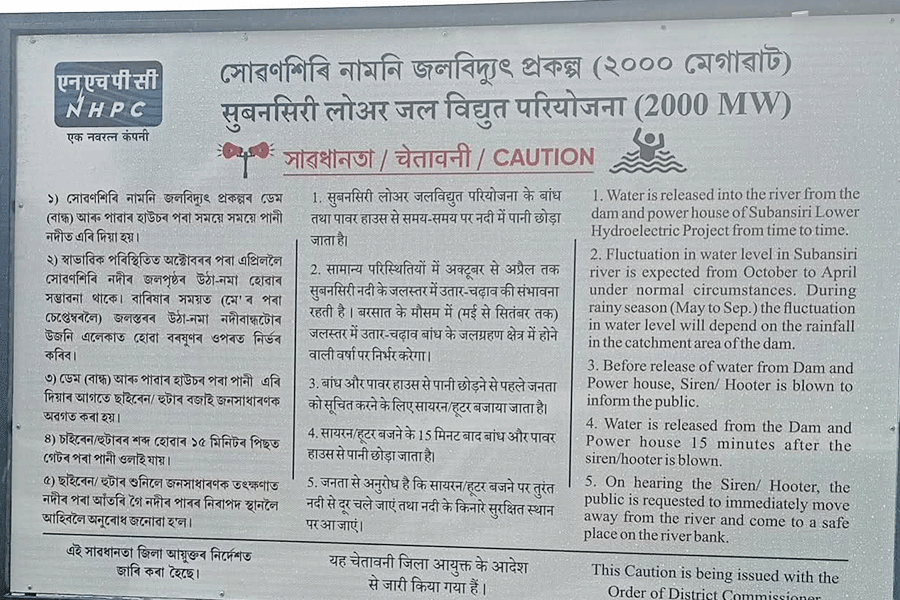
In this project the only measure undertaken to mitigate this peaking are several “caution notice boards” that have been put up in the downstream of the 2000 MW Subansiri Lower project by the NHPC in anticipation of commissioning.
As indicated in the notice board the usual flow fluctuations due to releases will be from October to April (that is due to peaking). There is no peaking done in monsoons as water level is maintained at minimum draw down level, but releases would be based on upstream rain.
People whose lives are intertwined with the river will be given a 15-minute notice, courtesy a hooter, to evacuate the river.
“On hearing the siren/hooter, the public is requested to immediately move away from the river and come to a safe place on the river bank,” says the notice.
Not just elephants at risk
Parag Jyoti Saikia, a scholar on the construction of hydropower dams, said that the Subansiri notice board ignores how life plays out in the region.
“The notice says what people should do. What about other life forms?” he asked. “One must remember that people engage with the river in different ways in different seasons, as the flow changes. But once the dam is completed and a new flow fluctuation starts it will blur the distinction of seasonal variation of water affecting lives and reshaping the use of the river.”
The remote control for the water flow is in the NHPC’s hands. That means after it’s commissioned hydro-peaking is likely to cause daily flow fluctuations between 240 cubic metres per second (cumecs) and 2579 cumecs in non-monsoon months, resulting in water level fluctuations of 1.5-2 metres (5-6 feet) in the first 40 km downstream according to the official Subansiri basin cumulative impact assessment and carrying capacity study.
That is a huge difference.
Saikia points out that not just elephants but other life forms will be affected as well because of the “wild swings in water flow” every day.
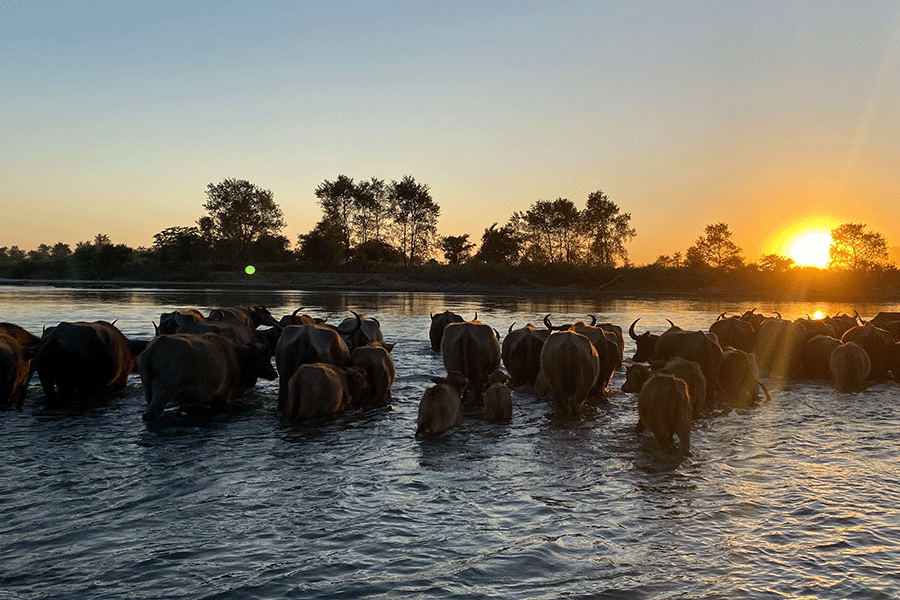
“Buffalo herders move from one sandbar to another depending on the flow of the river. It’s not just humans but even buffaloes have a sense of the flow.”
The Subansiri river, also called the Awanori or “mother river” by the Mising indigenous community, is a life support that sustains livelihoods along the river.
“Fishing, agriculture, livestock grazing, recovering driftwood, boats to transport people are all sustained by this river,” Saikia said.
New low in environmental governance
The WII report has several recommendations that point out steps for long-term interests of the elephant corridor.
This includes reduction of human interference by relocating labour camps and makeshift shops, closing of secondary roads and restoration of forests, shifting of dumpyards, regulation of a temple expansion and insulation of or laying of underground power lines to prevent electrocution.
Among its string of recommendations, it also suggests that villages in the vicinity of the corridor should be identified, local communities who are dependent on the corridor should be involved and alternate livelihoods developed.
Additionally, it recommends halting of Indian Air Force bombing practice during elephant migration periods to ensure safe passage for wildlife.
The SC-NBWL agreed to ask the state government to extend protection to the elephant corridor, but that protection holds little meaning if the animals crossing the river are going to get washed away.
Tongam Rina, journalist from Arunachal Pradesh who has closely tracked and written about hydropower and dams in her state for over two decades, says that poor environmental impact assessment has been a known aspect of hydropower development in Arunachal Pradesh, including downstream impacts in Assam.
“This case has gone a step further and become a new low,” Rina told The Telegraph Online.
“An impact assessment study as recommended by the WII has not been commissioned for almost two years due to opposition by the power company! The NBWL standing committee members will have blood on their hands if washing away of elephants is considered an acceptable trade-off to generate power from the project,” she added.
For now, shadowing the triumph of connecting with the national power grid is the disruption of life downstream and the probable disappearance of an elephant corridor.