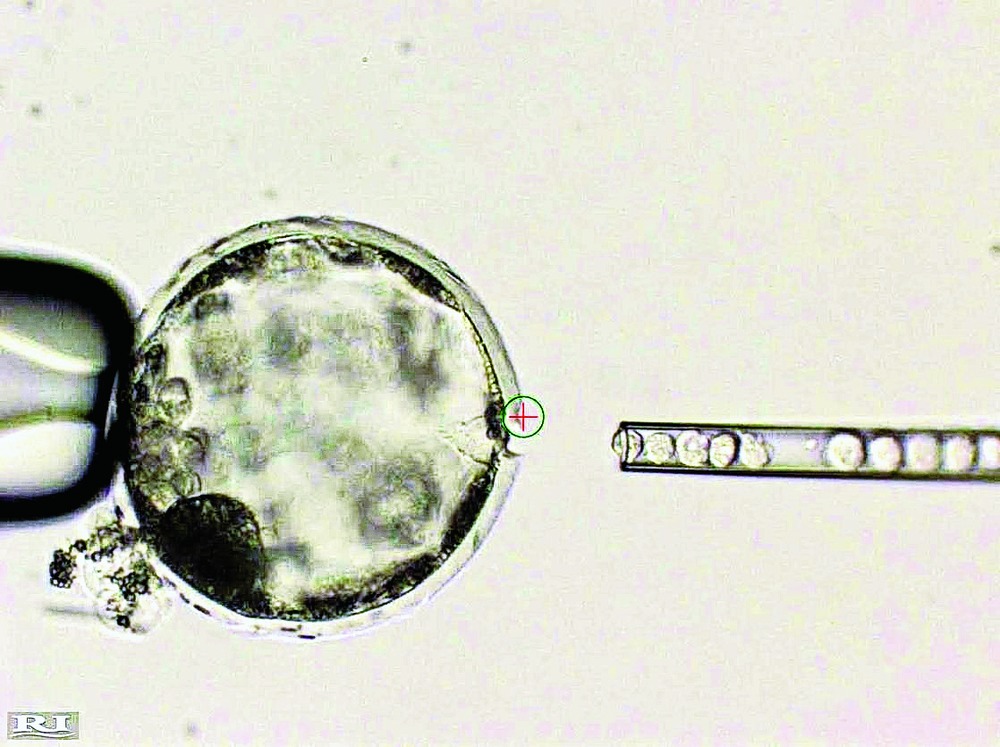

New Delhi, Jan. 26: Scientists have created the first embryos containing cells from both pigs and humans, a research milestone that they say is aimed at a better understanding of early development and generating transplantable human organs using large animals.
The scientists at the Salk Institute for Biological Sciences in the US with collaborators in Japan and Spain have also grown rat pancreas, heart and eyes in a developing mouse embryo, demonstrating a "proof-of-concept" that organs from one species can be grown in another.
"The ultimate goal is to grow functional and transplantable tissue or organs but we are far away from that," Juan Carlos Izpisua Belmonte, professor at the Salk Institute, said. "Our findings may offer hope for advancing science and medicine by providing an unprecedented ability to study early embryo development and organ formation. We've shown that a precisely targeted technology can allow an organism from one species to produce a specific organ composed of cells from another species."
Their studies involved inserting stem cells - progenitor cells that have the capacity to turn into various other cells in the body - from one species into an embryo of another species. The feats, described today in the research journal Cell, advance efforts to study inter-species chimeras, or organisms that contain cells from two species.
In one set of experiments, the scientists inserted rat stem cells that grew into pancreas, eyes, and heart in mice embryos. In a second set of experiments, the scientists inserted cells called human induced pluripotent stem cells into pig embryos and successfully implanted sows with those embryos, but stopped the experiments in four weeks to assess its safety and efficacy up to that point. They found that the human cells in some embryos had started to specialise into distinct cells, although the success was much lower than with the mice-rat chimera embryos.
Two years ago, Izpisua Belmonte and his colleagues had successfully attempted to integrate human stem cells into non-viable mouse embryos, allowing the human cells to develop into early-stage tissues. But scientists say it is not practical to grow human tissues in rats or mice because rodents are too small.