The Supreme Court on Monday issued notices to the Election Commission, the Bihar government and state minister Deepak Prakash on a petition challenging Prakash’s eligibility to hold a cabinet post despite not being a member of either House of the state legislature.
A bench of Chief Justice Surya Kant and Justice V. Mohana sought the trio's response on the petition filed by Bihar resident Rakesh Kumar Singh, who has challenged Prakash’s appointment as being contrary to constitutional principles.
The plea alleged that Prakash’s reappointment as the panchayati raj minister violated Article 164(4) of the Constitution and was in contravention of the top court’s 2001 judgment in the “S.R. Chaudhuri vs State of Punjab” case.
Under Article 164(4), a “minister who for any period of six consecutive months is not a member of the legislature of the state shall at the expiration of that period cease to be a minister”.
In its 2021 judgment, the apex court had quashed the appointment of then Punjab minister Tej Parkash Singh and held that it “would be subverting the Constitution to permit an individual who is not a member of the legislature to be appointed repeatedly for a term of ‘six consecutive months’ without him getting himself elected in the meanwhile”.
“The clear mandate of Article 164(4) is that if an individual concerned is not able to get elected to the legislature within the grace period of six consecutive months, he shall cease to be a minister, cannot be allowed to be frustrated by giving a gap of few days and reappointing the individual as a minister, without his securing confidence of the electorate in the meanwhile,” it had said.
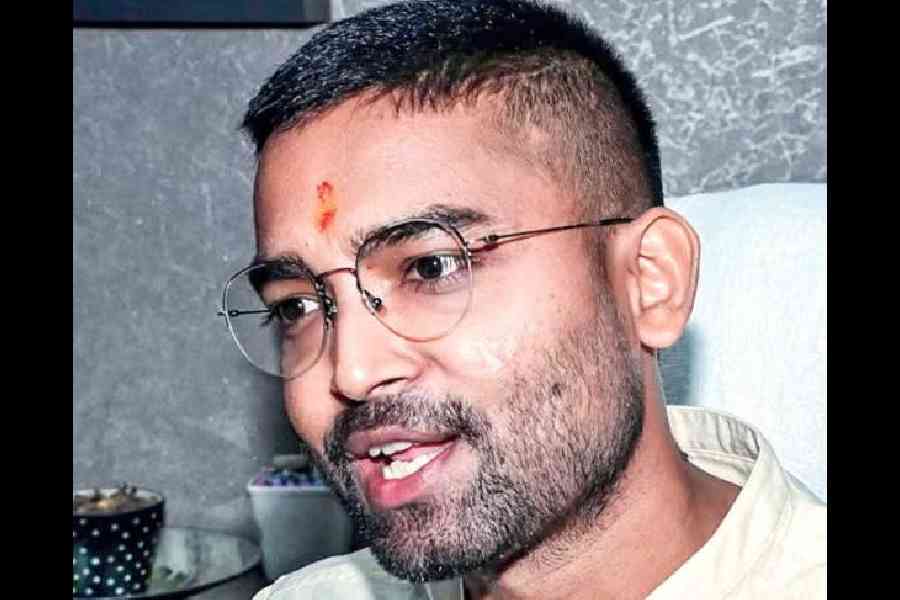
In the present case, Prakash, the son of former Union minister and Rastriya Lok Morcha leader Upendra Kushwaha, became a minister in the then Nitish Kumar government on November 20, 2025, without being a member of either House of the legislature. He bowed out of office along with Nitish, who resigned on April 15 this year.
However, Prakash was sworn in again as the panchayat raj minister in the Samarat Choudhary government, which assumed office on May 7.
The petitioner has submitted that Prakash's reappointment was a deliberate effort to circumvent the constitutional safeguards provided under Article 164(4) of the Constitution.
According to the petitioner, the six-month grace period under Article 164(4) expired on May 20, thus rendering Prakash ineligible to continue in office.
Terming Prakash's reappointment as a “colourable exercise of constitutional power to achieve indirectly what cannot be achieved directly under the Constitution”, the petitioner urged the apex court to declare his appointment as minister in the present Bihar government as being “ultra vires of the Constitution” and contrary to Article 164(4).