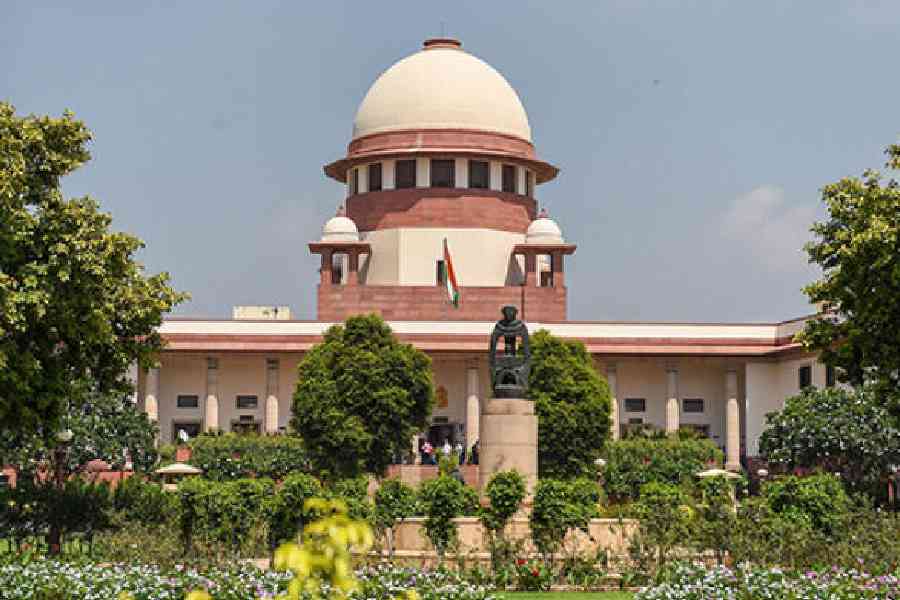
The Supreme Court has ruled that candidates from reserved categories such as SCs, STs, OBCs and PwDs (persons with disabilities) who availed themselves of the relaxation in a qualifying examination can migrate to the open/ unreserved category on merit in the final selection unless the rules specifically forbid such a shift.
“The appellants who admittedly are more meritorious than the last selected candidate under the general category cannot be excluded from consideration under the general category in the absence of any express prohibition in the recruitment rules/ notification,” a bench of Justices Pamidighantam Sri Narasimha and Alok Aradhe said in a judgment.
The relaxation in qualifying criteria only affects eligibility and not merit, and migration is permissible in the absence of any prohibition, it added.
The apex court passed the judgment while allowing the appeal filed by Chaya and other reserved category candidates challenging a Bombay High Court judgment that had upheld a Maharashtra government circular preventing reserved category candidates from migrating to the general category despite securing more marks than their general category peers.
The exclusionary decision was based on the fact that the exam qualification cut-off for reserved category candidates was 55 per cent against 60 per cent for the general category.
In this case, the appellants from reserved categories had challenged the merit list for the Teachers Aptitude and Intelligence Test, 2022 (TAIT), conducted by the Maharashtra State Council for Education (MSCE).
The appellants, despite securing higher marks, were excluded from the merit list published on February 25, 2024, on the ground that they had availed of the quota relaxation in the Teachers Eligibility Test (TET).
Their petition challenging the exclusion was dismissed by the high court, which prompted them to file the appeal.
Upholding their appeal, the top court referred to Clause 3 of the Maharashtra government’s official resolution, according to which “a relaxation of 5 per cent in the minimum qualifying marks will be provided to candidates belonging to SC, ST, Denotified and Nomadic Tribes (DNT), OBC, PwD, and other specified categories”.
Further, under Clause 7, "candidates securing a minimum of 60 per cent marks in the test will be considered as having passed. For candidates belonging to SC, ST, DNT, Special Backward Classes (SBC), OBC, and PwD, the minimum qualifying marks will be 55 per cent”.
The top court said that the requirement of obtaining 60 per cent marks in the TET was not an essential eligibility criterion as the guidelines issued by the NCTE (National Council of Technical Education) itself permitted such a relaxation. "The inter se merit of the candidates.. has solely been determined on the basis of performance in TAIT," the bench said, quashing the high court ruling.