|
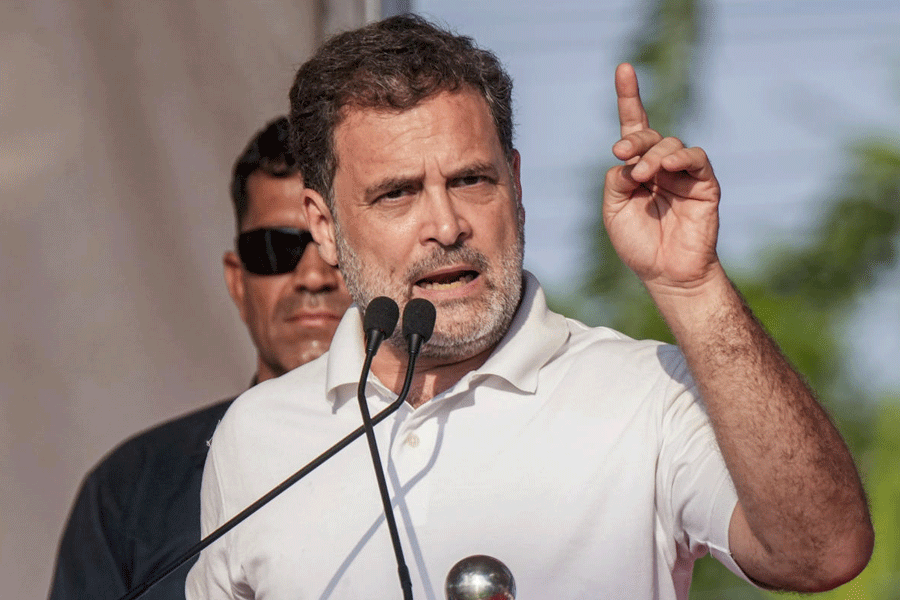
| Rahul Gandhi with winners of the Delhi University Students’ Union polls on Saturday. Picture by Prem Singh |
New Delhi, Sept. 8: Delhi University has elected its students’ union, but several aspiring leaders are licking wounds inflicted before the voting even began.
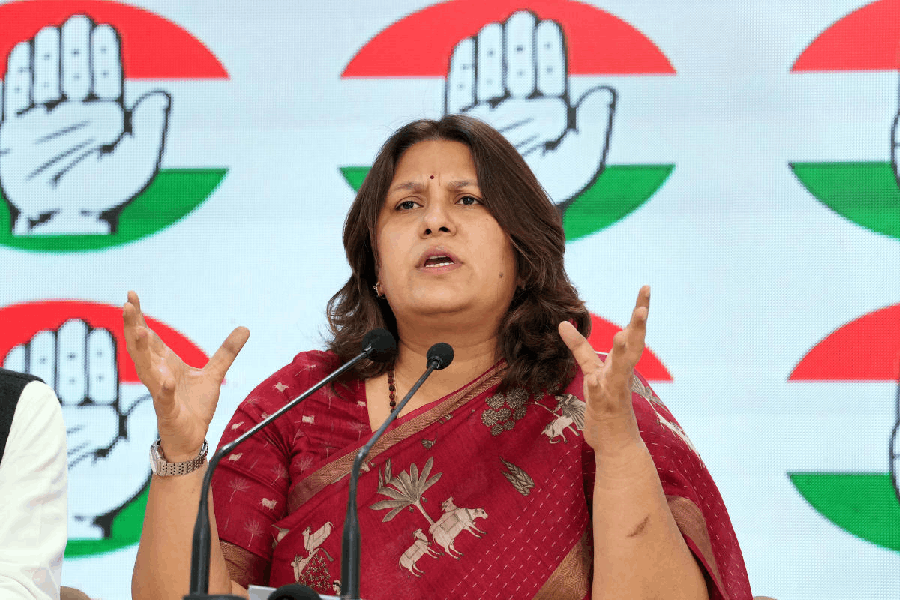
Congress-backed National Students Union of India (NSUI) today swept all four posts up for grabs in the DU Students’ Union. Amrita Bahri is the new president, Devraj Tehlan vice-president, Manish Choudhary secretary and Khushboo Sharma joint secretary.
Each of the four won by a margin of over 2,000 votes, particularly significant since this year the voter turnout was a mere 25 per cent — a sharp decline from the past decade — which has seen over 50 per cent students voting.
The decline in voter turnout, like much else in the polls, is being attributed to the Lyngdoh Committee recommendations. The Supreme Court last year made it mandatory to follow them.
Student leaders — across the political spectrum — predict that at least some of the changes this year’s DUSU elections have seen are here to stay, not just in Delhi but across India.
Of 50 candidates who filed nomination papers for the four posts, 10 — the highest percentage in at least a decade — was disqualified because of the recommendations.
“Till last year, if you told any DUSU candidate he would be disqualified because of poor attendance, he would just have laughed at you. Now we are the laughing stock,” a senior leader of the BJP-supported Akhil Bharatiya Vidyarthi Parishad said, clarifying that he was speaking for student leaders in general.
The ABVP has been stung the worst, with two of its candidates disqualified for poor attendance and a third because he had repeated a year.
On paper, DU has had age restrictions for some time now. University officials, however, admit they never really verified the age seriously.
“All these recommendations — of an age bar, academic performance and attendance — will have an even greater effect in other universities, where violent politics have replaced student polls,” said Amrita Dhawan, the outgoing DUSU president.
One effect that none of the students’ groups were prepared for was the declining number of their voters.
Lyngdoh had recommended a ban on loudspeakers, vehicles and printed bills and posters — the expensive crutches through which groups like the NSUI and ABVP traditionally bombard the university at election time.
Hand-made posters are the replacement Lyngdoh recommended. “We are not yet used to making hand-made posters on such a large scale as to cover the entire DU. That is one of the reasons campaigning was low key,” Nakul Bhardwaj of the ABVP said.
Though neither printed bills, nor vehicles or loudspeakers were completely absent, their numbers were significantly reduced.