Peace, once again, is the refrain as another turbulent year draws to a close in Kashmir.
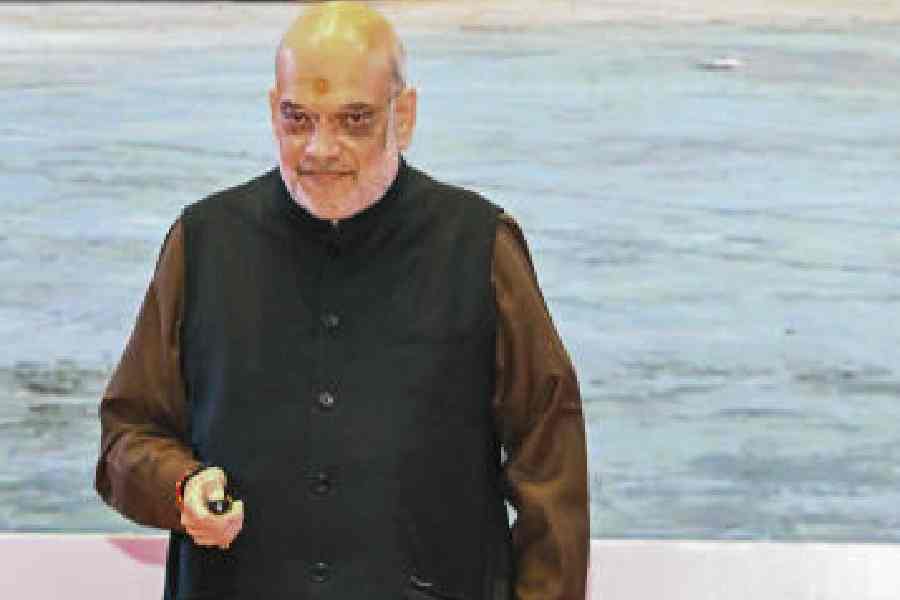
Home minister Amit Shah on Wednesday repeated the assertion that peace has returned to the Valley, a contention coming against the backdrop of a stormy year scarred by continued militant killings that kept Kashmir on the edge and pushed India and Pakistan once more to the brink of war.
Shah on Wednesday told a police graduation ceremony in Panchkula that the country faced three big law and order challenges, including “Leftwing extremism, terrorism in Jammu and Kashmir and armed outfits in the Northeast” some years ago.
“But after 10 years of Modi government, there is peace in these three areas and the country is safe on these fronts,” he said.
In Jammu and Kashmir, residents, however, carry bitter memories of the year, one in which peace seemed more elusive than in the years past.
The South Asia Terrorism Portal put the number of deaths in militancy at 92 this year up to December 23, including 28 civilians, 17 security force personnel, 46 militants and one unspecified case.
The casualties were more in 2024 at 126, including 31 civilians, 26 security forces and 69 militants, but figures for the current year do not fully capture the scale of turbulence on the ground.
To begin with, they do not include dozens of lives lost during Operation Sindoor, launched in the wake of the Pahalgam attack, or casualties in an “accidental blast” caused by explosives seized from doctors involved in the “white-collar module”.
The year began with a buoyant mood, with tourist hotspots witnessing packed crowds, but the euphoria lasted only for a few weeks as the Valley was shaken by the deadliest ever attack on tourists in Pahalgam, emptying the region in two days.
The attack killed 25 tourists and one local ponywallah. The Valley never recovered from the shock as it dealt a body blow to its already struggling tourism economy.
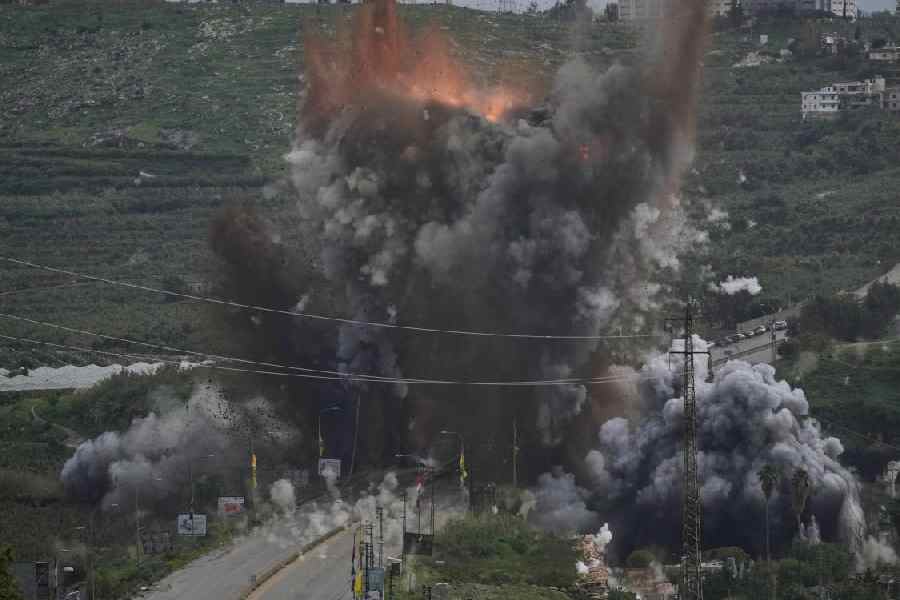
A security force crackdown led to the detention of thousands of people. Dozens of houses, of suspected militants and their neighbours, were blown up using explosives, widely perceived as reprisal attacks.
On May 7, India launched Operation Sindoor in response to the April 22 Pahalgam attack. At least 21 civilians and eight military personnel died in Pakistani shelling during this period. It took security forces more than three months to kill three militants reportedly involved in the Pahalgam attack.
A challenge as big as the Pahalgam attack unfolded in November when police unearthed a “white-collar terror module” comprising several highly educated doctors planning to carry out attacks in New Delhi and other places.
Luckily for the security establishment, the module was busted even before they could carry out their plans. But more than two dozen lives were still lost.
Dr Umar un Nabi, a suspected bomber, blew up his car near the Red Fort, leaving around a dozen dead and many injured.
Days later, a police station that was the nerve centre of the investigations related to the high-profile module was blown up in a powerful “accidental blast”, killing nine, mostly policemen, and injuring 32 others and turning the building into a heap of mangled wreckage and twisted metal.
A Srinagar hotelier wondered that if this was peace, what would violence look like? “There has hardly been a day of peace since April. Our industry is on the brink and thousands have been rendered jobless,” he said.