India has said no new issues or legally binding obligations should be included in the formal UN climate-change negotiation discourse and rued a decline in global climate financing from developed countries.
“No new issues or obligations beyond agreed mandates should be considered. Initiatives outside the UNFCCC process should remain voluntary in nature,” India said in its opening plenary statement at the UN’s mid-year climate meetings here in Germany on Monday.
The statement was read out by Harkeerat Singh Randhawa from the external affairs ministry. He is posted as the second secretary at the consulate general of India’s office in Berlin.
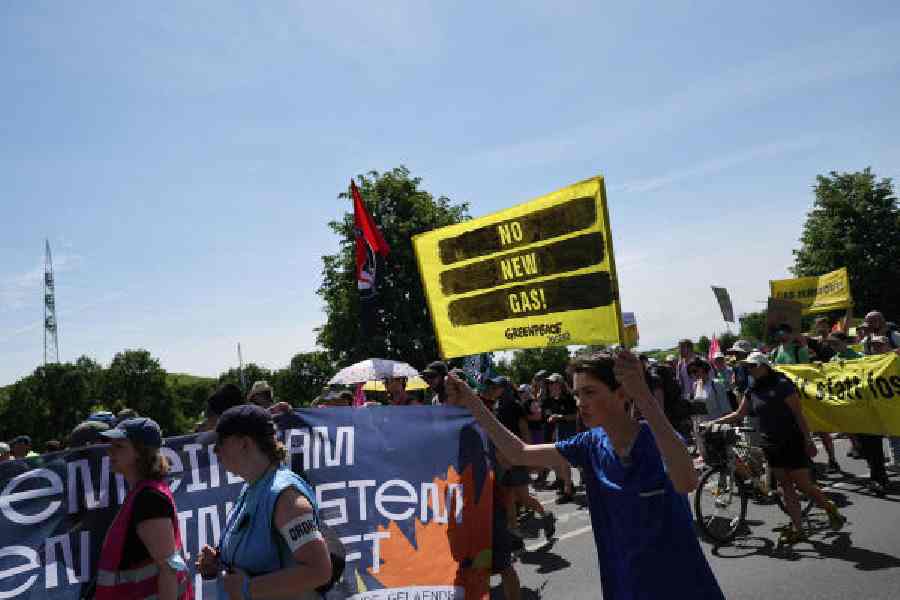
The Indian statement is assumed to be a response to a growing civil society-led demand for more pointed UN-led actions to cut down on fossil fuels following the Santa Marta fossil fuel treaty meeting in Colombia in April.
The first international conference on transitioning away from fossil fuels was co-hosted at Santa Marta by the governments of Colombia and the Netherlands. Fifty-seven nations had attended the conference to establish practical legal, financial and economic pathways to phase out coal, oil and gas. India did not participate in that meeting.
Responding to a query from The Telegraph on Tuesday, the executive secretary of the United Nations Framework Convention on Climate Change said the UNFCCC highly valued all key voluntary initiatives, but their inclusion in the formal UN discourse had to be decided by the negotiating governments led by the COP (Conference of the Parties) president.
“India believes that the international climate agenda must now focus on implementation (and) we ask that the Article 9.1 work programme receive the prominence and dedicated agenda space it deserves…,” the Indian statement said.
Article 9.1 of the Paris Agreement mandates that developed countries provide financial resources to assist developing nations with climate mitigation and adaptation, continuing their obligations under the UNFCCC.
The statement said India was concerned about declining climate fund replenishments and a widening adaptation finance gap.
As the back-and-forth between blocs of developed and developing countries continues over finance, 74 global organisations demanded in Bonn that health be made central to the COP31 negotiations scheduled to be held in Antalya, Turkey, in November.
The Right to Clean Air Platform Türkiye led the coalition, which includes key outfits such as 350.org, The Lancet Countdown on Health and Climate Change, and the Global Climate and Health Alliance (GCHA).
India, facing an unprecedented and severe public health crisis linked to intensifying climate change, could be a major beneficiary if climate change-linked health issues are prioritised at the Turkey COP.
The COP31 presidency had already included health as a standalone item on the Action Agenda in line with civil society demands.
Global health and environment organisations have demanded that health be established as an independent and robust priority area within the COP31 Action Agenda. Health should be central to all themes, especially energy, transport, industry, agriculture, waste and adaptation, and should be included systematically in climate policies to help mitigate climate-related health risks and inequalities, thereby enhancing social resilience, the advocacy groups have demanded.
“Fossil fuels should be recognised as ‘health-harming products’, considering the health impacts they create throughout their entire life cycle, from extraction to combustion,” the demand charter added.