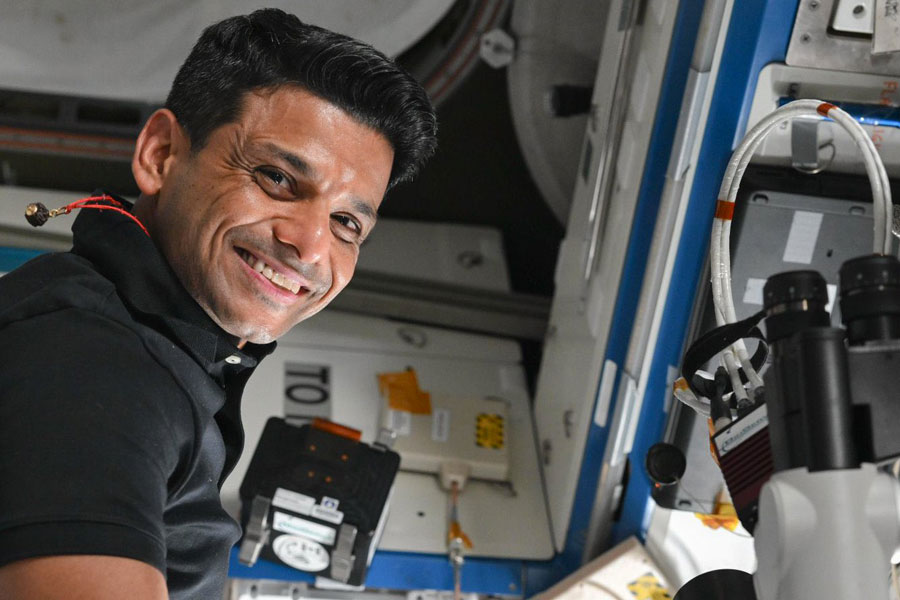
India must press ahead with Mission Gaganyaan with sustained enthusiasm despite the inherent complexities and unknowns of human spaceflight, astronaut Shubhanshu Shukla said, arguing that success would place the country among a select group of spacefaring nations.
Addressing reporters in Bengaluru, Group Captain Shukla — an Ashoka Chakra awardee and one of the four astronauts chosen for the mission — underscored the scale of the undertaking.
“I think, as a nation, what we are trying to do with Mission Gaganyaan has only been done by three other countries in the world,” he said.
The Gaganyaan mission, India’s first human spaceflight programme currently under development, aims to send a three-member crew on a three-day mission to space and bring them back safely to Earth. According to ISRO, the launch is targeted for 2027.
“These are very complex and challenging missions. We are trying to do something so audacious, whatever time it takes, we need to continue to work towards it with the same enthusiasm that I had on day one, and that will be there on the final day when we finally launch humans into space,” Shukla added.
The Indian astronaut acknowledged that delays and hurdles were natural in such cutting-edge ventures while maintaining that they should not be seen as setbacks.
“I do understand the complexities and challenges that are associated with such an ambitious mission. And yes, definitely there are going to be some unknowns along the way before we finally accomplish it,” the Group Captain said.
On India–US cooperation in the space sector, Shukla cited his own Axiom mission as an example of how international collaboration can advance space exploration.
“So my Axiom mission itself was a very good example of how collaboration works in the field of spaceflight or space exploration, and I think it serves as a very good beacon for all the other sectors as well,” he said, adding that joint efforts open doors for future partnerships and serve as models for countries to work together towards common goals.
He noted that comparisons between spacefaring nations are inevitable, but they must account for differing starting points and scales of operation.
Shukla also stressed that India’s identified missions are being actively supported by the government, with growing investment in science and space exploration over time. He expressed hope that such support would continue in the years ahead.
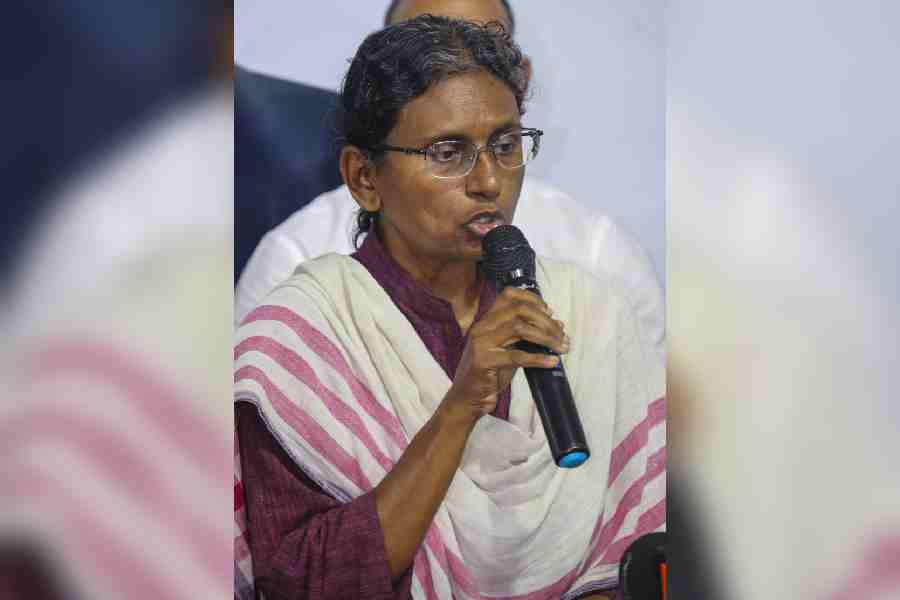
Group Captain Prasanth Nair, an astronaut chosen by the ISRO for the Gaganyaan mission, said, “I can only say, just be patient. Everything is happening exactly the way it has to happen,” Nair was responding to a query by reporters regarding the delay in the project.
He likened the Gaganyaan to an "inflection point".
“People should look for the inflection point. And that inflection point, if I may dare say, is going to be the Gaganyaan moment when India puts an Indian astronaut on an Indian rocket, in an Indian capsule, from an Indian spaceport here, and brings him back safely,” the Indian astronaut said.
He stressed that India will be only the fourth country in the world if it succeeds.
Nair also noted that the moment is important because “when India does something, it does it differently”.
“We believe in Sabka Saath, Sabka Vikas (Collective development with everyone’s participation). We gave vaccines to the rest of the world even when we ourselves needed them,” he said, recalling how India tackled the COVID-19 pandemic.
“This time also, when we go to space and the Gaganyaan moment happens—when an Indian human goes to space—the rest of the world, especially those who cannot send their own astronauts, will say, ‘Thank God India went’, because once we go, we will hold that space for all of us,” he noted.