

New Delhi, April 19: The Supreme Court today directed the revival of conspiracy charges in the Babri case against BJP veterans such as L.K. Advani and Murli Manohar Joshi, transferred the trial from Rae Bareli to Lucknow and ordered daily hearings with a two-year deadline.
Among the others facing the charge is Kalyan Singh, the current Rajasthan governor and the then Uttar Pradesh chief minister, Union minister Uma Bharti and Ayodhya spearhead Vinay Katiyar. Kalyan will have immunity from the trial till his term at the Raj Bhavan ends, after which the conspiracy charge will stand revived.
The flurry of action came 25 years after the Babri Masjid was demolished in Ayodhya and at a time large sections of the minority community are feeling the same sense of siege that had set in when kar sevaks carried out in 1992 the most schismatic act in independent India.
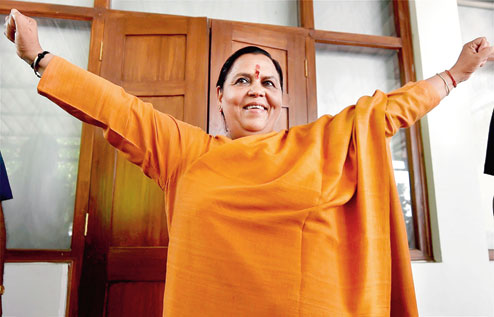
A sign of the times was on full display today when Uma, the sole central minister named in the case, declared soon after the court ruling that she was "proud, unapologetic and unrepentant" about her association with the Ram Janmabhoomi movement.
The BJP showed restraint in public but, privately, several leaders appeared to be relishing the prospect of "the Ayodhya issue" simmering again around the time the next general election is held.
There appeared little downside for the current BJP dispensation. If anything, those running the risk of paying a price are unlikely to make too many party leaders shed tears now.
Advani and Joshi had tried to take on Narendra Modi before and after he became Prime Minister and have retired hurt. Reduced to a " margadarshak (mentor)", Advani's name crops up occasionally as a possible candidate for President, the prospects of which are expected to be undermined by today's ruling.
However, for the rest of the country, the case resurrects images of some of the darkest days of the latter half of the 20th century, which set off a chain reaction that is yet to subside. From the Bombay serial blasts to the Godhra train carnage to the Gujarat riots that made Modi the most controversial politician in India, the impact of what happened on December 6, 1992, is felt to this very day.
The Supreme Court bench of Justices P.C. Ghose and R.F. Nariman described the circumstances that led to the demolition as "crimes which shake the secular fabric of the Constitution of India".
Advani and the others will now be charged with criminal conspiracy under Section 120(B), along with other pending charges such as promoting enmity between classes, making imputations and assertions prejudicial to national integration and circulating false statements and rumours with the intent to cause mutiny or disturb public peace. All the charges carry a maximum punishment of five years.
The apex court passed the judgment while upholding an appeal filed by the CBI challenging an order of Allahabad High Court that had upheld the discharge of the accused by a Rae Bareli court in May 2001.
"In the present case, crimes which shake the secular fabric of the Constitution of India have allegedly been committed almost 25 years ago. The accused persons have not been brought to book largely because of the conduct of the CBI in not pursuing the prosecution of the aforesaid alleged offenders in a joint trial, and because technical defects which were easily curable, but which were not cured by the state government," the bench said.