Glaciers across the Hindu Kush Himalaya (HKH), a major part of which falls within India, are melting at double the rate since 2000 and impacting major river systems such as the Indus, Ganges and Brahmaputra, claimed two reports released on Saturday by the International Centre for Integrated Mountain Development (ICIMOD).
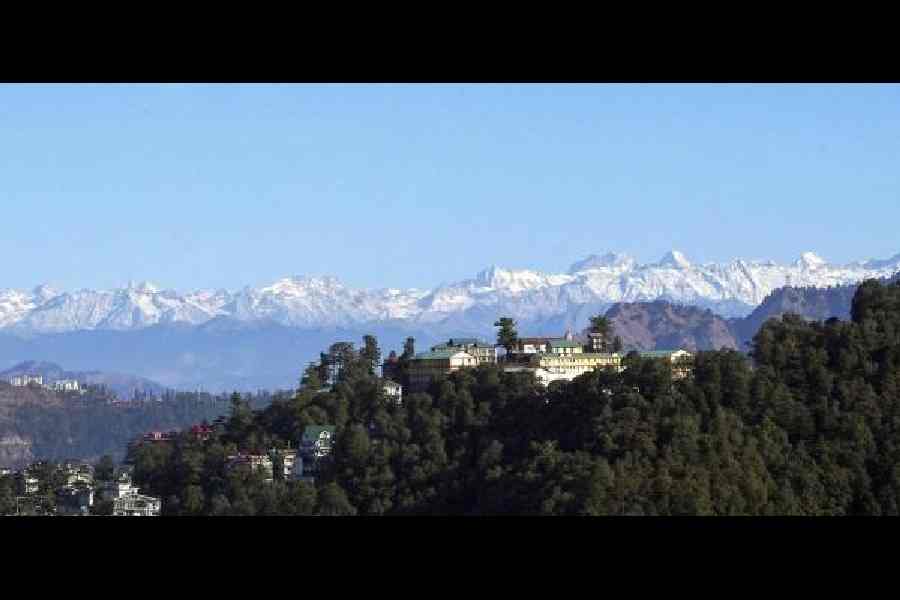
The region, spanning 3,500km across Afghanistan, Bangladesh, Bhutan, China, India, Myanmar, Nepal and Pakistan, is considered crucial for water security and biodiversity of the zone that supports over 240 million people. Himachal Pradesh, Uttarakhand and the Northeast are part of this region.
The reports titled “Changing Dynamics of Glaciers in the Hindu Kush Himalaya Region from 1990 to 2020” and “HKH Glacier Outlook 2026: Insights from 50 Years of Himalayan Glacier Monitoring” claim that the region has lost up to 27 metres of ice thickness since 1975. They point out that this could have severe consequences for the almost two billion people downstream who are dependent on meltwater from the glaciers.
“This isn’t a distant problem; it’s a crisis unfolding in real-time, with new disasters every summer and monsoon. The fact that ice loss rates have doubled this century should shock us all into action,” says Pema Gyamtsho, director-general of ICIMOD. Hit by “the triple planetary crisis” of climate change, pollution and biodiversity loss, HKH is now an extremely vulnerable zone, claims ICIMOD.
“HKH holds the largest volume of ice outside the poles, with an inventory of over 63,700 glaciers covering nearly 55,782 square kilometres. These glaciers are the source of at least 10 major Asian river systems, supporting the food, water, energy, and livelihood security of billions,” says a statement from ICIMOD, a Kathmandu-based global organisation working on climate challenges in the region.
“… Around 78 per cent of this glacier area, located between 4,500 and 6,000 metres above sea level, is highly exposed to elevation-dependent warming,” it adds.
The reports point out that major river systems in India and adjoining countries are at stake because of the melting glaciers. “…The largest absolute area losses are concentrated in the Indus, Ganges and Brahmaputra basins, where over 74 per cent of the region’s glaciers are found, underlining their critical vulnerability,” ICIMOD said.
ICIMOD’s analysis claims that between 1990 and 2020, HKH glaciers lost about 12 per cent of their total area and 9 per cent of their estimated ice reserves. The analysis highlights the threat to small glaciers. “…The losses are most acute for the region’s smallest glaciers — those below 0.5 sq km — which are shrinking more rapidly than others,” says Sudan Bikash Maharajan, remote sensing analyst at ICIMOD and lead author of the glacier dynamics report.
“This poses an immediate risk of localised water shortages for high mountain communities and intensifies hazards like glacial lake outburst floods. The danger is magnified because three-quarters of the region’s glaciers fall into this vulnerable size class,” said Maharajan.
The reports also highlight a crucial data gap — among the 38 glaciers, only seven meet the global benchmark monitoring standards. “We are trying to navigate a rapidly changing future with an incomplete map,” said Mohd Farooq Aslam, an author of one of the reports, adding that: “…Large parts of the Himalaya remain blind spots.”
“The larger glaciers above 10 sq km hold nearly 40 per cent of the region’s natural water reserves. The heavily glaciated Karakoram range, home to 18 of the 25 largest glaciers, remains highly vulnerable to long-term water, food, and disaster risks with ramifications for the entire region,” the report adds.
Y. P Sundriyal, a geologist and Himalaya expert, said climate change was a reality, and its impacts were going to be quite severe in a geologically fragile and ecologically sensitive Himalayan region of India.
“But if we keep on only blaming it, we will only be shifting the goalpost. A lot of responsibility also falls upon the policy and practice that we pursue,” he said.