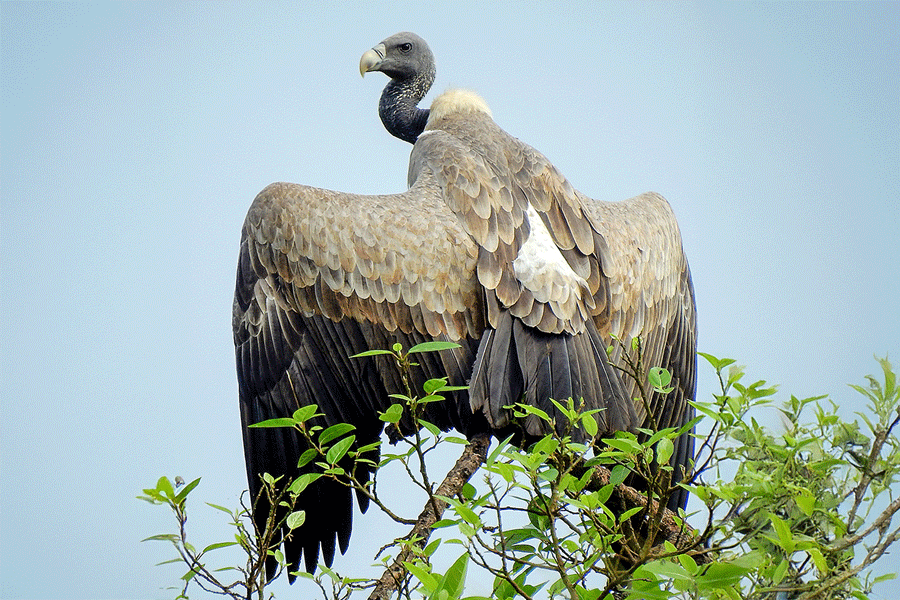
The Bombay Natural History Society (BNHS) and the Maharashtra Forest Department have tagged 15 long-billed vultures at the Melghat Tiger Reserve in Amravati district as part of efforts to study movement patterns and bolster conservation of the endangered species.
The tagging programme, conducted on December 19, was led by Dr Sachin Ranade with support from Bhaskar Das and Athira of the Vulture Reintroduction Programme. Of the 15 birds, 11 were fitted with GSM tags and four with satellite PTT tags, BNHS said in a press release on Wednesday.
The tags were attached using a backpack-style harness, a safe method known as harnessing. All vultures were also fitted with blue-coloured leg rings carrying identification numbers. The blue colour indicates that the ringing was done in India, while the letter “M” denotes Maharashtra as the release site.
The solar-powered tags will help scientists track movement, travel distance, safety and survival of the vultures after release into the wild. Chief Wildlife Warden of Maharashtra Sreenivas Reddy is monitoring and guiding the project.
The initiative comes amid worrying findings from a new pan-India assessment by scientists from the Wildlife Institute of India (WII), which found that vultures have vanished from nearly 72 per cent of their historically known nesting sites. The study warned that once vulture populations collapse in an area, natural recolonisation is often slow and uncertain, leaving the species in a precarious state.
The vultures were born at the Vulture Conservation Breeding Centre in Pinjore, Haryana, which is BNHS's first such centre in India. They were later brought to Melghat, where they were given training of feeding on their own and allowed to acclimatise for the last eight months before being released.
During this period, the birds are regularly checked for health and monitored through CCTV cameras to observe their natural behaviour.
Kishor Rithe, Director of BNHS, said that making the landscape safe for vultures is a key step before their release. He explained that awareness programmes were carried out in nearby areas, along with pharmacy surveys to ensure that harmful and banned veterinary medicines are not sold or used.
Stakeholders, such as the veterinary department, pharmacists, and local villagers were actively involved in this process.
Expressing happiness over the completion of the tagging exercise, Adarsh Reddy, Field Director of Melghat Tiger Reserve, said, "This effort marks an important step towards the conservation and successful reintroduction of long-billed vultures in the Melghat landscape. We hope that these birds will get support from the animal husbandry department and the Food and Drugs Administration department from Buldhana, Akola, Amravati districts as well as the concerned departments from adjoining Madhya Pradesh."