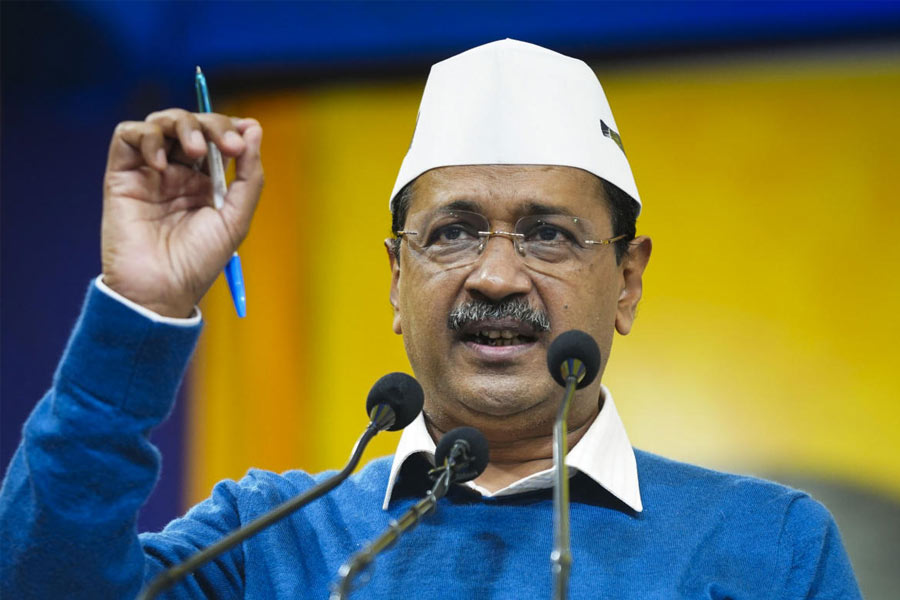
Delhi High Court on Monday sought a response from former chief minister Arvind Kejriwal and others on the CBI’s appeal seeking to quash the trial court’s February 27 order discharging the accused in the liquor policy case.
Among others, former Delhi deputy chief minister Manish Sisodia and Telangana Jagruthi president K. Kavitha have also been asked to file a reply to the CBI’s appeal.
Justice Swarana Kanta Sharma, while issuing notice to Kejriwal and 22 others, said the trial court’s “scathing remarks” against the investigating officer needed consideration and stayed its direction recommending departmental action against the officer.
The high court also said it would issue an order directing the trial court to defer proceedings to a later date in the connected money-laundering case being investigated by the Enforcement Directorate.
While dismissing the charges against Kejriwal and others, the trial court had pulled up the CBI by pointing out that “the material placed on record does not disclose even a prima facie case, much less any grave suspicion, against any of the accused persons”.
Solicitor-general Tushar Mehta, appearing for the CBI in the high court on Monday, justified the agency’s case and said there was enough evidence to frame charges against the accused.
The CBI said it had collected enough evidence in support of a conspiracy and bribery behind the formulation of the now-scrapped liquor policy.
“The material, taken cumulatively and at face value as required by law, undeniably establishes grave suspicion of a systematic criminal conspiracy involving public servants and private individuals to manipulate the Delhi Excise Policy 2021-22 for illegal gratification, followed by money laundering and utilisation of proceeds for election expenditure of the AAP,” Mehta submitted.
Mehta said the trial court order was perverse and “turned the criminal law on its head”.
The matter has been listed for further hearing on March 16.