New Delhi, Sept. 10 (PTI): The Reserve Bank of India is not using "counting machines" to tot up the demonetised Rs 500 and Rs 1,000 notes in any of its offices, the central bank has said in an RTI reply.
Rather, it is using "sophisticated Currency Verification and Processing machines for checking the numerical accuracy and genuineness of the currency notes, including SBNs (specified bank notes that have been scrapped)", the Reserve Bank clarified this evening in a statement that followed the August 10 RTI reply.
"These machines are way superior to the note-counting machines. With a view to augmenting processing capacity, the RBI is using the available machines in two shifts and has been using some machines temporarily drawn from commercial banks after suitable modifications. The RBI is also exploring other options to augment processing capacity even further."
An official said the counting machines were typically very small and were used mostly in the branches of commercial banks to tally smaller numbers of notes.
In reply to the RTI application, the central bank had refused to state the number of personnel counting the scrapped notes, saying that compiling such data would "disproportionately divert" its resources.
On August 30, in its annual report for 2016-17 (for the year ended June 30), the Reserve Bank said that Rs 15.28 lakh crore, or 99 per cent of the value of the demonetised notes, had returned to the banking system.
It added that only Rs 16,050 crore of the Rs 15.44 lakh crore in the old high-denomination notes had not returned.
When Prime Minister Narendra Modi announced the note ban on November 8 last year, there were 1,716.5 crore pieces of Rs 500 and 685.8 crore pieces of Rs 1,000 notes in circulation, totalling Rs 15.44 lakh crore in value, the central bank said.
Asked about the dates it began and finished counting the demonetised notes, the central bank said in its RTI reply that "the processing of notes is a continuous activity".
It said that while the counterfeit currency notes made up a minuscule number, the Reserve Bank had after the demonetisation spent Rs 7,965 crore printing the new notes (of Rs 500, Rs 2,000 and other denominations) - more than double the Rs 3,421 crore spent the previous year.
Finance minister Arun Jaitley had said that the demonetisation, which had slowed economic activity and inconvenienced the common man, was aimed at flushing out black money, eliminating fake currency, striking at the root of terror financing, converting the non-formal economy into a formal one to expand the tax base and employment, and boosting the digitisation of payments to make India a less-cash economy.
In his reaction to the RBI report, former finance minister P. Chidambaram had wondered whether demonetisation was "a scheme designed to convert black money into white".
"RBI 'gained' Rs 16,000 crore, but 'lost' Rs 21,000 crore in printing new notes! The economists deserve Nobel Prize. Rs 16,000 cr out of demonetised notes of Rs 15,44,000 cr did not come back to RBI. That is 1%. Shame on RBI which 'recommended' demonetisation," he had said in a series of tweets.
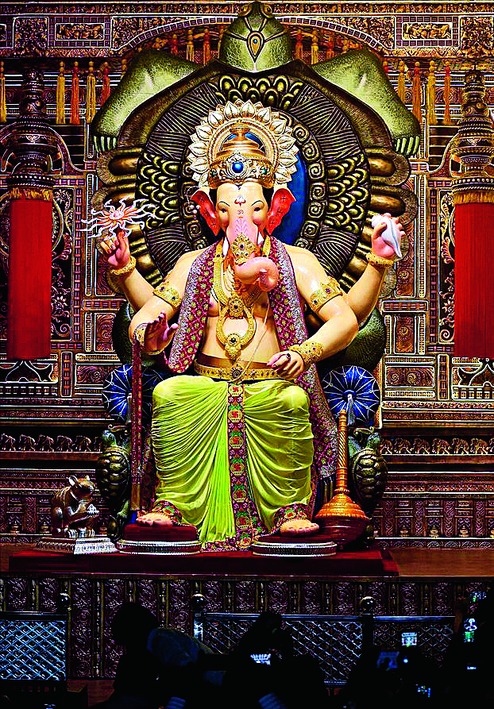
OLD NOTES FOR GANESH

Banned currency notes made their way to Mumbai’s most popular Ganesh pandal — Lalbaugcha Raja (in picture) — with devotees offering over Rs 1 lakh in demonetised currency. Of the around Rs 6 crore received in the donation box during the 11-day Ganesh festival that ended on September 5, there were 105 notes of the scrapped Rs 1,000 denomination. There were also 50 notes of the scrapped Rs 500 denomination, an official from the state charity commissioner’s office said. The collection this year was far less than the Rs 8 crore received last year.