The Bombay High Court on Wednesday stayed all present and future actions by three banks seeking to declare the accounts of Anil Ambani and his company Reliance Communications Ltd as “fraud”, observing that the process violated provisions of the Reserve Bank of India’s Master Directions.
Justice Milind Jadhav, while passing the interim order, noted that the action initiated by the Indian Overseas Bank, IDBI and Bank of Baroda was based on a forensic audit report prepared by external auditor BDO LLP.
However, the court held that the report could not be relied upon as it had not been signed by a duly qualified chartered accountant, which is a requirement under the RBI’s 2024 Master Directions on fraud.
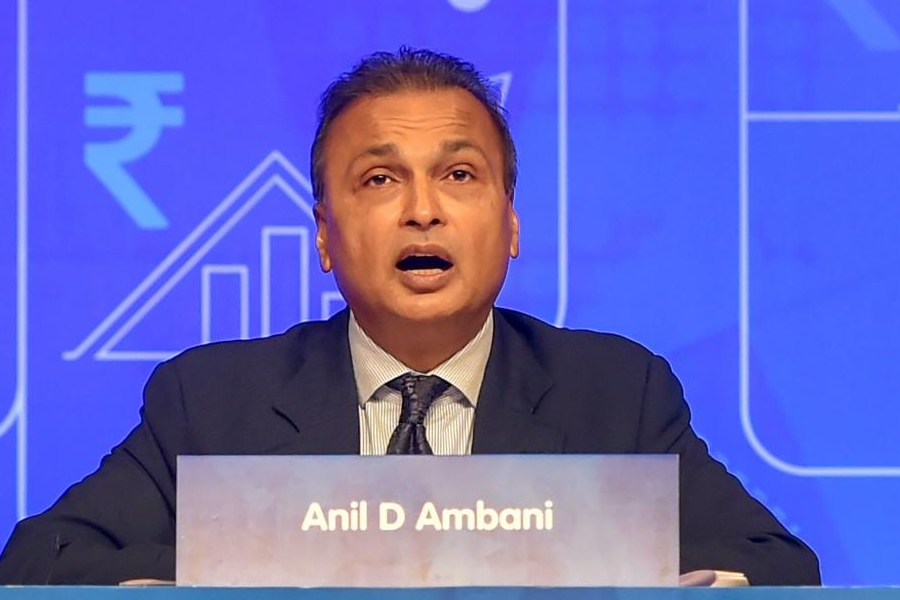
The court said that if interim relief was not granted to Ambani and Reliance Communications, it would cause “grave and irreparable harm / loss”.
Emphasising the importance of procedural fairness, the High Court said, “Principles of natural justice are based on the maxim `justice should not only be done but should manifestly be seen to be done,’” adding that a forensic audit report prepared by an external auditor cannot be relied upon by banks to issue a show cause notice.
“The RBI Master Directions are mandatory in nature and they operate within a binding statutory framework requiring banks to engage auditors strictly in accordance with applicable law,” the court said in its order.
The High Court also took note of the serious implications of a fraud classification, observing that the consequences are “virtually drastic and lead to disastrous consequences like being blacklisted, barred from new bank loans / credit for years, criminal FIR filing, reputation damage, impacting fundamental rights to financial access and civil death”.
The court further criticised the banks for the delay in initiating action against Ambani and Reliance Communications, terming it a “classic case where the banks have woken up from their deep slumber”.
It noted that the lenders sought to conduct a forensic audit in 2019 for transactions covering the period from 2013 to 2017.
Ambani had approached the High Court challenging the show cause notices issued by the three banks seeking to declare his personal accounts and those of Reliance Communications as fraud accounts.
As interim relief, he sought a stay on the notices and an injunction against any coercive action, arguing that BDO LLP was not qualified to conduct the forensic audit since its signatory was not a chartered accountant.
Ambani contended that BDO LLP was an accounting consultant firm and not an audit firm.
The banks, however, argued that the audit report had been submitted in accordance with the 2016 RBI Master Directions, under which an external auditor was not required to be a chartered accountant.
They also claimed that Ambani had belatedly challenged the report on the issue of the auditor’s qualification and that the challenge was an afterthought and a malafide exercise.
Rejecting these submissions, the court maintained that under the RBI’s Master Directions, a person is eligible for appointment as an auditor of a company only if he or she is a chartered accountant.
The High Court also noted that BDO LLP had previously worked as a consultant for the lender banks, which placed it in a conflicting position as an independent auditor.