Olympian Bharat Chetri, former captain of the Indian hockey team, says his toughest game in a career spanning over two decades was the semi-final against England in the 2010 Commonwealth Games.
In that match in Delhi, India was unable to break the 3-3 deadlock. The pressure kept mounting and the game went into a tie-breaker at the end of extra time. Then came the decisive moment. Goalkeeper Chetri dived, stretched and blocked a shot, helping India win with a 5-4 scoreline in the penalty shootout.
More than a decade and a half later, Chetri faces a different kind of a match, with stakes just as high.
Chetri, 45, now the BJP candidate from Kalimpong, has stepped onto a turf that is far less predictable than a hockey field. A greenhorn in politics, he admits he is still figuring out which one is tougher.
“In sports, you prepare, train and then play. Here, every day is a different match, but I am used to facing different situations,” Chetri says.
Village to Olympics
Chetri’s journey began far from the glare of stadium lights at Paiyu Busty, a small village in Kalimpong.
When he was 12 and a student of Class VII at St George’s High School in Pedong, a distant relative from Patna, Prem Singh Rana, happened to visit his family.
“I played football but never hockey. He insisted I go with him to Patna and learn hockey,” Chetri says.
His talent as a goalkeeper was spotted early, and he was soon drafted into structured training setups.
Known for his reflexes and calmness under pressure, Chetri became one of India’s most dependable goalkeepers since his international debut in 2001. He rose through the ranks, representing the country in World Cups, Asian Games, Commonwealth Games, and finally captaining the team in the 2012 London Olympics.
He received the Dhyan Chand Award for lifetime achievement in sports and games in 2018. Chetri also got the Banga Ratna and Banga Bibhushan awards from the Bengal government.
Shifting realities
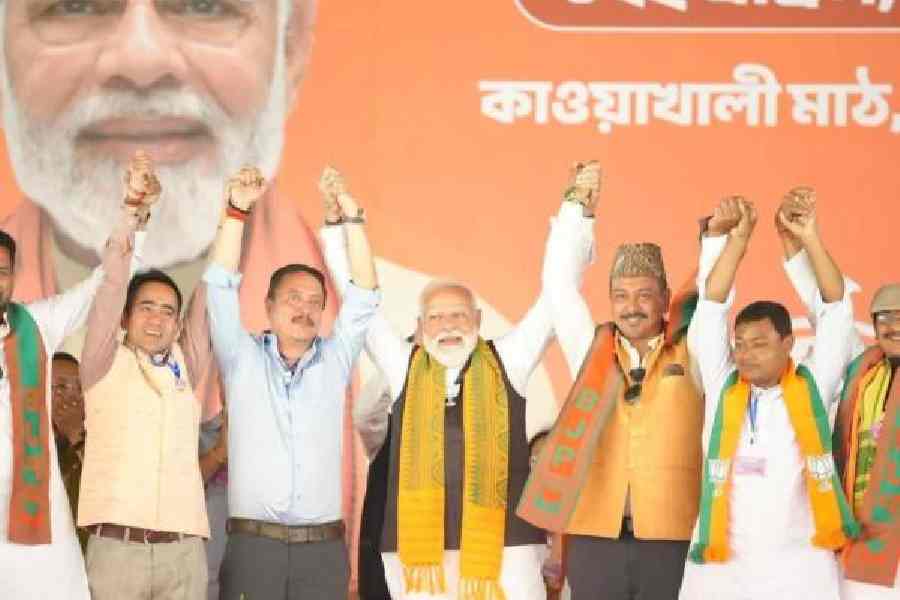
Chetri’s sporting career brought him into the proximity of powerful figures such as Prime Minister Narendra Modi and Union home minister Amit Shah.
“They know me since my playing days,” Chetri says, adding that he believes the two leaders handpicked him as the BJP candidate for Kalimpong.
But if elite sport introduced him to power corridors, politics is bringing him face to face with the ground reality.
“I was aghast to find graduates working as roadside labourers,” he says, recounting his campaign trail across Kalimpong.
The world-class hockey arenas are in the past. Chetri now navigates narrow hill roads, listening to concerns over parking chaos, drinking water shortage and crumbling infrastructure.
“I want to solve basic issues like parking, water shortage, drinking water issues and unemployment. Hordes of youths are leaving the hills in search of employment elsewhere and I want to try and stop this exodus,” Chetri, who recently opened a hockey academy in Kalimpong, says.
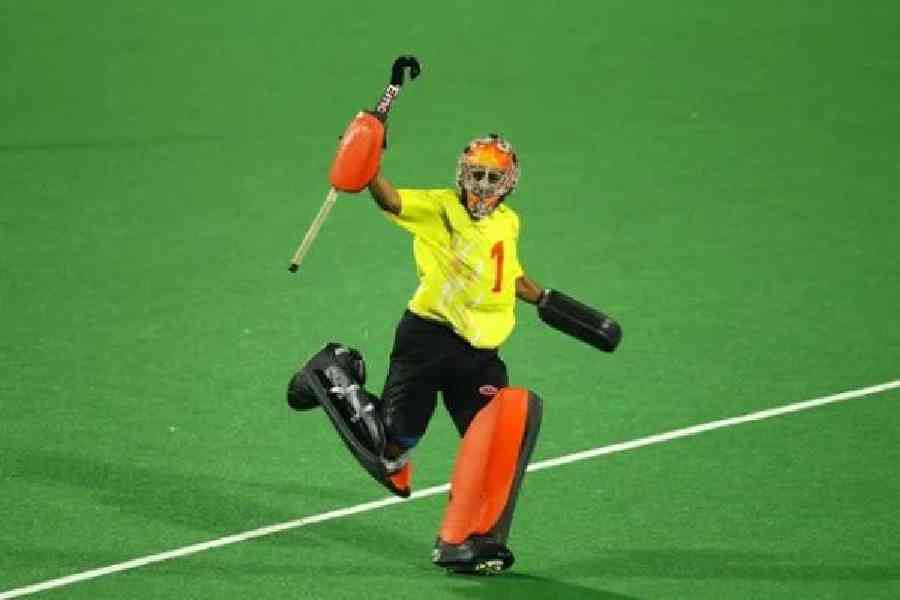
Chetri during his playing days.
Tightrope walk
Chetri’s political debut is far more complicated than he thinks and it comes with a baggage not entirely his own.
The BJP has held the Darjeeling Lok Sabha seat since 2009 and won the Darjeeling and Kurseong Assembly segments in the last election. Yet, key promises — a permanent political solution (PPS) for the hills and tribal status for 11 Gorkha communities — remain unfulfilled.
Recently, Shah reiterated in Calcutta that a PPS for the hilly areas of the state would be explored “without dividing Bengal”, a phrase he notably avoided while addressing a public meeting in Darjeeling and a nuance not lost on the hills.
It underlines the tightrope the BJP walks — balancing the statehood aspirations of the hill people with the political arithmetic of the plains, where the Darjeeling hills account for just three Assembly seats in a 294-member House.
New game plan
For Chetri, the challenge is no longer about anticipating the direction of a penalty stroke, but reading a far more complex field, one of expectations, disillusionment and political nuances.
Soon after his nomination, some of his friends from the sporting fraternity in Kalimpong distanced themselves from Chetri, with some even openly campaigning in favour of rival candidates. Chetri refuses to comment on it.
“I am used to working hard and will strive to bring about change if elected,” he says.
But many believe politics demands more than discipline. “It demands negotiation, messaging and sometimes, compromise,” said a political observer.
And as Chetri learns the rules of this new game, one question remains: Is saving a penalty stroke easier than winning the trust of the people in a region that is now increasingly feeling let down?