Friday, 01 May 2026
Friday, 01 May 2026
Friday, 01 May 2026
UP’s ‘miracle pothole’
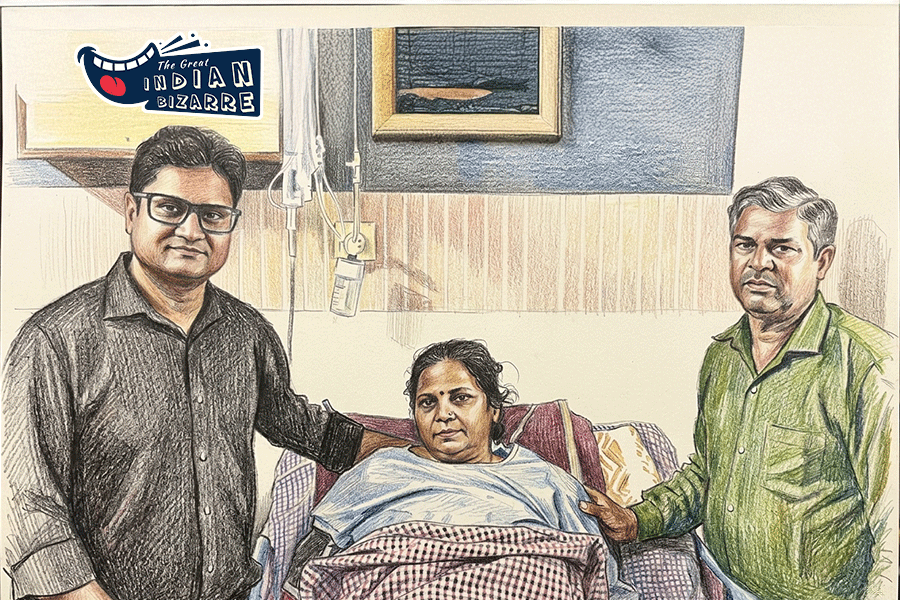
In what might be the most unexpected endorsement for India’s crater-decorated highways, a pothole on the Bareilly–Haridwar stretch of National Highway-74 has been credited—at least by stunned relatives—with “reviving” a woman who had been declared nearly brain-dead.
Vinita Shukla, 50, a senior assistant in the copy section of Pilibhit’s judicial courts, collapsed at home on February 22 while doing household chores. Her family rushed her to Pilibhit’s Autonomous State Medical College before she was referred to a private hospital in Bareilly due to her critical condition.
After three days on ventilator support, doctors reportedly told the family that her chances of survival were extremely slim and discharged her with a referral note.
Her husband Kuldeep Shukla arranged for an ambulance to bring her back home on February 24.
But fate—or perhaps the road department—had other plans.
Near Hafizganj, the ambulance hit a pothole. The jolt shook the vehicle and, according to Kuldeep, moments later his wife began breathing again.
Vinita was rushed to Neurocity Hospital in Pilibhit, where doctors treated her in intensive care for nearly 12 days. She regained consciousness and returned home, talking and recovering.
Doctors poured some scientific cold water on the “miracle pothole” narrative. Neurosurgeon Dr Rakesh Singh said the woman likely suffered neurotoxin poisoning from a snake or insect bite, evidenced by a bite mark and high toxin levels in her blood.
So while the road may have delivered the dramatic plot twist, doctors insist the real hero was targeted medical treatment—not the highway’s creative landscaping.
One golgappa, 12 years, 15 witnesses
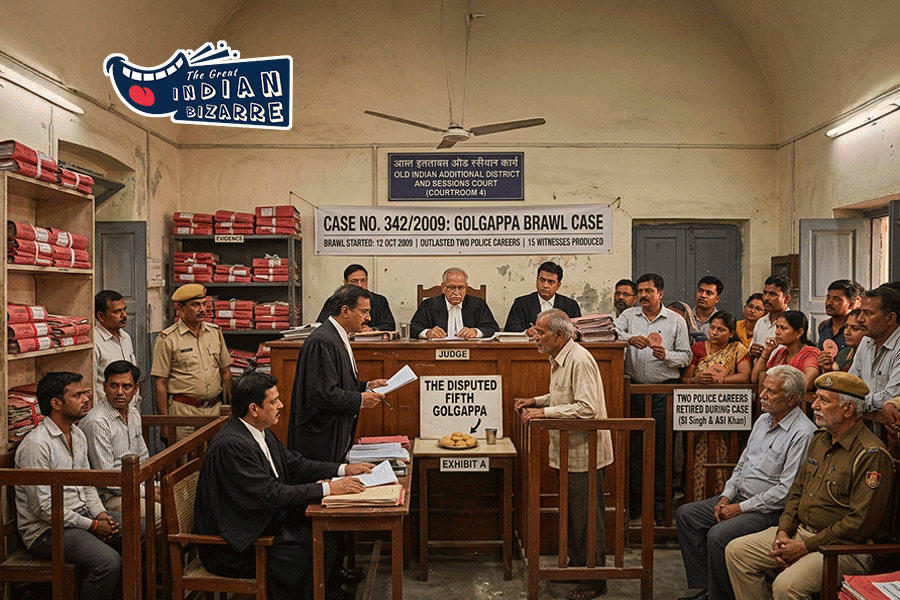
A legal battle over one missing golgappa has finally wrapped up—after a modest 12 years, 15 witnesses, and one brief jail sentence.
The saga began on May 21, 2013 in Haryana’s Maham town, when Anil approached a golgappa cart at Rajiv Chowk and asked a question that would echo through courtrooms for over a decade: Why five rupees for four golgappas when everyone else gives five?
Vendor Sube Singh stood firm—his cart, his rules. What followed was not a debate on snack economics but a full-blown brawl.
Sube Singh accused Anil and his friends of assault. Anil returned the next day with injuries, claiming he had been beaten—by the vendor, another stall owner, and even some police officers.
When that complaint went nowhere, Anil’s father Satyawan filed a private case in court, dragging six people—including the local SHO—into what had now become a full-scale legal buffet.
The original case moved faster. Anil was convicted and sentenced to three years in jail, only to be acquitted later by the Rohtak sessions court. The court then suggested that both cases be heard together—because clearly, the judiciary also wanted to know what exactly happened to that fifth golgappa.
After years of adjournments, testimonies and paperwork, the Maham court last week acquitted all nine accused, citing insufficient evidence.
Today, some officers have retired, others have been promoted, and the legal files have closed.
But Anil’s father isn’t done yet—he plans to appeal.
As for the real mystery: whether Sube Singh still sells golgappas—and if he’s upgraded the plate to five pieces.
Rabindrasangeet for the garbage hour
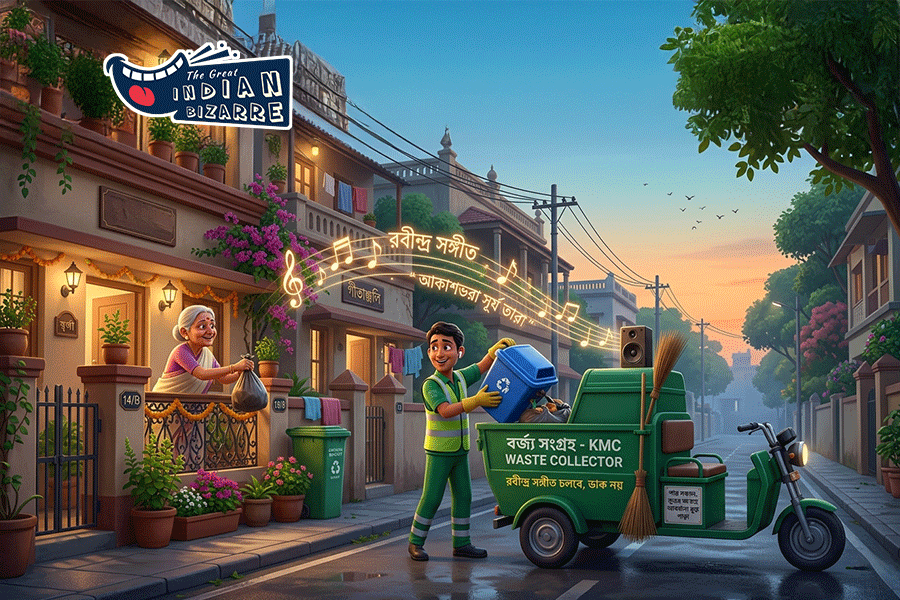
The familiar shrill whistle of the garbage vans may soon fade out in Bengal’s Jalpaiguri.
In its place, residents will now be called to dispose of their trash by the soothing strains of Rabindrasangeet.
The municipality has decided that waste collection vehicles will play songs of Tagore as they make their morning rounds. Probably the hope is that citizens might feel a little happier while taking out the garbage.
After all, effective and sustainable waste management still remains a challenge across West Bengal — and much of India.
But Jalpaiguri’s municipal authorities seem to have misidentified the real crisis.
Too gooey for landing: Rising heat melts Indore airport strip, flights diverted
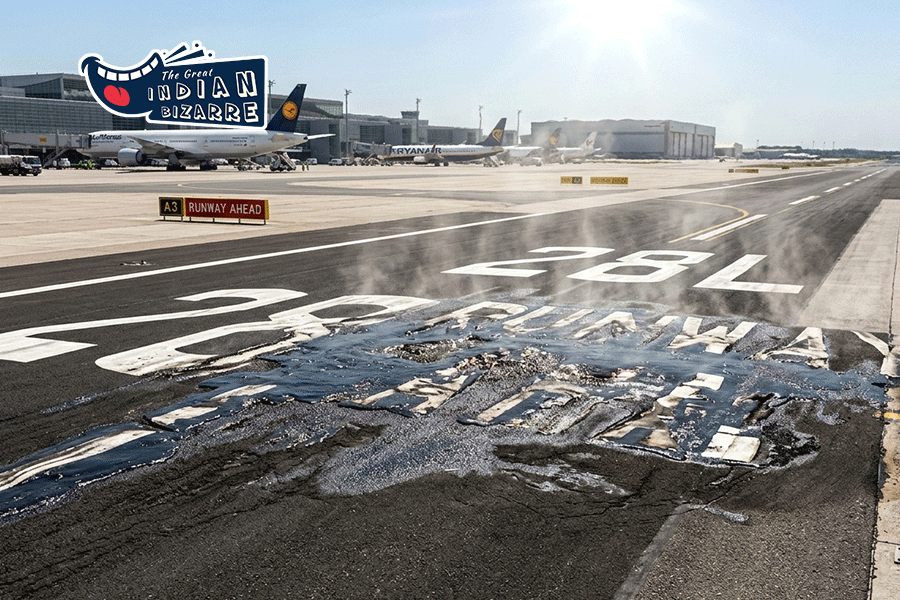
In a development that could be called lightly sauteed aviation, the runway at Indore Airport entered the culinary arts this week when rising temperature softened a stretch of its bitumen layer, forcing two incoming flights to divert to Bhopal.
During a routine inspection at the Devi Ahilyabai Holkar Airport, officials discovered that the early onset of summer had loosened and melted the runway’s bitumen layer ‘beyond prescribed standards’ which could be bureaucratic language for ‘the runway has melted into the consistency of freshly spat out chewing gum.’
Two flights, one from Delhi and another from Raipur were redirected to Raja Bhoj Airport in Bhopal.
Repairs were completed in about 20 minutes and passengers were shepherded to their intended destinations. Operations resumed to normal after the slight delay. Until then, operations at the airport may not always run on clockwork efficiency, but occasionally it will certainly continue to run like fondue.
Family turns Lucknow train coach into 'reel studio', passenger calls helpline
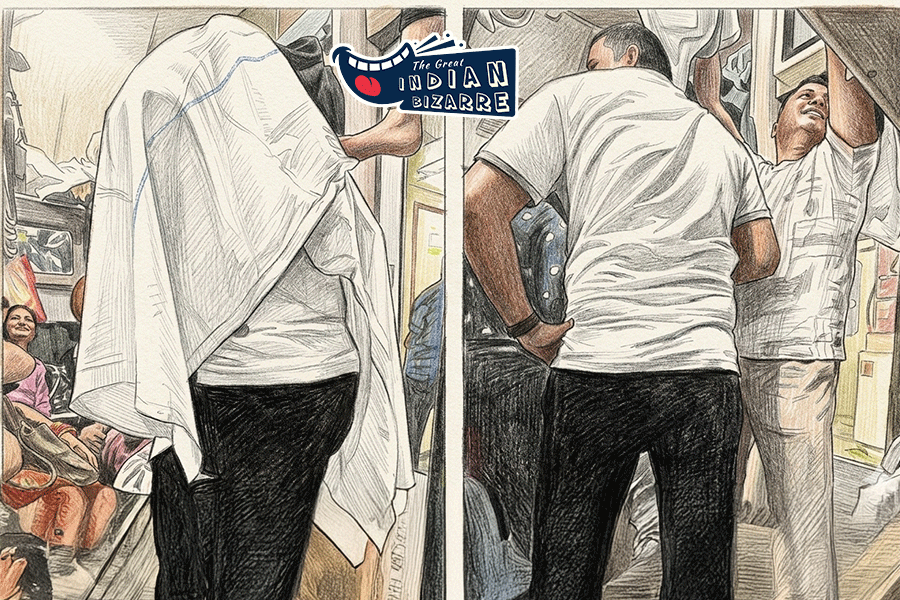
Indian trains have always been theatrical spaces. But this was amped up into a full Bollywood production when the Garib Rath Express, travelling from Bilaspur to Lucknow, unwittingly hosted a family who converted the coach into a 'reel studio.'
A large Lucknow family of roughly 25 turned the coach's aisle into a runway; music blaring, infinite retakes of shimmies and twirls, and with the family's most skillful content creators coordinating the operations in a manner with the seriousness of a Bollywood film director.
Indian Railways, to its credit, does provide a helpline. Eventually one passenger, having endured enough behind-the-scenes footage to qualify for a producer’s credit, called it.
Officials intervened and the music stopped. The phone cameras finally lowered. The travelling production shut down and the coach returned to its original, far less glamorous role, of moving mildly exhausted citizens across the country.
Manmohan Verma, shared the video of his experience, in what he called a ‘terrible incident.’ He said, “what should have been a peaceful journey turned into a live reality show.”
Delhi man turns flight lavatory into beedi cafe
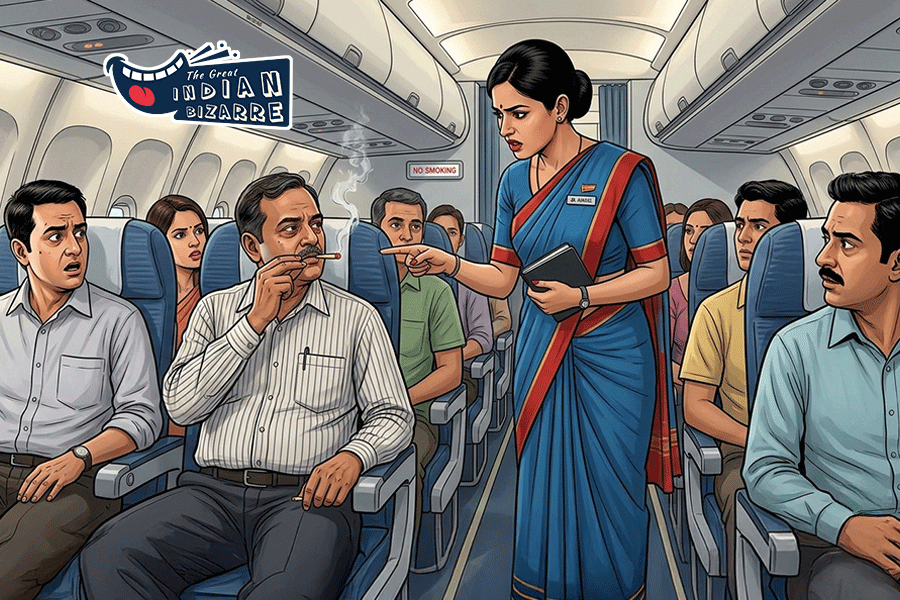
A Delhi passenger apparently decided that 35,000 feet is the perfect altitude for a smoke break.
Ashish thought the lavatory on Akasa Air’s Delhi-Goa flight would double as his personal beedi lounge.
Police in Goa stepped in after landing, reminding Ashish that planes are for flying, not for impromptu smoking sessions.
A case has been registered under aviation safety laws, proving once again that some people just don’t get the memo: “No Smoking on Flights” is not a suggestion.
Akasa Air said its crew followed protocols, which means they handed him over to the authorities.
Future of education or foot therapy?
In Chitrakoot, Uttar Pradesh, the latest school innovation seems to be “foot massages for principals.”
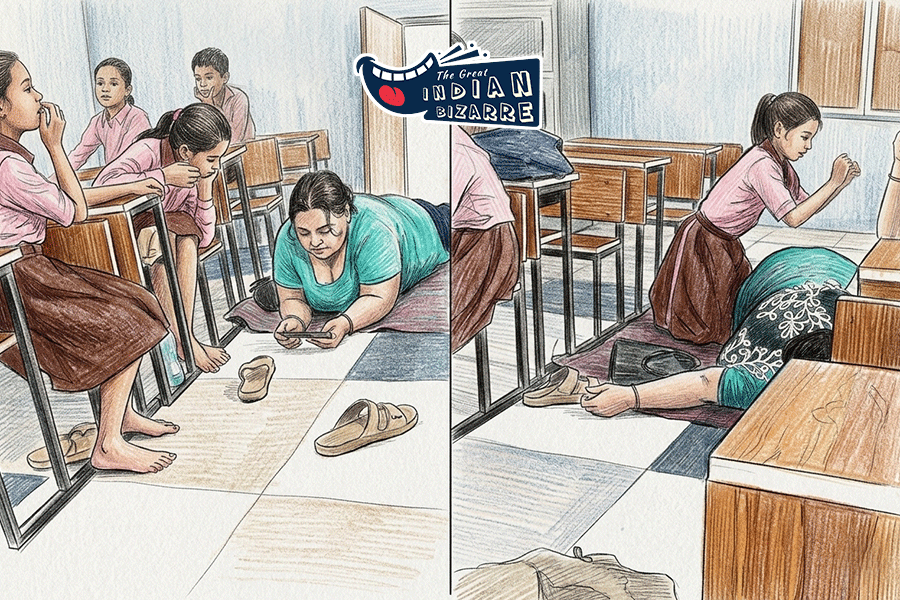
Madhu, headmistress of a government primary school, has been suspended after a video showed her getting a foot massage from a Class 5 student, during school hours.
The 23-second clip shows Madhu sprawled on the classroom floor, glued to her mobile phone, while students sit nearby. One student is doing the honours of massaging her feet.
According to The Times of India, Rai was suspended on Friday after the incident at the government school in Karwi’s Naya Bazar area.
One person wrote on X, "How can the future of children be shaped if the principal herself exploits them like this?"
Rai claimed the video is fake, saying it was doctored using artificial intelligence (AI) tools.
Shampookant
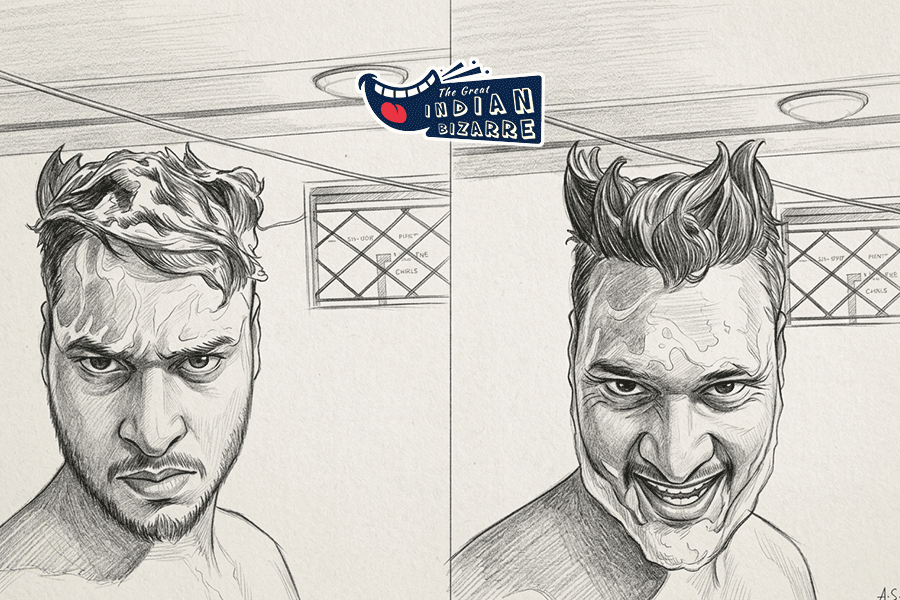
A video recreating a famous scene from Enthiran, better known as Robot, is going viral with over 14 million views in four days.
In the clip, a man manages to do what apparently even AI can’t: change his hairstyle in seconds. Using shampoo foam on his head, he switches between different looks, perfectly copying Chitti the robot, played by Rajinikanth.
The internet called him “Shampookaant.”
The video was shared on Instagram by @abhi.bh_8 with the caption, “How’s my talent?” It has racked up over seven lakh likes, more than 12,000 comments, and 14.5 million views.
So yes, in 2026, a bottle of shampoo and some quick hands are enough to steal the internet’s attention.
Golden retriever beats candidate to take exam
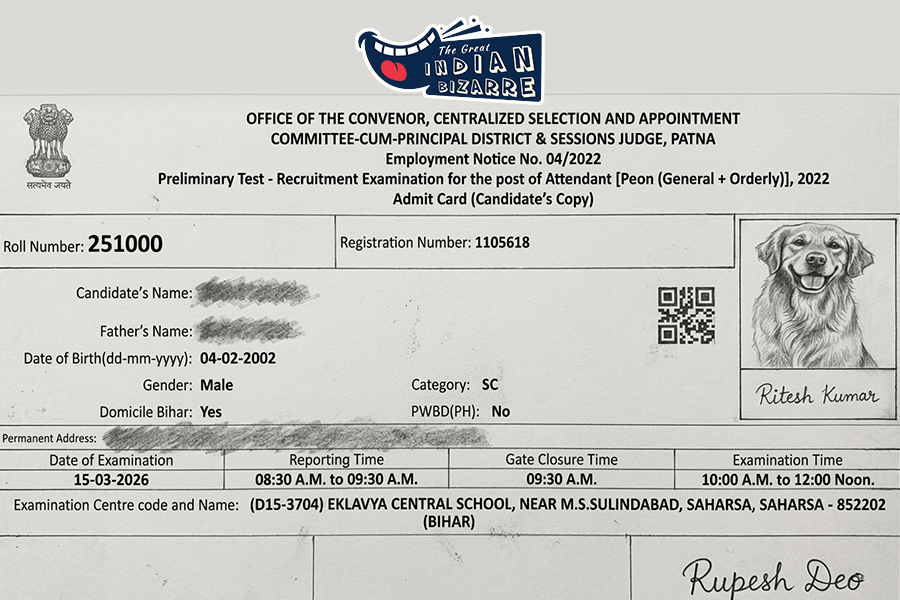
You have a public examination coming up. Already frazzled, preparing for the exam, you download your admit card to check your exam centre, calculating down to the very second when you have to leave home to reach on time. But wait, what is that picture?
You zoom in, and it’s not you who would be giving the exam, but a cute golden retriever who had stolen your spot. This is what happened with Ritesh Kumar in Bihar’s Rohtas district.
Though he had applied after seeing a notification in 2022 for the peon vacancy posts in the District and Sessions Court, it was almost four years later that admit cards were released.
But even four years were not enough to issue the correct admit card, resulting in the candidate being a subject of ridicule in his village.
Scheduled to be held on March 15, even after multiple complaints to the recruitment authorities regarding rectification, no actions have been taken, resulting in the candidate feeling unsure of whether he would be able to appear for the exam or not.
AIR 440 went on a state transfer
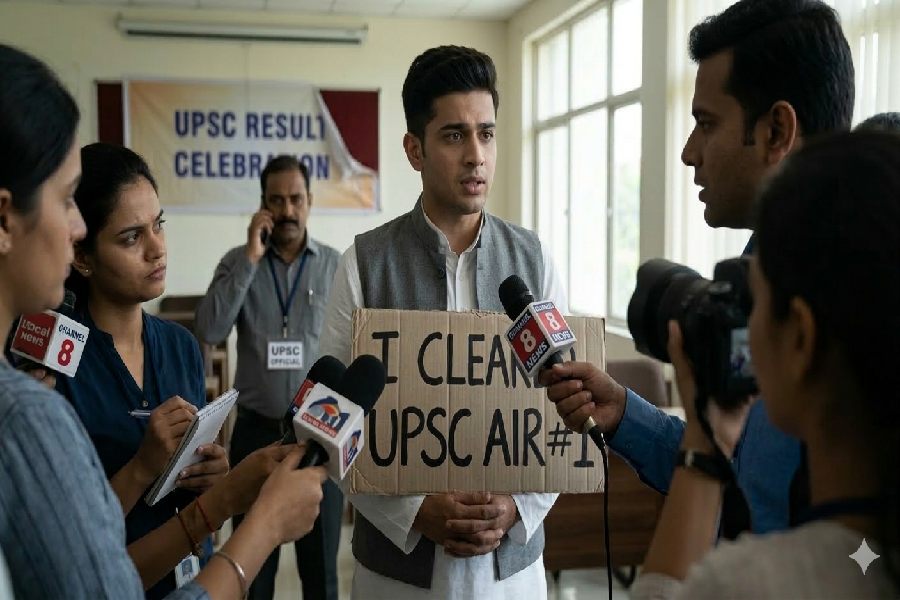
A fresh dose of drama has entered the saga that we call UPSC Civil Services Examination results, and in its latest episode of ‘fake it till you make it’, a third case of fake rank claim has surfaced (Yes, there have been more).
Ranjeet Yadav had made headlines, and not in a good way.
Originally from Sheikhpura district in Bihar, and coming from a poor farmer family, he celebrated his All India Rank (440) with much gusto, distributing sweets among friends and the public, even getting felicitated by former RJD MLA from Sheikhpura Vijay Samrat with garlands and sweets.
While celebrating the achievement, he was even called to the local police station, where he was garlanded. The bubble soon burst when a few youth of the village, wanting to ensure that this was not all a gimmick, downloaded the result list, revealing that Rank 440 actually belonged to Ranjith Kumar R from Karnataka’s Chikkaballapur district.
While MLA Samrat had already retracted the pictures, Ranjeet Yadav had been called by the district authorities for document verification; however, he had gone AWOL.
Rat’s guilty pleasure at golgappa stall
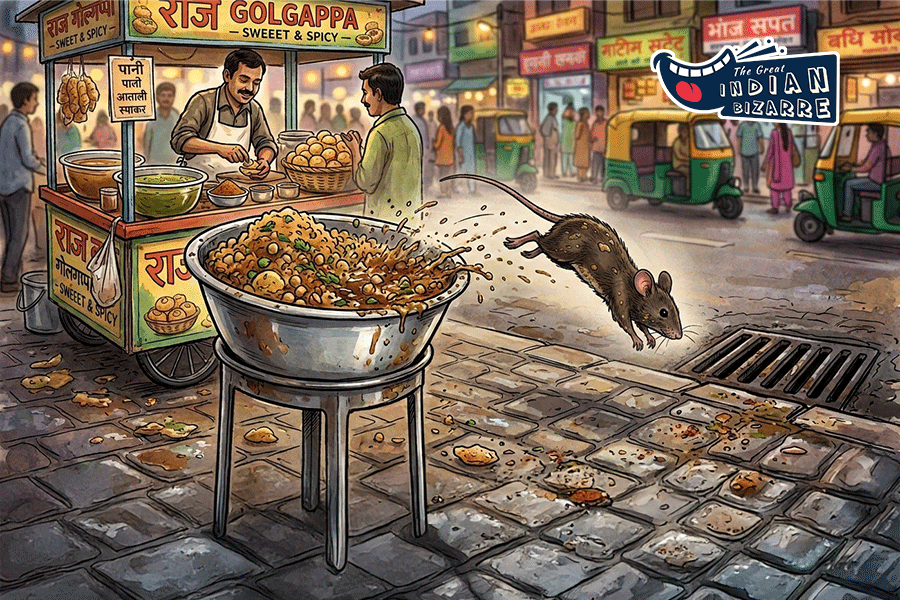
India’s street food has many loyal followers. A viral video from Amritsar suggests the fan club may occasionally include a whiskered foodie as well.
The clip shows two customers eating pani puri at a roadside stall when movement inside the bowl of spiced pani and masala catches their attention. The unexpected diner turns out to be a rat.
In the video, the vendor can be seen trying to remove the rodent from the mixture before it leaps out of the bowl and disappears into a nearby drain.
The footage, captioned “Rat in Pani Puri”, quickly racked up nearly 300,000 views online. The customers reportedly asked the vendor to discard the contaminated mixture.
As the clip spread, some viewers suggested it might be scripted or even AI-generated. The creator claimed that the video was recorded on his phone and was “100% original”.
An AI-detection tool used by Deccan Herald also suggested the footage likely did not contain any “AI-generated or deepfake content”, the report added.
He later told The Indian Express that the rat appeared midway through a pani puri challenge before making a quick exit.
For the rat, however, it may simply have been an evening snack run that was abruptly cut short.
QR code on CBSE maths paper takes students on musical detour
The CBSE Class 12 mathematics exam this week briefly appeared to offer something that no coaching centre had prepared students for: a lesson in internet memes.
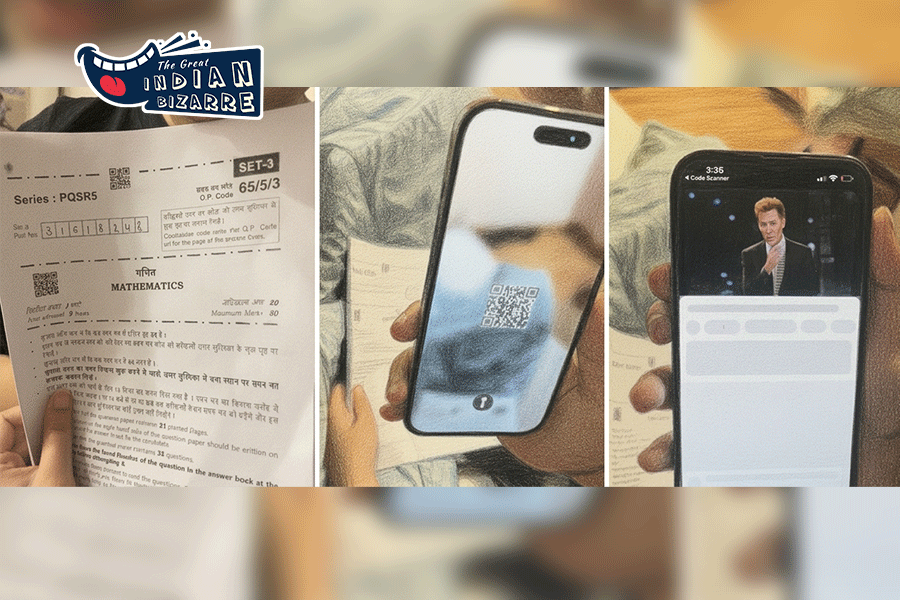
Soon after the March 9 exam, held from 10.30am to 1.30pm, images of the question paper began circulating online with claims that a QR code printed on it opened a music video when scanned.
Students said the code led straight to ‘Never Gonna Give You Up’, the 1987 hit by Rick Astley- the song behind the internet prank known as “rickrolling”.
QR codes have appeared on CBSE question papers since 2018 as a security feature meant to verify authenticity and help prevent paper leaks.
But videos shared on social media showed students scanning the code and landing on the song’s YouTube page instead.
The discovery quickly spread across platforms such as X and Reddit. Soon, the comment section under the video itself began filling up with references to the CBSE mathematics exam.
The Central Board of Secondary Education later clarified that the question papers were genuine and that the security of the examination had not been compromised. The board said the issue appeared in a few question paper sets and that steps were being taken to ensure it does not recur.