Elections in the Darjeeling hills are unfolding to a different beat this time, and the beat is unmistakably rap.
From hilltop hamlets to bustling towns, campaign trails are echoing with rhymes and basslines as political messaging finds a new voice among the youth.
The two principal players in the Gorkhaland Territorial Administration (GTA), the Bharatiya Gorkha Prajatantrik Morcha (BGPM) and the Indian Gorkha Janshakti Front (IGJF), have turned to rap music to connect with Gen Z voters, churning out one track after another in a battle that is as much lyrical as it is political.
The Ajoy Edwards-led IGJF was the first to set the tone, rolling out a series of rap songs built around its campaign pitch of parivartan (change). The BGPM, led
by Anit Thapa, was quick to respond, matching the tempo with its own set of tracks, transforming the election into a full-blown sonic contest.
The trend has gone a step further, with candidate-specific rap songs entering the fray of late.
Sitting BGPM MLA from Kalimpong, Ruden Sada, and IGJF’s Kurseong candidate Bandana Rai have personalised campaign tracks. In Lebong, Darjeeling, BGPM supporters recently produced a constituency-specific rap while campaigning for Bijay Kumar Rai, adding another layer to the growing playlist of political verses.
Party leaders say the shift is strategic. “Rap is more relatable to the younger generation,” said a campaign insider.
A content creator associated with one of the parties pointed out that technology has accelerated the trend. “With AI tools, it is easier to produce multiple songs quickly,” he said.
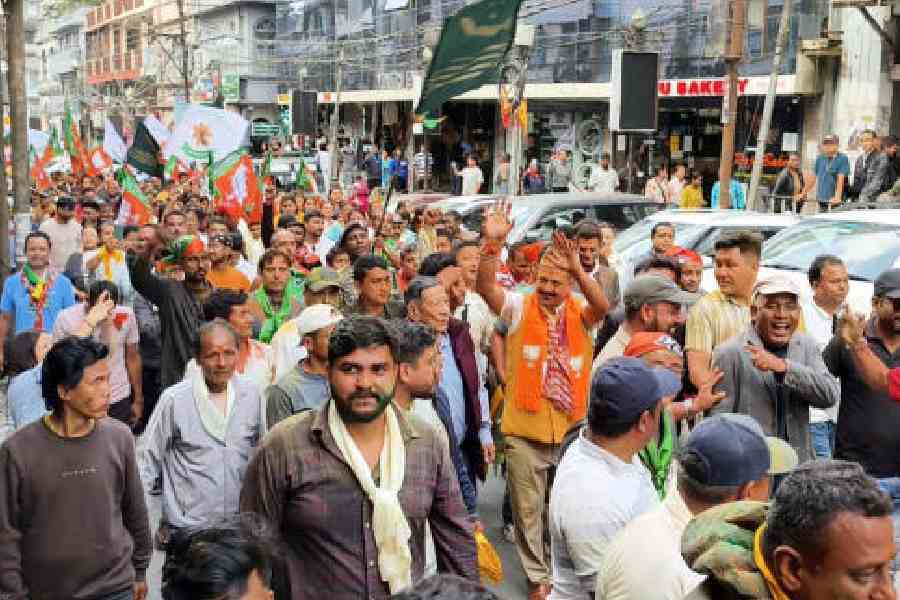
The visual spectacle matches the sound. Pickup and 4 X 4 vans fitted with large speakers snake through the hills, blasting campaign raps while party workers move alongside, turning canvassing into something resembling a travelling music show.
Some observers believe the influence may have come from across the border. In Nepal, the meteoric rise of rapper-turned-politician Balen Shah has demonstrated the political power of unconventional, youth-driven messaging, providing a template that appears to be resonating in the hills.
However, even amid the high-decibel campaign, moments of cultural continuity remain.
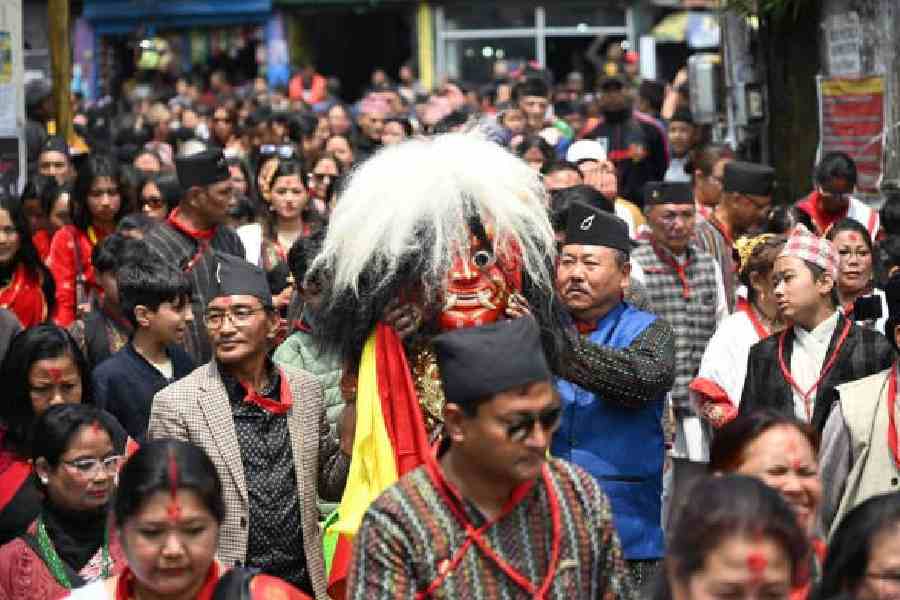
On Tuesday, the tone briefly softened as both Anit Thapa and Ajoy Edwards attended Nepali New Year (2083) celebrations in Kalimpong and Kurseong, rooted in tradition.