 |
 |
 |
 |
 |
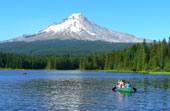
| (From top): Boating at the base of Mount Hood; a view of Portland city with Mount Hood in the background; a wedding party walks through a park in historic downtown Portland; Portland’s MAX light rail runs through the ibrant downtown area; the 36-foot tall statue of Portlandia |
It’s a big city that feels like a small town, cosmopolitan without the skyscrapers, funky without being pretentious. Think 160 parks, snow-capped mountains, fun museums, crazy-themed pubs and tax-free shopping. There’s lots to satiate a visitor to this city. Yet just 10 years ago it would have been hard to predict that Portland, the capital city of Oregon state, would become the hip hub for bohemians and artists it is today.
Oregon was once a nondescript state and Portland existed because of the timber industry and the port provided by the Willamette River that runs through it. But something happened in the 1990s; Portland became cool. Perhaps it was the rub-off from the grunge movement from Seattle, or the worldwide Nike Corporation headquarters nearby. Or perhaps it was because all the other major West-coast cities became too expensive for the young, struggling artists who inevitably arrive to transform boring areas into happening places.
It also helps that Oregon has no sales tax, so the prices don’t pinch as much. In Portland, everything is about 10 per cent cheaper than elsewhere. The other good news ? you don’t need a car to get around. Public transportation is solid.
My trip to Portland was incredibly diverse ? strolling through a Japanese garden, eating the best chaat I’ve ever had outside of India, and drinking ice-cold beer (legally) inside a movie theatre.
After getting off the train in the historic Pearl District, I immediately noticed the greenery. Portland’s huge parks are more than just standard rose bushes and lawns and my first destination was the Japanese Garden, renowned as the most authentic outside Japan. In the garden, traditional bamboo fountains and birds are about the only sounds you’ll hear unless a rowdy tour group is walking by. It’s segregated into different traditional themes: a lotus pond with stepping stones, a waterfall from the mountainside, a mesmerising white rock garden. There’s no other way to say it ? the garden is stunning, peaceful and bound to inspire. It also includes angular wooden buildings done in 16th century Japanese architectural style.
At the edge of the ridge you’ll see the view that inspired it all ? Mt Hood and its snowy 11,235-ft peak. The founders decided to build the garden here because Mount Hood looked a lot like Mount Fuji.
Mount Hood, a dormant volcano, is a short drive and makes a great day trip for skiing, hiking, fishing and rock climbing. Since it’s one of the few places in the US with year-round snow, the US Olympic ski team often practises here.
A bit farther out of town is the Columbia River Gorge, a stunning geological wonderland of cliffs and dams controlling the river. The Gorge is famous for wind surfing, and on blustery days the river teems with brightly coloured sails and surfers showing off. The best way to see it is on a jet boat and Portland Spirit offers four-hour tours for $62.
After hiking back down the hill from the garden, I was famished. Luckily, I met some friends who showed me a gem of a restaurant in an unassuming trailer in a parking lot downtown. The tiny Indian Chaat House sells fruit chaat that tastes just like it was flown in from Delhi, and gigantic $5 vegetarian thalis with naan.
If you’re looking for a proper sit-down restaurant though, visit the popular No Fish! Go Fish!, and try its famous fish-shaped pastry sandwiches made of cornmeal. The pocket (which has no fish) has loads of different fillings: from bananas to chocolate. But fish lovers shouldn’t worry, as their dinner menu offers creative seafood dishes for around $15 a plate.
After lunch, ride the streetcars that run the length of downtown to Powell’s City of Books, the largest bookstore in the US. Housed in an old warehouse building, it’s so vast, you’re handed a map as you walk in the door.
There’s fun for kids at the Ira Keller Fountain a few blocks away. A giant piece of public art that doubles up as summer playground, it takes up a whole block and circulates 13,000 gallons of water a minute. There are no signs that say “don’t touch” ? it’s meant to be explored and climbed. Another great piece of art is the huge copper sculpture of Portlandias, who bends over from her perch on the Portland building to welcome visitors.
Closer to the waterfront downtown is the American Advertising Musuem, where the exhibits go all the way back to Babylon in 3000 BC to modern times, chronicling the evolution from ads scratched into stone tablets to the multimedia madness of today. It’s a fun place and a steal as well ? the entrance fee is just $5.
To get a sense of Portland’s history, contact the Cascade Geographic Society for tours of the tunnels built underneath Portland in the 19th century. Known as the Shanghai tunnels, these passageways connected basements of opium dens, brothels and sailor’s bars to facilitate the secret slave trade known as ‘Shanghaiing’, where unsuspecting people were kidnapped and forced to work on merchant ships bound for Shanghai.
Portland has some amazing bars. Much of this is thanks to the McMenamin brothers, who bought up old buildings and transformed them into community-oriented pubs and performance spaces.
Head to the bohemian Hawthorne neighbourhood for the Baghdad bar/theatre, owned by the McMenamins, where a meal and a beer while watching movies comes at the cheapest prices in town ($3 for most shows). This is the vibrant, young side of Portland with galleries, concert halls and funky cafes.
If the bars in town don’t satiate, head south of the city to Oregon’s boutique wineries. The area around Portland is widely believed to make the world’s best Pinot Noir, and most have tasting rooms.
After all the rowdy evenings, I was ready for some peace and quiet at McMenamin’s Edgefield Farm Resort. Edgefield is located on the campus of an old “poor farm”, where people were sent to work off their debt during the American Depression. From sad beginnings, it has been transformed into a place of art and joy. Murals adorn the walls of the main farmhouse and it boasts multiple restaurants, a glass blowing and pottery studio, a golf course, and its very own winery and distillery. I enjoyed a warm cocktail made from their apple liquor and imported Italian spirits.
Surrounding the grounds is farmland, cows and the distant Cascade Mountains. There are no TVs or phones in the rooms, so all is peaceful. It’s perfect for enjoying all the old time frontier comforts of Oregon ? without the loan collectors and kidnappers of the past. Surely, modernity is a blessing.
Photographs by Alan Campbell
Photograph of Portland City
View courtesy: Portland Oregon
Visitor Association
Fact file
• Portland has an excellent airport and great flight services from all major airlines. However, if you have a bit of time, the best way to get there is by train. Coming from either north or south, you meander through some of the most beautiful forest and mountain areas in the US.
Train from Oakland ? $67 for reserved coach seat, one way, 18 hours
Train from Seattle ? $30 for reserved coach seat, one way, 4 hours
Reserve tickets online at Amtrak.com
• Accommodation:
Budget ? Downtown Value Inn, $55 a night (Ph: 503-226-4751)
Moderate ? Kennedy School Hotel $84-$109 a night (Ph: 503-249-3983)
• Weather: Portland is quite rainy and cold in winters. Late spring, summer and early fall are the best times to visit, though summers can get hot and muggy.