A provision in the US–Bangladesh reciprocal trade agreement offering zero duty on select textile and apparel exports from Bangladesh to the US, subject to the use of US-produced cotton and fibre inputs, has raised concerns across India’s textile value chain.
The pact, signed on February 9, reduces the reciprocal tariff on Bangladeshi goods to 19 per cent from 20 per cent. While this remains marginally higher than India’s 18 per cent base tariff, the inclusion of a zero-duty quota for specified volumes of Bangladeshi apparel could blunt New Delhi’s expected gains from its own trade understanding with Washington.
According to a White House statement, the US will establish a mechanism that allows a defined volume of Bangladeshi textile and apparel shipments to enter at zero duty, subject to Bangladesh’s use of US cotton and man-made fibre inputs. Industry executives fear the clause could prompt Bangladeshi manufacturers to pivot away from Indian cotton yarn towards US suppliers, hurting Indian exporters of raw material and finished goods.
The market reaction was swift. Shares of textile exporters fell sharply, with Gokaldas Exports down 7.98 per cent, KPR Mill 3.05 per cent, Arvind 5.02 per cent and Pearl Global 10.11 per cent on the BSE.
“Our deal is still good, but this reduces the advantage we were expecting,” Sanjay Jain, chairman of the ICC National Textiles Committee, told The Telegraph.
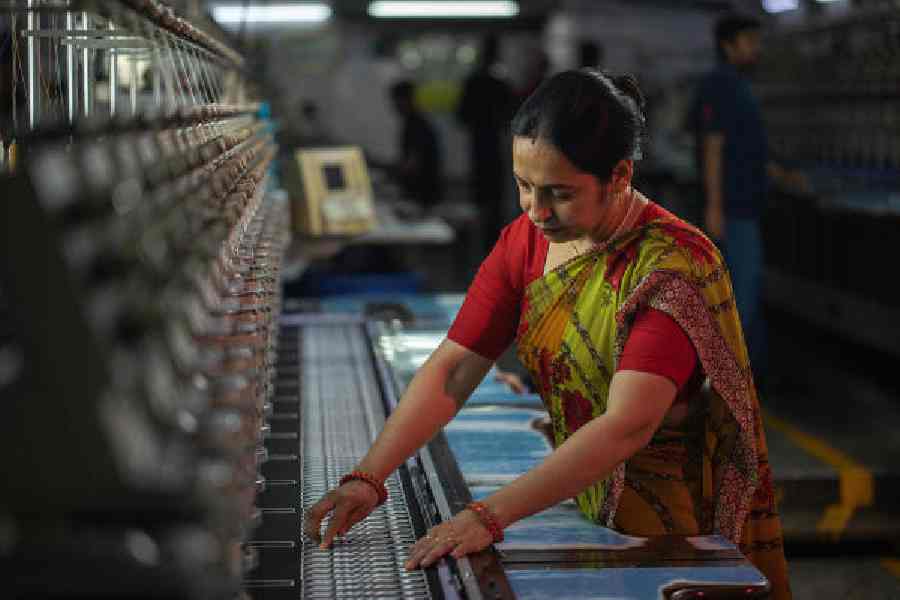
The US is India’s largest export destination, with textile and apparel shipments of $10.5 billion. After the tariff cut from 50 per cent to 18 per cent, the textile ministry projected that the US would account for over a fifth of India’s $100 billion textile exports by 2030.
Bangladesh is the biggest buyer of Indian cotton yarn, accounting for 45–50 per cent of exports. India ships around 16–18 lakh bales of cotton to Bangladesh annually. Industry leaders warned a shift to US cotton could materially dent volumes.