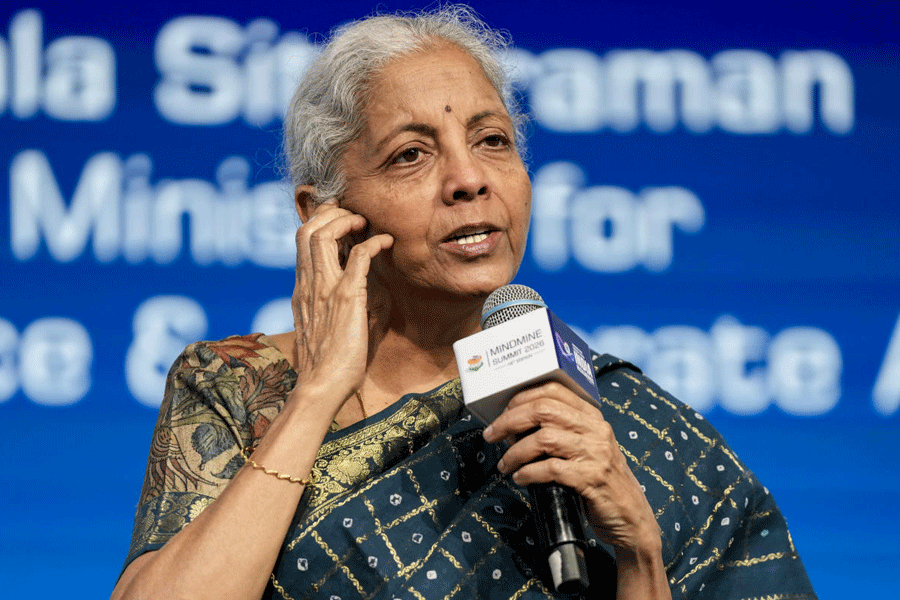
Union finance minister Nirmala Sitharaman on Monday said the government recognises the need to attract more foreign capital, even as the Congress highlighted what it called the structural problems the economy faces.
At the Hero Mindmine Summit 2026, Sitharaman said measures taken by the government to exempt withholding tax on interest and capital gains tax made by foreign investors in G-secs will be the first step towards drawing foreign capital back.
"Certainly, that's not the end of story, there will be more. We recognise we need more foreign capital to come in," Sitharaman said.
The RBI on June 5 had allowed banks to access the central bank’s swap facility for Foreign Currency Non-Resident (Bank) (FCNR(B)), deposits with maturities ranging from three to five years till September 30. The facility would allow banks to swap US dollar deposits with the RBI and manage currency risks.
Also, to shore up foreign capital inflows include a concessional forex swap facility to encourage PSUs to raise external commercial borrowings (ECBs) until September 30.
Sitharaman said under the framework announced by the RBI, currency hedging will be at the expense of the RBI.
"And as a result, the banks can now go unfettered, to raise their own fund. So we have taken a very calibrated approach to make sure that the markets do see the required investments," Sitharaman said.
The finance minster also said the Indian economy is facing "severe strain" from import of key raw materials, as well crude oil and fertilisers.
She said the global situation is changing almost every week with newer challenges emerging and the country has to be ready for every such "exigency".
Congress general secretary Jairam Ramesh, meanwhile, underlined that while the peace deal in the Iran war is good news, the danger of the Indian economy running into dire straits remains.
“The news that the US and Iran will be signing an agreement on June 19th in Geneva to halt hostilities in West Asia is to be welcomed, even though the full details are yet to be made public officially. There is universal hope that the two countries (as also Israel) will abide by the accord - even though it is of an interim nature - and that the accord will lead to a more permanent normalization,” Ramesh wrote on X (formerly Twitter).
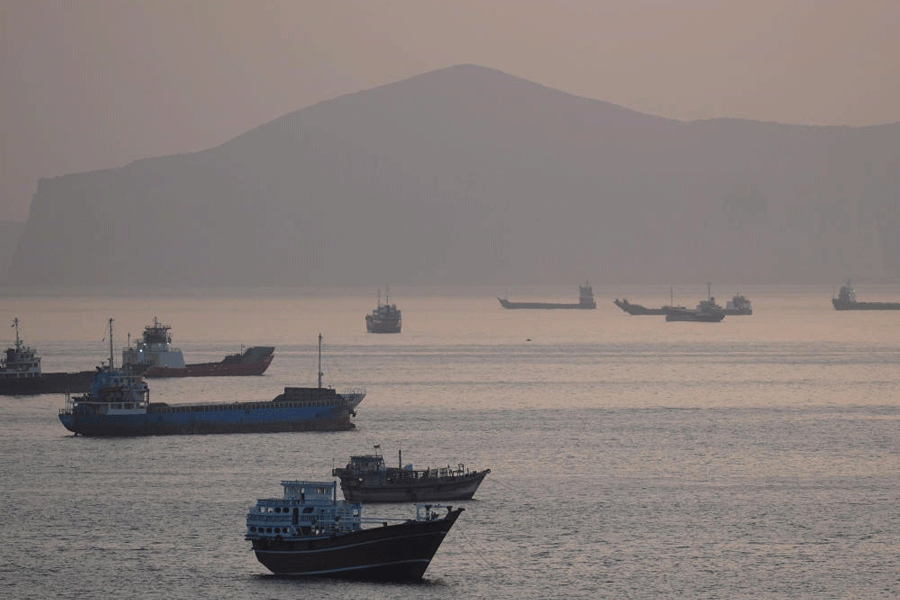
“While the unrestricted re-opening of the Strait of Hormuz will certainly bring great relief to India, it does not mean the structural problems the economy faces will soon be surmounted. These concerns clearly predate the current war in West Asia that began just two days after Prime Minister Modi’s visit to Israel,” he said.
“The rupee had been under considerable pressure for over a year and the gap between the demand and supply of dollars had been growing. Rates of private investment—a most crucial determinant of GDP growth-- have been tepid for many years.”
This, Ramesh said, was the result of sluggish growth in demand that, in turn, was the outcome of “Stagnation in real wages over the past decade; Modi Government’s failure to check the dumping of imports from China that has resulted in a record trade deficit and endangered growth of job-generating MSMEs in particular; Overall investment climate vitiated by unchecked powers given to tax authorities and investigative agencies,” he added.