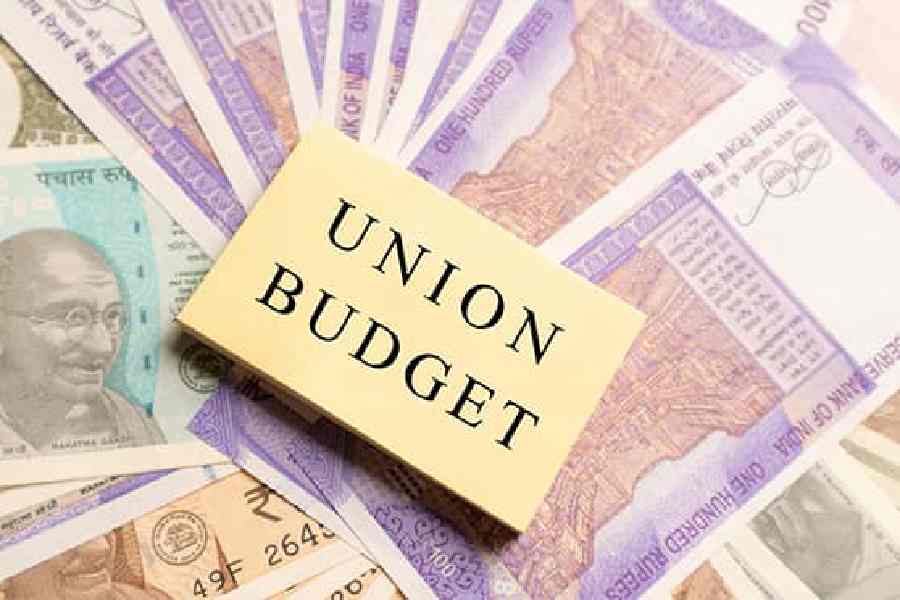
The Union Budget for 2026-27 is expected to reinforce India’s growth momentum by supporting strong domestic demand through targeted fiscal measures, complementing the Reserve Bank of India (RBI)’s growth-oriented monetary stance, according to the latest EY economy watch report.
EY India chief policy advisor D K Srivastava said that amid rapidly shifting trade barriers and heightened global policy uncertainty, India may need to rely more heavily on resilient domestic demand to sustain economic expansion.
“Along with RBI's growth-oriented policy, one can look forward to a complementary growth push through the union budget for FY27,” Srivastava said.
The Union Budget for 2026-27 is scheduled to be presented in Parliament on February 1, 2026.
Srivastava expects India to maintain a robust medium-term growth trajectory, averaging around 6.5 per cent. This outlook could strengthen further if domestic private investment gains momentum and global supply chain disruptions ease.
India’s economy grew by 7.8 per cent and 8.2 per cent in the June and September quarters, respectively, while the RBI has projected GDP growth of 7.3 per cent for the current fiscal year, compared with 6.5 per cent in 2024-25.
On the fiscal front, the EY report noted that gross tax revenue buoyancy in the first six months of FY26 stood at just 0.32, significantly below the budgeted assumption of 1.1. To achieve the budgeted gross tax revenue growth target of 12.5 per cent over FY25, tax collections would need to grow by 22.3 per cent during the December-March period.
While income tax and GST reforms in the current fiscal year may result in some revenue sacrifice, the report said unbudgeted non-tax receipts and possible savings in revenue expenditure could help the government adhere to its fiscal deficit and capital expenditure targets. The government has received a record surplus transfer of ₹2.68 lakh crore from the RBI for 2024-25, and has also announced revenue-enhancing measures such as higher excise duty on tobacco products and a national security and public health cess.
To meet the fiscal deficit target of 4.4 per cent of GDP amid expected tax shortfalls, the government may curtail revenue expenditure, while making efforts to meet the budgeted capital expenditure target, the report said.
Separately, a report by think tank Think Change Forum said the Union Budget 2026 should focus on widening the direct tax base, incentivising private investment and freezing peak direct tax rates to accelerate growth and job creation. It emphasised technology-driven tax base expansion by integrating GST, income tax and high-value consumption data, rather than raising tax rates.
The report highlighted a persistent investment paradox, noting that despite rising corporate profitability, investment-to-GDP ratios remain below pre-2011 levels. It recommended targeted tax incentives to channel corporate earnings into manufacturing and employment-generating assets, along with a phased roadmap to bring petroleum under GST.